

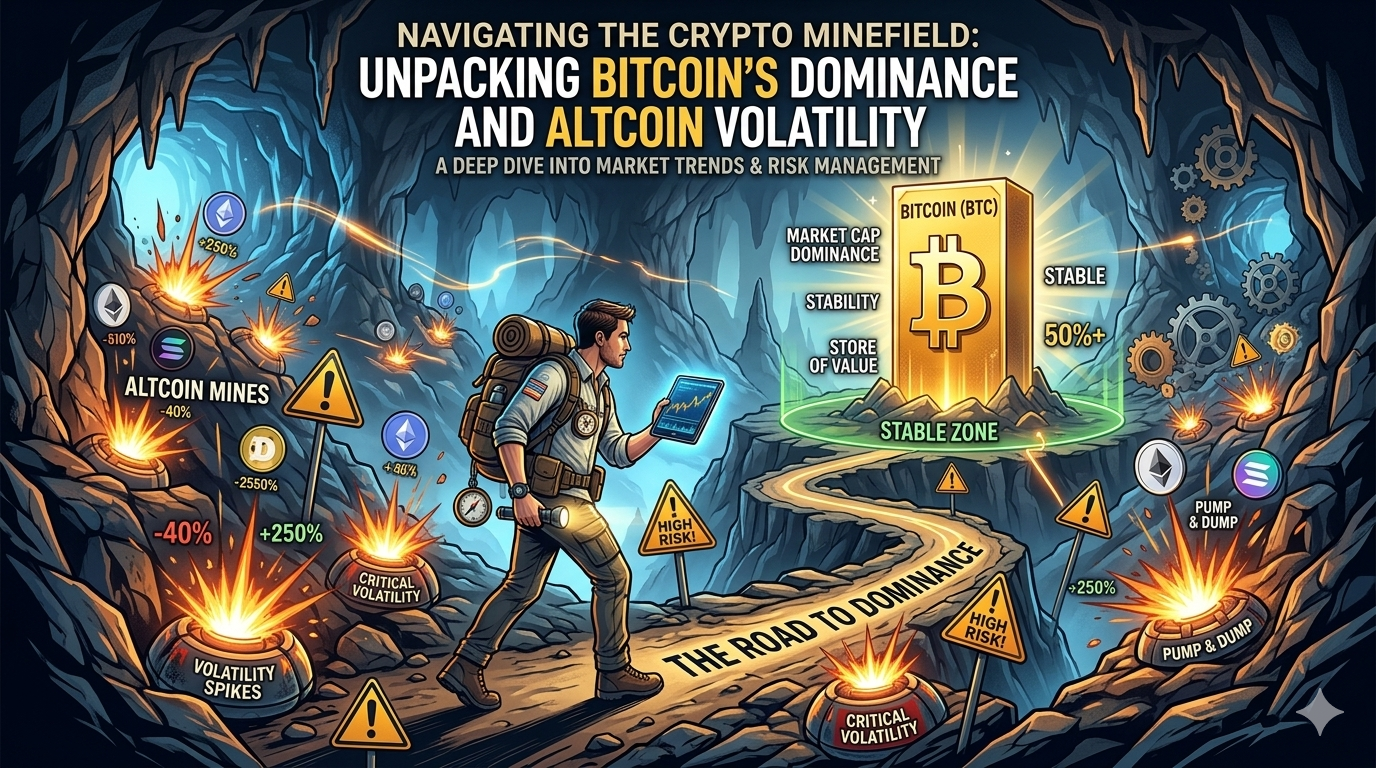
As the cryptocurrency market continues its relentless evolution, 2026 presents a fascinating landscape for investors. Bitcoin, the progenitor of digital assets, often dictates the market’s sentiment, yet the vibrant ecosystem of altcoins offers both unparalleled opportunities and significant risks. Understanding the interplay between Bitcoin’s dominance and the inherent volatility of alternative cryptocurrencies is crucial for any investor looking to navigate this complex terrain. The current market dynamics suggest a period where strategic asset allocation and a keen eye on emerging trends will be paramount.
Bitcoin’s Enduring Reign and Market Dominance
Bitcoin’s position as the market leader remains a significant factor influencing the broader cryptocurrency space. Its established network, growing institutional adoption, and its role as a perceived store of value contribute to its enduring dominance. As of mid-2026, Bitcoin continues to capture a substantial portion of the total cryptocurrency market capitalization, acting as a bellwether for investor confidence. When Bitcoin experiences significant price movements, whether upward or downward, the ripple effect across the altcoin market is almost instantaneous. This dominance means that understanding Bitcoin’s price action and its underlying fundamentals provides a critical baseline for assessing the health and direction of the entire crypto economy. For instance, discussions around key support levels, like the $9 mark for AVAX, highlight how even established altcoins are keenly watched in relation to Bitcoin’s stability.
The Allure and Peril of Altcoin Investments
Beyond Bitcoin, a universe of altcoins beckons with the promise of higher returns. These cryptocurrencies, ranging from Ethereum with its robust smart contract capabilities to a myriad of newer tokens exploring niche applications, offer diversification and the potential for exponential growth. However, this potential comes hand-in-hand with amplified volatility. Altcoins are often more susceptible to market sentiment swings, regulatory news, and project-specific developments. A successful project launch or a significant partnership can send an altcoin’s price soaring, while a setback, a security exploit, or simply fading investor interest can lead to swift and dramatic declines.
The sheer number of altcoins also presents a challenge. With thousands of digital assets available, distinguishing between genuine innovation and speculative bubbles requires rigorous due diligence. Investors must look beyond ambitious whitepapers and consider factors such as the development team’s track record, community engagement, tokenomics, and real-world utility. For those looking to enter the altcoin market, a measured approach, perhaps involving dollar-cost averaging (DCA) into carefully selected assets, can help mitigate some of the inherent risks.
Market Sentiment and Investor Psychology in Crypto
The cryptocurrency market is notoriously driven by sentiment and investor psychology. Fear of Missing Out (FOMO) can lead to irrational buying during bull runs, while panic selling during downturns can exacerbate price drops. In 2026, understanding these psychological drivers is more important than ever. The rapid dissemination of information, and sometimes misinformation, across social media platforms can significantly influence market perception.
Experienced investors often emphasize the importance of emotional discipline, sticking to a pre-defined investment strategy, and avoiding impulsive decisions based on short-term market fluctuations. Building a resilient portfolio means being prepared for both the euphoric highs and the challenging lows that characterize the crypto space. It’s a market that rewards patience and informed decision-making over reactive trading.
Exploring Emerging Trends and Technological Advancements
While Bitcoin and major altcoins capture headlines, the cryptocurrency market is constantly innovating. Emerging trends in areas such as layer-2 scaling solutions, decentralized finance (DeFi) innovations beyond basic lending and borrowing, and the integration of blockchain technology into various real-world applications are shaping the future. Investors should keep an eye on projects that are not only capturing market share but also demonstrating sustainable development and adoption.
The continued development of blockchain interoperability solutions, for example, is crucial for unlocking the full potential of a multi-chain crypto future. As different blockchains become more adept at communicating and transferring assets between each other, new use cases and efficiencies are likely to emerge. This technological evolution, while complex, holds the key to broader cryptocurrency adoption and the creation of a more interconnected digital economy.
Strategic Considerations for the Modern Crypto Investor
In the current climate, a multi-faceted approach is essential for success in the cryptocurrency market. This involves:
* **Diversification:** Spreading investments across different types of cryptocurrencies, including Bitcoin, established altcoins, and potentially promising new ventures, can help manage risk.
* **Risk Management:** Implementing strategies like stop-loss orders and only investing capital that one can afford to lose is fundamental.
* **Continuous Learning:** The crypto space is dynamic. Staying updated on technological advancements, regulatory developments, and market trends is an ongoing necessity.
* **Long-Term Perspective:** While short-term trading can be profitable, a long-term investment horizon often proves more rewarding, allowing assets to mature and projects to realize their potential.
The cryptocurrency market in 2026 remains a frontier of opportunity, characterized by both the stabilizing influence of Bitcoin and the dynamic volatility of altcoins. By adopting a disciplined, informed, and strategic approach, investors can better position themselves to navigate the challenges and capitalize on the immense potential that this rapidly evolving digital asset class offers. This journey requires constant adaptation and a deep understanding of the forces at play, much like the intricate dance between established support levels and sidelined traders refusing to chase speculative news in any given market. The future of crypto, as always, is being written with every transaction and every innovation.
Conclusion
The cryptocurrency market in 2026 presents a compelling blend of established leadership with Bitcoin and high-growth potential, coupled with significant volatility, in its altcoin segment. Navigating this landscape successfully requires a strategic blend of diversification, rigorous due diligence, emotional discipline, and a commitment to continuous learning. By understanding Bitcoin’s market-moving influence and the unique risk-reward profiles of altcoins, investors can craft a more resilient and potentially rewarding investment strategy. The ongoing technological advancements and evolving market sentiment underscore the dynamic nature of crypto, making informed decision-making and a long-term perspective the cornerstones of success. For those who approach it with diligence and a forward-thinking mindset, the crypto space continues to offer a transformative investment frontier.