

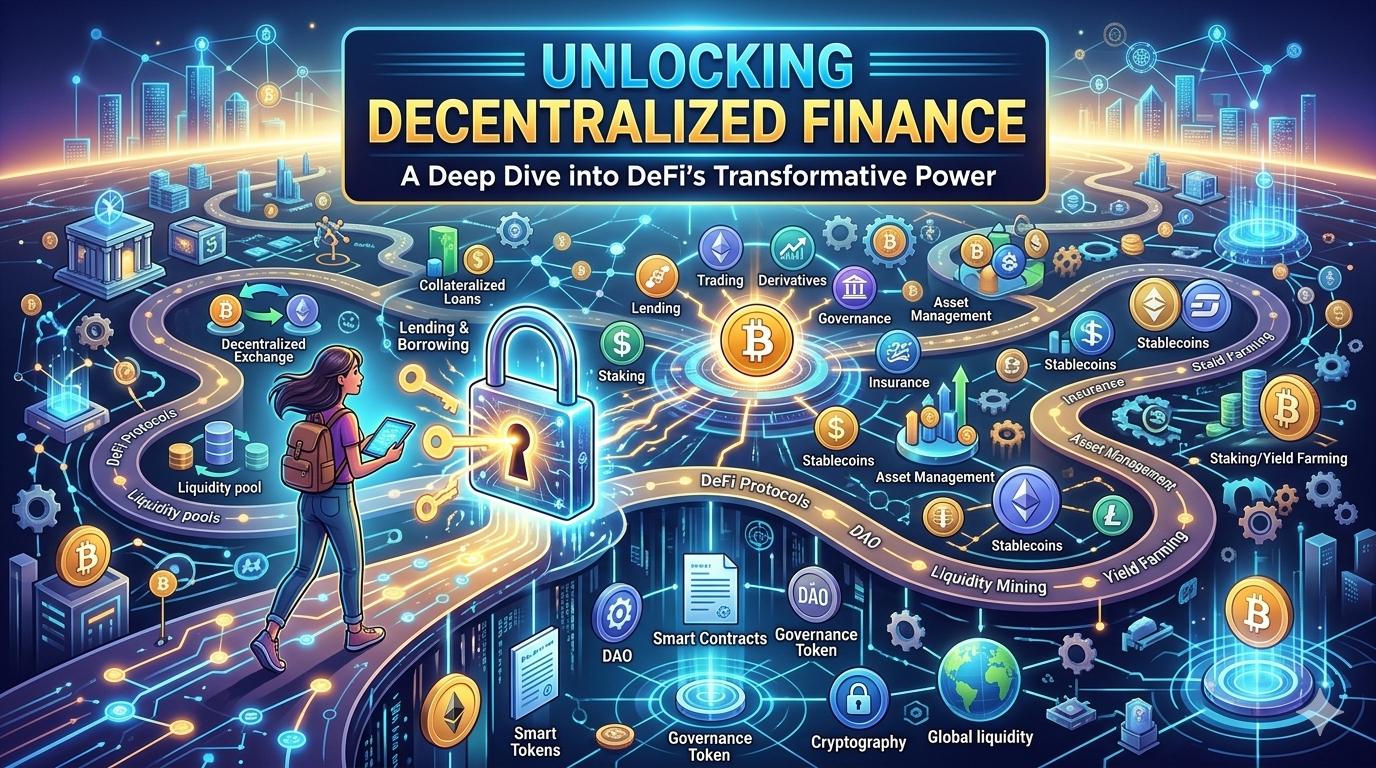
The landscape of finance is undergoing a seismic shift, driven by the burgeoning ecosystem of Decentralized Finance, commonly known as DeFi. At its core, DeFi seeks to recreate traditional financial services – lending, borrowing, trading, and investing – on open, permissionless blockchain networks. This innovative approach offers a compelling alternative to centralized financial institutions, promising greater transparency, accessibility, and user control. The fundamental principle of DeFi lies in its reliance on smart contracts, self-executing agreements with the terms of the agreement directly written into code, ensuring that transactions occur autonomously and without intermediaries. This architectural shift is not merely an upgrade; it represents a paradigm change in how financial interactions can be conducted, empowering individuals with unprecedented financial sovereignty. Exploring the intricacies of Decentralized Finance is crucial for anyone seeking to understand the future trajectory of global financial systems and the transformative potential of blockchain technology.
The Pillars of Decentralized Finance
DeFi is built upon a foundation of several key components that work in concert to create a robust and interconnected financial ecosystem. Understanding these pillars is essential to grasping the full scope of DeFi’s capabilities and its potential to disrupt traditional finance.
Smart Contracts: The Engine of Automation
Smart contracts are the bedrock of DeFi. These self-executing contracts have the terms of the agreement directly written into code. They reside on a blockchain and automatically execute when predetermined conditions are met, eliminating the need for manual intervention or trusted third parties. This automation ensures that processes like loan approvals, collateral management, and asset distribution happen efficiently and transparently, reducing the risk of human error and fraud. The immutability of smart contracts on a blockchain also means that once deployed, their terms cannot be altered, providing a high degree of trust and predictability for users engaging in financial activities.
Decentralized Exchanges (DEXs): Trading Without Intermediaries
Decentralized Exchanges (DEXs) are a cornerstone of the DeFi movement, offering a peer-to-peer platform for trading digital assets. Unlike traditional centralized exchanges that hold user funds and manage order books, DEXs facilitate direct trading between users through automated liquidity pools and smart contracts. This model significantly reduces counterparty risk, as users retain control of their private keys and assets at all times. The integration of automated market makers (AMMs) has further revolutionized DEXs, allowing for continuous liquidity and more efficient price discovery, even for less commonly traded assets. The ability to trade a vast array of digital tokens without relying on a central authority is a powerful testament to the decentralized ethos of DeFi.
Lending and Borrowing Protocols: Peer-to-Peer Financial Services
DeFi lending and borrowing platforms empower individuals to become both lenders and borrowers directly, bypassing traditional banks. Lenders can earn interest on their digital assets by supplying them to liquidity pools, while borrowers can access funds by providing collateral in the form of other digital assets. These protocols operate on the principles of algorithmic interest rates, which adjust dynamically based on supply and demand, ensuring fair market conditions. The transparency of transactions on the blockchain and the collateralization mechanisms inherent in these smart contracts provide a secure and efficient way to access credit and generate passive income. These platforms are rapidly evolving, offering a diverse range of financial products akin to those found in traditional banking.
Stablecoins: Bridging the Volatility Gap
The inherent volatility of many cryptocurrencies presents a significant challenge for widespread adoption in financial applications. Stablecoins emerge as a critical solution, aiming to maintain a stable value, typically pegged to a fiat currency like the US dollar. These digital assets are crucial for DeFi applications as they provide a reliable medium of exchange and a store of value, enabling smoother trading, lending, and payment transactions. Different mechanisms, including fiat-backed, crypto-backed, and algorithmic stablecoins, are employed to maintain their peg, each with its own set of trade-offs regarding decentralization and stability. The reliable performance of stablecoins is foundational for the practical utility of many DeFi services.
The Transformative Impact of DeFi on Financial Inclusion
One of the most profound implications of Decentralized Finance is its potential to foster financial inclusion on a global scale. In many parts of the world, access to traditional banking services remains limited due to geographical barriers, stringent identification requirements, or high fees. DeFi, by contrast, operates on an internet connection and a digital wallet, opening up financial services to a much broader population. Individuals who were previously unbanked or underbanked can now participate in lending, borrowing, and investment opportunities, empowering them to build wealth and improve their financial well-being. This democratization of finance is a key driver behind the rapid growth and innovation seen within the DeFi space.
Navigating the Risks and Future Outlook
While the potential of DeFi is immense, it is essential to acknowledge the inherent risks associated with this rapidly evolving field. Smart contract vulnerabilities, market volatility, regulatory uncertainty, and the potential for user error are all factors that investors and users must carefully consider. The nascent nature of DeFi means that the technology and its governance are still maturing, and a thorough understanding of the underlying protocols and associated risks is paramount. However, as the technology matures and regulatory frameworks become clearer, the promise of a more open, efficient, and inclusive financial future driven by Decentralized Finance appears increasingly attainable. The continuous innovation in areas like interoperability, scalability, and user experience suggests that DeFi will play an increasingly significant role in shaping the future of finance.
The journey into Decentralized Finance is an ongoing exploration of a frontier that challenges conventional financial paradigms. By leveraging the power of blockchain technology and smart contracts, DeFi is paving the way for a more accessible, transparent, and user-centric financial system. As this ecosystem continues to mature and evolve, its capacity to transform individual financial lives and the global economy will undoubtedly become more pronounced.