

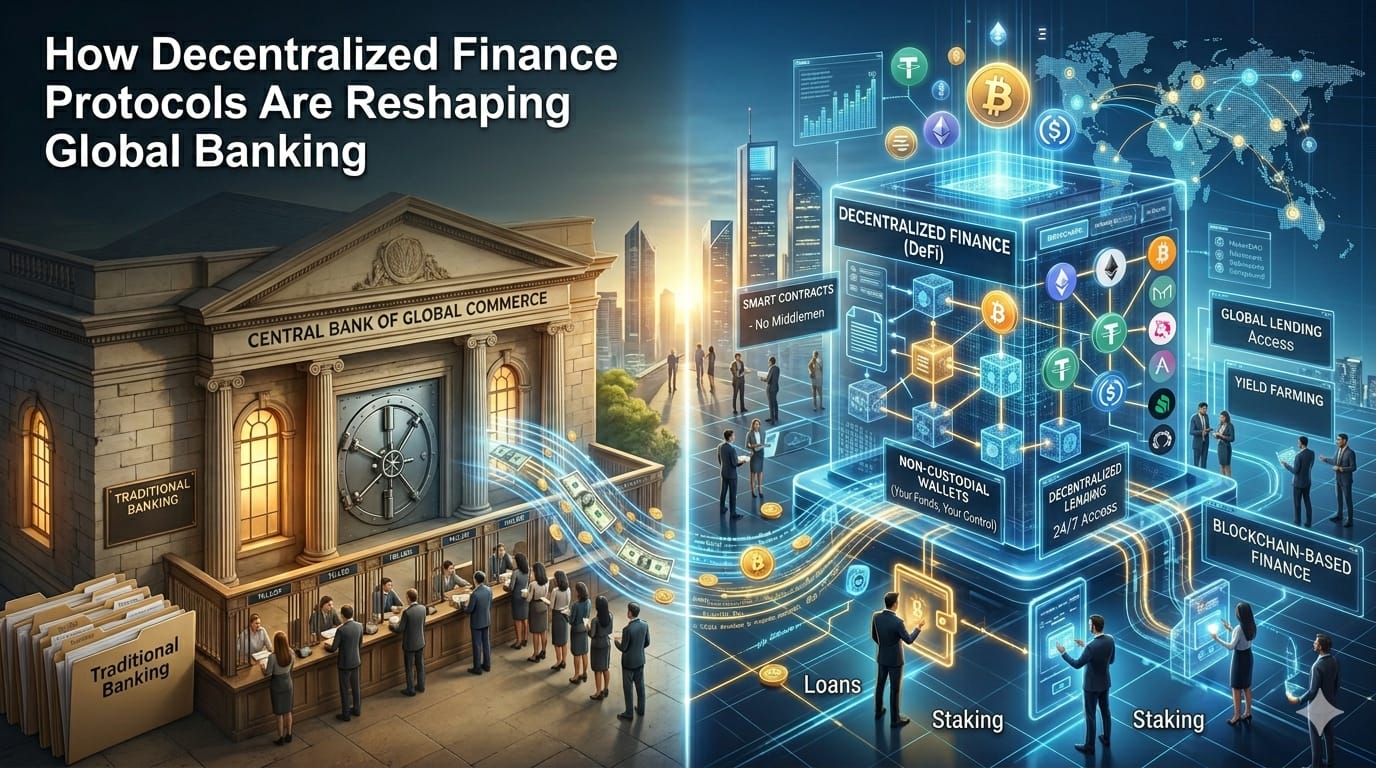
The rapid rise of Decentralized Finance Protocols is fundamentally challenging the traditional foundations of the global banking system. By leveraging blockchain technology, these systems remove the need for traditional intermediaries like banks or clearinghouses. This evolution offers individuals more direct control over their assets and financial destinies than ever before.
As traditional financial institutions struggle with legacy infrastructure, the agility of Decentralized Finance Protocols continues to attract both retail and institutional capital. Users can now engage in complex lending, borrowing, and yield generation activities through transparent, automated smart contracts. This shift is creating a more inclusive financial ecosystem that operates around the clock without geographic restrictions.
The Structural Benefits of Decentralized Finance Protocols
The primary advantage offered by Decentralized Finance Protocols is the principle of complete financial transparency. Every transaction is recorded on an immutable public ledger, allowing anyone to verify the state of the network at any time. This level of auditability is significantly higher than the opaque processes often associated with private banking institutions.
Additionally, these systems are inherently permissionless, meaning anyone with an internet connection can participate. This lowers the barrier to entry for millions of unbanked individuals who previously lacked access to basic credit or savings tools. By democratizing access, these protocols are fostering a new wave of global economic participation.
Efficiency is also greatly improved through the use of automated protocols that execute tasks instantly upon meeting predefined conditions. This removes the manual delays, paperwork, and human error that characterize many legacy banking operations. When you interact with Decentralized Finance Protocols, you benefit from a streamlined process that prioritizes speed and accuracy.
Transforming Asset Management and Liquidity
The Rise of Automated Market Makers
Liquidity provision has been revolutionized by Automated Market Makers, a key component within many Decentralized Finance Protocols. Instead of relying on centralized order books, these systems use algorithmic pools to facilitate continuous trading of digital assets. This mechanism ensures that users can execute trades at competitive prices even in volatile market conditions.
Investors can earn rewards by providing assets to these pools, effectively becoming the market makers themselves. This incentive structure has successfully created massive liquidity pools that rival some of the world’s most prominent traditional exchanges. It represents a fundamental shift in how market depth and stability are achieved in the digital age.
Yield Farming and Portfolio Optimization
Yield farming has emerged as a popular strategy for users looking to maximize returns on their idle digital capital. By navigating various Decentralized Finance Protocols, participants can strategically move their assets to where demand for borrowing is highest. This dynamic approach to capital allocation allows for more efficient wealth generation than static savings accounts.
Sophisticated tools and aggregators are further simplifying this process, allowing users to automate their yield strategies. These platforms scan the ecosystem to find the best risk-adjusted opportunities, reducing the manual effort required to manage a digital portfolio. As these tools become more user-friendly, they are drawing in broader demographics of investors.
Managing Risks in a Decentralized Environment
Understanding Smart Contract Security
While the potential of Decentralized Finance Protocols is immense, users must remain acutely aware of security considerations. Since the entire system runs on code, any vulnerability within a smart contract can potentially lead to asset loss. Diligent research into the audits and reputation of a protocol is essential before committing capital.
Developers are constantly working to improve security through open-source collaboration and rigorous stress testing. Real-time monitoring tools now provide alerts for suspicious activity, allowing for faster responses to potential threats. Staying informed about the underlying security architecture is the best defense against unforeseen technical issues.
Navigating Regulatory Developments
As the sector matures, many jurisdictions are developing frameworks to address the unique nature of these financial tools. Clearer guidelines will likely enhance long-term stability by encouraging more institutional involvement and better consumer protections. Engaging with Decentralized Finance Protocols that prioritize compliance can offer a more stable experience for long-term holders.
The balance between maintaining the core philosophy of decentralization and meeting legal standards remains a hot topic for global innovators. Responsible growth is necessary to ensure that these technologies can reach their full potential without systemic disruption. Thoughtful engagement with the broader community helps shape these evolving standards effectively.
The Future Landscape of Digital Finance
The integration of Decentralized Finance Protocols into the broader financial landscape is just beginning. As interoperability between different blockchain networks increases, we will see even more seamless movement of assets and value globally. This evolution will likely drive further innovation in how we conceive of ownership, credit, and investment.
Looking ahead, the synergy between traditional banking and these new protocols could create a hybrid financial world. This approach would combine the reliability and familiarity of legacy systems with the speed and transparency of modern technology. We are witnessing the dawn of a new financial era where autonomy and efficiency are accessible to all.
For more AI and Future Technology insights, visit:
https://novaastrax.com