

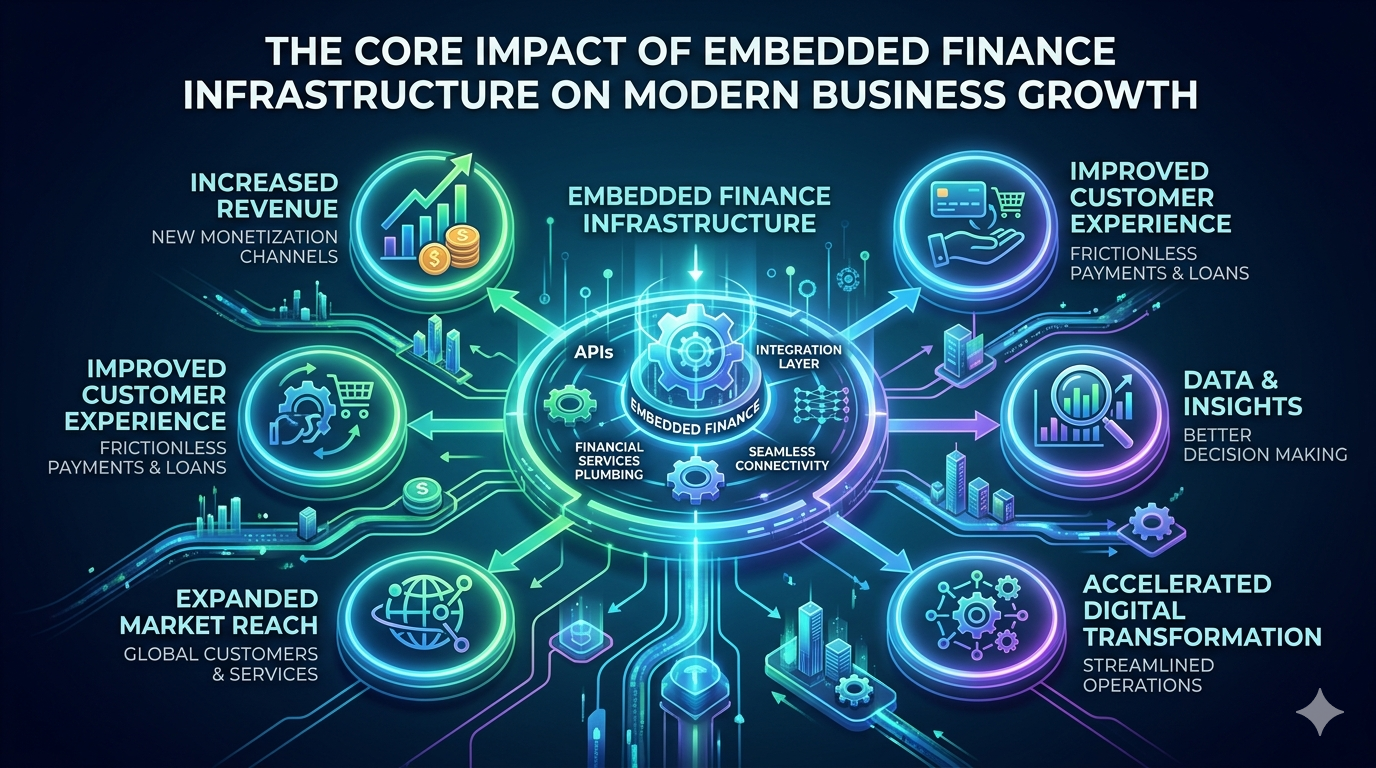
Integrating a robust Embedded Finance Infrastructure into non-financial applications is completely revolutionizing how consumers interact with digital banking services. Businesses can now seamlessly provide specialized financial solutions, such as instant loans or digital wallets, directly within their native ecosystems. This strategic integration eliminates the traditional friction associated with third-party payment gateways and enhances the overall user journey.
By embedding native payment capabilities through a robust Embedded Finance Infrastructure, non-financial brands can significantly increase consumer retention and open entirely new revenue streams. Consumers no longer want to leave their favorite retail or service applications to execute financial transactions. This paradigm shift bridges the deep gap between software companies and traditional banking institutions.
Building this advanced network requires massive cloud capabilities, secure Application Programming Interfaces, and regulatory compliance networks. Brands that successfully implement these integrated systems can capture market share much faster than legacy competitors. The landscape of digital commerce is shifting from standalone applications to highly integrated, multi-functional software suites.
Understanding the Power of Embedded Finance Infrastructure
At its core, Embedded Finance Infrastructure acts as a software bridge connecting traditional commercial banks with consumer-facing digital platforms. Historically, setting up automated payment workflows or micro-lending features required months of intensive legal negotiations and specialized engineering work. Today, pre-built developer modules allow non-financial corporations to launch compliant financial services in a fraction of the time.
This democratization of financial services empowers micro-entrepreneurs and large enterprise brands alike to operate like modern digital banks. By capturing granular consumer transaction data safely, platforms can tailor individual credit offerings or loyalty incentives perfectly. This highly predictive mechanism lowers transaction defaults and elevates customer lifetime value metrics.
The Strategic Role of Open Banking Protocols
The expansion of open banking systems provides the technical fuel necessary for modern software architectures to communicate safely. Secure data sharing pipelines allow consumer platforms to authenticate credit history and identity records instantly during the checkout process. This seamless information exchange forms the backbone of modern frictionless commerce models.
Furthermore, open banking standards minimize the reliance on expensive corporate intermediaries that traditional institutions utilize to manage data assets. Reducing these middle layers drastically slashes transaction processing fees for the end merchant. This economic efficiency can be passed directly down to the consumer in the form of competitive pricing structures.
How Embedded Finance Infrastructure Streamlines Digital Payments
Optimizing an Embedded Finance Infrastructure allows modern e-commerce enterprises to offer customized point-of-sale financing effortlessly. Buy Now, Pay Later modules are seamlessly written into the application architecture, enabling instant risk assessment at the checkout page. This instant underwriting capability boosts average cart values and dramatically lowers cart abandonment rates.
Traditional lending models often alienate modern consumers due to tedious physical paperwork requirements and delayed approval times. Automated credit scoring protocols evaluate alternative transaction data instantly to deliver rapid approval decisions without human error. This immediate gratification encourages higher transaction volumes across digital retail networks.
Enhancing B2B Supply Chain Operations
The benefits of an integrated Embedded Finance Infrastructure extend far beyond individual consumer transactions into complex business-to-business supply chain networks. Wholesale vendors can integrate automated invoicing, instant factoring, and real-time vendor credit lines directly into their logistics software. This automation ensures smooth cash flow states even during periods of heavy manufacturing expansion.
Eliminating manual verification processes allows automated payment systems to execute instant settlements the moment a delivery is verified digitally. This level of transactional speed reduces operational friction between global trade partners significantly. Businesses can operate with lean working capital structures while maintaining excellent supplier relationships.
Securing Micro Transactions and Digital Wallets
As gig economies grow globally, freelance service platforms require specialized payment systems that support instant micro-payouts. A standard Embedded Finance Infrastructure allows freelance networks to deploy custom branded digital wallets for millions of distributed workers. This feature enables workers to access their hard-earned capital instantly without waiting for monthly bank clearing cycles.
Providing immediate access to funds serves as a powerful competitive advantage for platforms competing for top talent worldwide. Branded wallets can also offer native debit cards that allow users to spend their account balances directly at physical retail stores. This comprehensive ecosystem keeps capital circulating within the platform network seamlessly.
Mitigating Complex Cybersecurity Risks
Handling sensitive financial information internally exposes digital platforms to massive data breach risks and stringent regulatory penalties. Advanced foundational infrastructure solves this vulnerability by using sophisticated tokenization and end-to-end data encryption. Financial data is securely processed through isolated banking vaults, keeping the merchant out of regular regulatory scope.
Continuous machine learning security audits monitor transaction flows to spot anomalous behavior patterns before fraud can occur. These real-time defensive systems analyze geolocation data, purchasing habits, and biometric identifiers instantly. Protecting consumer wealth and identity remains the highest priority for modern tech architectures.
The Future Global Reach of Integrated Ecosystems
The ultimate realization of a modern Embedded Finance Infrastructure will completely change how global software companies plan their monetization models. SaaS platforms will no longer rely solely on monthly software subscription charges to sustain long-term growth. Instead, they will generate predictable recurring revenue streams from every transaction running through their software layer.
This profound monetization shift allows software developers to subsidize core application costs and offer richer free-tier options to global users. As a result, cutting-edge software solutions become affordable to developing economic regions, boosting global digital inclusion. The convergence of software and finance creates a more equitable distribution of technology tools.
Maximizing Operational Efficiency Through Automation
Manual bookkeeping and ledger reconciliation can drain valuable corporate resources and introduce administrative input errors. Automated ledger engines within modern financial networks synchronize every commercial transaction directly with corporate accounting software. This immediate synchronization gives executive teams an accurate, real-time picture of corporate financial health.
Having instant access to flawless financial metrics empowers businesses to make confident, data-driven scaling decisions quickly. Corporate leaders can allocate capital toward research and development pipelines without waiting for delayed quarterly accountant reports. Precision execution replaces guesswork in the modern corporate boardroom environment.
Regulatory Compliance and Scalability in Embedded Finance Infrastructure
Navigating the intricate maze of international banking regulations is one of the steepest hurdles for expanding tech platforms. Utilizing a certified Embedded Finance Infrastructure allows startups to inherit pre-configured compliance frameworks instantly, including Know Your Customer protocols. This embedded security ensures your business meets international anti-money laundering standards without hiring massive legal teams.
Scalability becomes effortless when your core financial architecture is built on flexible, cloud-native APIs designed for high transaction volume. Whether your platform processes one hundred or one million transactions daily, the cloud system scales resources dynamically to prevent downtime. This infrastructure stability protects your brand reputation during peak seasonal shopping rushes.
Final Thoughts on Modern Financial Integration
Embracing automated banking integrations is no longer a luxury choice reserved for elite tech corporations looking to experiment. It has quickly become a critical survival metric for any consumer-facing application looking to remain relevant in a digital economy. Platforms that fail to adapt will struggle against competitors who offer effortless, integrated payment options.
As cloud capabilities advance, building these intuitive experiences will become even simpler and more cost-effective for growing startups. The future belongs to smart software applications that respect consumer time by managing both utility and finance under one single roof. Deploying a flexible Embedded Finance Infrastructure ensures long-term market leadership.
For more AI and Future Technology insights, visit: