
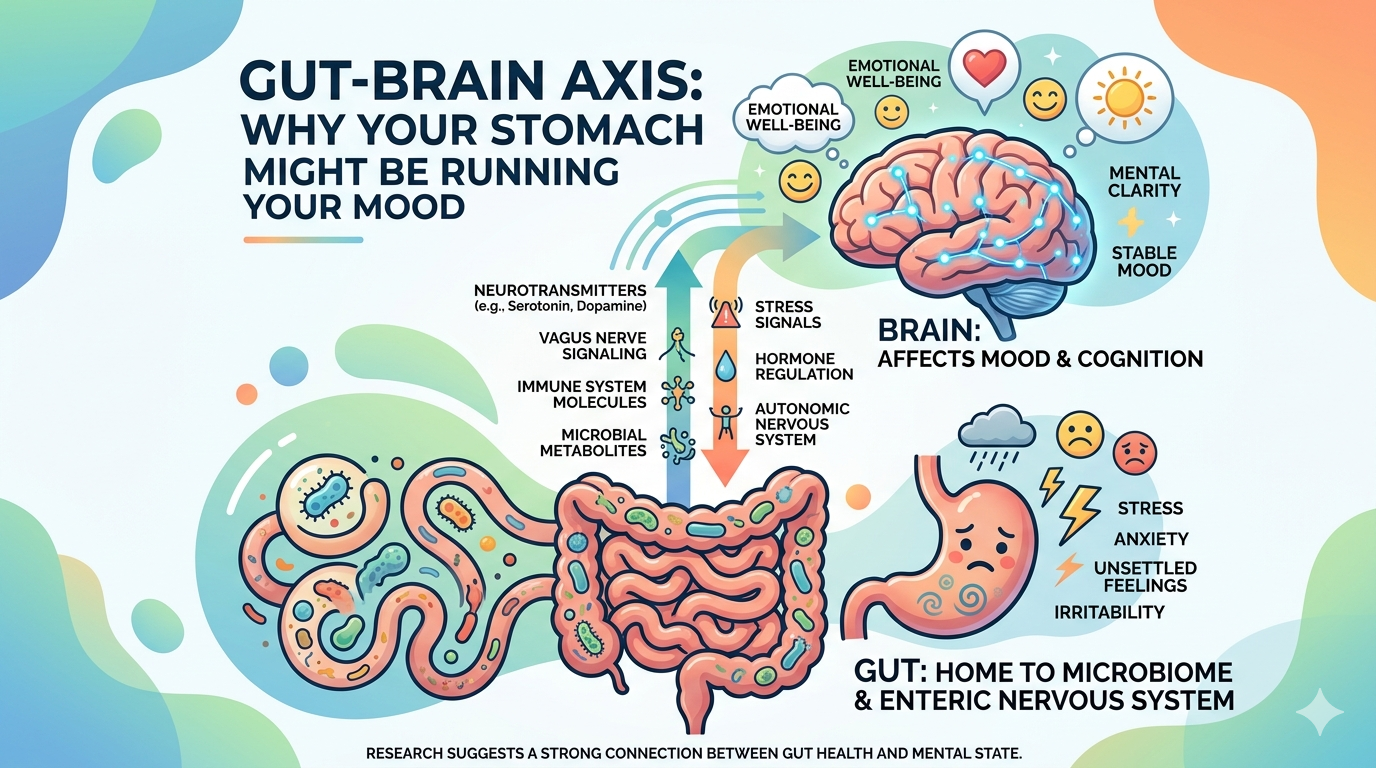
You’ve probably said it without thinking twice — “I had a gut feeling” or “that news made my stomach turn.” Turns out, those phrases aren’t just figures of speech. Scientists have spent the last decade mapping something called the gut-brain axis, and what they’re finding is changing how we think about anxiety, focus, and even depression. Your stomach isn’t just digesting lunch. It’s talking to your brain, constantly, whether you notice it or not.
What Exactly Is the Gut-Brain Axis
Think of it as a two-way phone line running between your digestive system and your central nervous system. The vagus nerve is the main cable connecting the two, but it’s not the only one. Trillions of bacteria living in your gut — collectively called the gut microbiome — produce chemicals that influence this conversation directly.
Here’s the part that surprises most people: roughly 90 percent of your body’s serotonin, the neurotransmitter tied to mood and calm, is made in the gut, not the brain. Dopamine production is influenced there too. So when someone says their digestion feels “off” during a stressful week, that’s not a coincidence. It’s biology doing exactly what it’s designed to do.
How an Unhealthy Gut Affects Your Mood
A gut that’s out of balance — too few beneficial bacteria, too much inflammation, poor diversity in the microbiome — doesn’t stay quietly in your stomach. It shows up elsewhere, and often in ways people don’t immediately connect back to digestion.
You might notice low energy that sleep doesn’t seem to fix, or a kind of mental fog that makes it hard to focus on simple tasks. Some people feel mood swings that don’t line up with anything actually going on in their life, or a bump in anxiety that seems to flare up around meals or social situations. Bloating that gets noticeably worse during a stressful week is another common one — and it’s rarely a coincidence.
Scientists looking into this have noticed something interesting: when inflammation starts in the gut, it can set off an immune response that eventually reaches the brain, and the result often looks a lot like depression. That overlap is exactly why doctors are starting to treat gut health and mental health as connected, instead of handling them in completely separate appointments.
Foods That Support a Healthier Gut-Brain Axis
You don’t need an extreme overhaul to start shifting things in a better direction. Small, consistent changes tend to outperform dramatic ones anyway.
Fermented Foods
Yogurt, kefir, kimchi, sauerkraut, and miso introduce live beneficial bacteria directly into your system. A bowl of plain yogurt with breakfast does more for your microbiome than most supplements marketed for the same purpose.
Fiber-Rich Plants
Beneficial gut bacteria feed on fiber, particularly the kind found in oats, lentils, beans, and leafy greens. As that fiber breaks down in your colon, it gets converted into compounds that calm inflammation and keep the gut lining healthy — which is part of why a fiber-light diet so often comes with digestive complaints.
Polyphenol-Heavy Foods
Berries, dark chocolate, green tea, and olive oil contain polyphenols that feed good bacteria while suppressing some of the less helpful strains. They’re easy to add without restructuring your entire diet.
What to Minimize
Highly processed foods, excess added sugar, and artificial sweeteners have all been linked to reduced microbial diversity. You don’t have to eliminate them completely, but cutting back noticeably changes how your gut behaves over a few weeks.
Lifestyle Habits That Matter Just as Much as Diet
Food gets most of the attention, but it’s only part of the gut-brain axis story.
Sleep quality directly affects gut bacteria. Poor sleep reduces microbial diversity within days, and the relationship runs both ways — an unhealthy gut can also disrupt sleep. Prioritizing a consistent bedtime does more for your microbiome than people expect.
Chronic stress reshapes the gut environment too. Cortisol doesn’t just affect your mood — over time it changes how permeable your gut lining is and shifts the balance of bacteria living there. Even short daily practices like a ten-minute walk, slow breathing, or stepping outside without your phone can measurably lower that stress load.
Movement supports microbial diversity. You don’t need intense workouts. Regular, moderate movement — walking, cycling, swimming — has been shown to increase beneficial bacterial strains compared to a sedentary routine.
When to Consider Talking to a Professional
Occasional bloating or an off mood after a rough week is normal and rarely a red flag. Where it’s worth paying closer attention is when digestive trouble sticks around for weeks, shows up alongside ongoing anxiety or low mood, or starts getting in the way of daily life. At that point, a conversation with a doctor or registered dietitian is going to serve you better than another late-night search session — gut-related symptoms can overlap with several different conditions, and an actual diagnosis beats a guess every time.
Frequently Asked Questions
What is the gut-brain axis, in plain English?
Basically, it’s the line of communication running between your stomach and your skull — mostly carried by the vagus nerve, with help from chemicals your gut bacteria produce. It’s the reason a stressful day can leave you with a knotted stomach, and why a struggling gut can drag your mood down with it.
Do probiotics genuinely help with mood?
A handful of studies say yes, at least modestly, for certain probiotic strains people now call psychobiotics. Don’t expect them to work miracles on their own, though — they tend to help most when sleep and diet are already in decent shape, not as a replacement for those things.
How soon will I notice a difference if I work on my gut health?
Digestion usually responds first, sometimes within a week or two of eating better. Mood-related changes take longer because they depend on actual shifts in microbial diversity, which generally needs four to eight weeks of sticking with new habits.
Is there a real link between gut health and anxiety, or is that overstated?
It’s real. Multiple studies tie gut inflammation and a less diverse microbiome to higher anxiety, and a chunk of that comes down to the fact that your gut is where a lot of your serotonin and dopamine actually get made.
Should I just take supplements instead of changing my diet?
You could, but whole foods tend to outperform pills here. Fermented vegetables, fiber, and polyphenol-rich foods do more for your gut than most supplement bottles claim to — save the supplement conversation for your doctor if diet alone isn’t cutting it.
The Bottom Line
Your gut and your brain were never separate systems pretending to work independently. The gut-brain axis is in constant conversation, and the food, sleep, and stress patterns you live with every day shape what that conversation sounds like. None of this requires perfection. A little more fiber, a touch more sleep, and a slightly calmer nervous system go a longer way than most people expect — and your mood is often the first place that improvement shows up.