Circulation and Official Launch
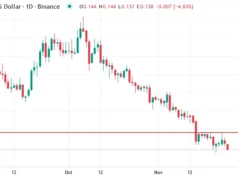
Following a year-long pilot phase, the rand-pegged token eZAR officially opened to the public and institutional partners on November 2. Data from the launch indicates that as of October 30, there were R303 million worth of tokens currently in circulation.
The project is a collaborative effort between eZAR Ltd, asset manager Ninety One, and AVBOB Financial Services, with the latter serving as the lead liquidity partner. CEO Sean Emery noted that the team prioritized operational stability over rapid growth during the pilot, but the platform is now prepared for broader adoption. The system is designed to allow retailers, neobanks, and insurers to integrate the token into their own branded wallets, facilitating instant, zero-cost transactions between participants.
The Money Market Model
Unlike standard stablecoins, eZAR utilizes a money market reserve strategy. The reserves are primarily managed through the Ninety One Money Market Fund. Returns are processed daily, minus partnership fees, at which point individual partners determine how to distribute these gains to their users.
Adam Duxbury, head of digital assets at Ninety One, stated that the firm has spent 25 years managing money market strategies. He emphasized that South Africa should focus on developing its own digital currency solutions rather than relying on imported, dollar-denominated alternatives.
Regulatory and Risk Disclosures
eZAR distinguishes itself from traditional stablecoins through its risk disclosures. It is classified as a crypto asset issued by the eZAR En Commandite Partnership, with clear warnings that it is not a bank deposit, legal tender, or a guaranteed banking product. Key risks include:
- Redemption values at R1 are subject to liquidity availability.
- Returns from the money market fund can be negative, meaning capital is at risk.
- Holders do not have direct ownership of the underlying assets in the reserve fund.
These features align with observations from a March report by Blockhouse, which suggested that eZAR may not meet the regulatory criteria typically required for a stablecoin.
Global Regulatory Friction
The inclusion of yield creates potential friction with international frameworks like the US GENIUS Act and the EU’s MiCA, both of which generally discourage payment-focused tokens from offering interest to avoid functioning as unregulated deposits. While eZAR operates outside these jurisdictions, its hybrid structure—where partners pass on returns—places it in a complex gray area that regulators are currently scrutinizing.
Why it matters
eZAR represents a significant experiment in blending digital payment utility with investment-style returns, effectively challenging the industry standard for what constitutes a stablecoin. By prioritizing yield, the project forces a critical conversation about whether digital assets should be strictly regulated as currency or if there is space for hybrid financial instruments that carry inherent investment risks.

Nova Astrax covers crypto, fintech, finance, health and wellness, AI and future tech, and practical life hacks — with original analysis and daily news from around the world.