Key Takeaways
- Standard Chartered predicts LINK could hit $200 by 2030, driven by the expansion of tokenized assets.
- Technical indicators remain bearish, with the token currently trading below its primary moving averages.
- Market participants are monitoring the $7 support level closely as the asset navigates a period of selling pressure.
Standard Chartered has issued a long-term price target for Chainlink (LINK), banking on the idea that increased demand for cross-chain connectivity will bolster the token. This optimistic outlook arrives while the asset is experiencing a persistent monthlong decline.
While institutional interest in blockchain pilots continues to grow, these initiatives have yet to translate into significant revenue for token holders. Furthermore, interest from spot ETF investors has cooled, leading to recent capital outflows. Investors are now left to determine if current price floors can hold until broader adoption begins to materialize.
Long-Term Outlook Amidst Testnet Partnerships
The bank projects that LINK will reach a valuation of $200 by the end of 2030, representing a potential 22x increase from current prices. This forecast is anchored to expectations that the tokenized asset market will reach $4 trillion by the end of 2028. As Chainlink provides the infrastructure for data and value transfers between blockchains, the bank anticipates increased adoption will drive demand for its services.
Notable entities are already utilizing this infrastructure. On Nov 10, Moody’s initiated a credit-data pilot using Chainlink’s Cross-Chain Interoperability Protocol (CCIP), though it remains in the testnet phase. Similarly, Hanwha Investment & Securities integrated CCIP into its tokenization platform on Oct 29. Currently, these projects do not provide direct fee revenue to LINK holders.
Meanwhile, ETF investors have shown signs of waning confidence. By Nov 16, cumulative net inflows for spot funds GLNK and CLNK dropped to $174.4 million following four consecutive days of outflows. Total net assets for these funds declined by approximately 30%, reaching $157.5 million. LINK is currently trading 82.7% below its all-time high of $52.70.
Technical Analysis: Bearish Trends Persist
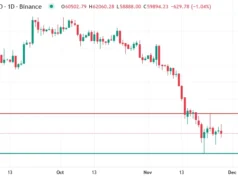
As of Tuesday, LINK was trading near $9.14, reflecting a 2% daily loss and a monthly decline of roughly 24%. The current chart setup remains challenging for buyers.
Following a price of approximately $12 on Oct 21, the token slid below $9 by the middle of November. This downward movement has established a clear trading range, with the October peak acting as resistance and the mid-November lows serving as support.
The 50-day moving average is currently at $11.08, while the 200-day moving average sits at $10.88. Because LINK is trading below both of these key lines, the technical outlook remains bearish, as these averages function as significant overhead resistance. A recovery would require a daily close above the 200-day moving average to signal a potential shift in market sentiment.
Momentum and Support Levels
Current momentum indicators remain weak, with the Relative Strength Index (RSI) hovering near 33. While not yet in the oversold category, the reading suggests that sellers maintain control.
The Moving Average Convergence Divergence (MACD) remains below its signal line, further confirming the downward trend. Significant support is identified at $7.83; should this level fail, the $7 mark becomes the next critical test for the asset. Conversely, upside resistance levels are located at $10.27 and $10.91.
Short-Term Scenarios
- Bullish Path: A daily close above the initial resistance level could pave the way for a test of the 200-day moving average, signaling that buying pressure is absorbing current supply.
- Bearish Path: A break below the $7.83 support level would likely lead toward the $7 floor, potentially pushing the asset toward new lows for this cycle.
Why it matters
Standard Chartered’s high-value target highlights the long-term institutional belief in Chainlink as essential infrastructure for the future of finance. However, the current technical weakness and outflows from spot ETFs serve as a reminder that fundamental adoption remains disconnected from immediate price performance.

Nova Astrax covers crypto, fintech, finance, health and wellness, AI and future tech, and practical life hacks — with original analysis and daily news from around the world.