
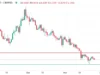
Bitcoin faced renewed downward pressure on November 25, 2026, dipping below the psychological threshold of $60,000. This decline reflects a broader market anxiety triggered by recent trade policy announcements from Washington. President Trump has proposed new tariffs on 16 trading partners under a Section 301 investigation, creating significant uncertainty regarding industrial trade capacity.
Market Reaction to Trade Policy
The announcement immediately impacted global markets, particularly in Asia. South Korean equities dropped by 6.4%, Taiwan saw an 8.6% decline, and Japan’s Nikkei index also retreated. Semiconductor stocks bore the brunt of this sell-off, with Nvidia shares falling 4.87%. Because Bitcoin has been trading with a high correlation to the tech sector throughout November, these developments effectively neutralized the recent rebound momentum in the crypto market.
Chris Weston, head of research at Pepperstone, noted that traders are currently hesitant to deploy significant capital based solely on news headlines. Beyond trade fears, market participants are increasingly concerned about the potential return of US debt ceiling negotiations, which adds another layer of caution to an already risk-averse environment.
The ETF and Technical Landscape
The current market weakness is underscored by consistent outflows from spot Bitcoin ETFs. On November 24, these funds recorded approximately $232 million in net outflows, marking the sixth consecutive day of capital flight. BlackRock’s IBIT fund was particularly affected, losing $175 million in a single day and totaling roughly $4.2 billion in outflows for November. Bitwise analyst Camran Khosravi attributed these trends to a combination of Fed policy signals and broader tech-sector volatility.
Technically, Bitcoin is showing signs of being oversold, with its daily Relative Strength Index (RSI) hovering around 23. While such levels often precede a bounce, the current trend remains bearish. Key technical factors include:
- Resistance levels: The immediate hurdle for bulls is $62,000, followed by $65,000.
- Moving averages: The 50-day average at $72,000 and the 200-day average at $75,000 act as significant overhead ceilings.
- Support levels: The critical floor for the asset is located near $55,000; a break below this point could trigger further aggressive selling.
Why it matters
The current price action demonstrates how deeply integrated Bitcoin has become with traditional tech-driven macro assets, making it highly sensitive to trade-related volatility. Investors are currently trapped in a wait-and-see cycle where only sustained inflows into ETFs or a stabilization of semiconductor stocks are likely to provide the catalyst needed to reverse the prevailing bearish trend.
Related reading
- Justice Department Announces Record-Breaking Crackdown on International Scams and Crypto Fraud
- When Disaster Recovery Mechanisms Trigger System Failures
- Chainlink Price Struggles Despite Major UBS Tokenization Pilot

Nova Astrax covers crypto, fintech, finance, health and wellness, AI and future tech, and practical life hacks — with original analysis and daily news from around the world.









[…] Bitcoin Struggles Below $60K Amid Trade Tensions and ETF Outflows […]