Market Overview and Recent Price Action
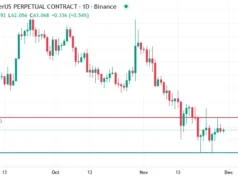
Monero (XMR) has experienced significant downward pressure this week, marked by a 20% decline on November 26. This sharp drop followed the announcement from the KuCoin exchange that it intends to terminate all four of its Monero spot trading markets. The privacy-focused cryptocurrency saw its most substantial single-day loss since June 4, with prices sliding from approximately $430 to $405.
KuCoin confirmed that the markets for XMR/USDT, XMR/USDC, XMR/ETH, and XMR/BTC will cease operations at 08:00 UTC on November 30. All open orders will be canceled, and the platform has already disabled deposits. While withdrawals remain active until December 31, other services such as Flexible Savings, trading bots, and conversion tools are being phased out in the days leading up to the market closure.
The Impact of Exchange Restrictions
KuCoin is not the only venue restricting access to the token; MEXC has also removed its XMR spot pairs and the XMR/DASH perpetual contract. According to data from TRM Labs, there have been 73 separate Monero delistings throughout 2025. These collective actions are forcing liquidity into fewer venues, which market observers warn can exacerbate price volatility. When order books become thinner, even modest sell orders can lead to disproportionate price swings.
Despite these challenges, alternative methods for trading exist. A recent release for Eigenwallet now provides support for native BTC-XMR atomic swaps, allowing users to engage in decentralized exchanges without relying on a centralized intermediary.
Technical Outlook and Key Levels
Currently, XMR is trading near $424, representing a modest 4% recovery from its lows, though it remains down approximately 7% for the week. The broader trend remains negative, with the asset having lost 29% of its value over the past 30 days. Technically, Monero is trading below both its 50-day average, which sits near $529, and its 200-day average near $474.
Traders view these moving averages as significant resistance levels. When an asset trades below these lines, they often act as ceilings that hinder upward momentum. Current momentum indicators, including the RSI at 34 and a bearish MACD, suggest that sellers maintain control. To shift the trend, buyers would need to reclaim the 200-day moving average, whereas a failure to hold recent lows could expose the token to further downside, with support levels not appearing until the $180 and $166 marks.
Why it matters
The systematic removal of Monero from major centralized exchanges represents a significant shift in how privacy-focused assets are integrated into the global crypto market. By reducing access points, these delistings increase the risk of heightened volatility and may force users toward decentralized alternatives like atomic swaps, fundamentally altering the liquidity landscape for XMR.
Related reading
- Why Response Time is No Longer Enough in the Era of AI-Driven Cyber Threats
- Ethereum ETF Outflows Mount Amid Divergent Price Forecasts
- A Strategic Framework for Peace on the Korean Peninsula
Source: cryptodaily.co.uk

Nova Astrax covers crypto, fintech, finance, health and wellness, AI and future tech, and practical life hacks — with original analysis and daily news from around the world.