The Divergence Between Network Utility and Token Value
The Stellar network is currently experiencing a significant disconnect between its expanding ecosystem and the market performance of its native token, XLM. While institutional adoption and the volume of tokenized assets on the blockchain continue to reach new milestones, XLM has faced a persistent downward trend, losing approximately 24% of its value over the past month. This creates a challenging environment for investors as they weigh the network’s long-term utility against current selling pressure.
Institutional Adoption and Asset Milestone
As of November 13, the Stellar Development Foundation reported that the total value of tokenized assets on the network has surpassed $5 billion. This growth is driven primarily by two major products: Spiko, which accounts for roughly $2.1 billion, and the Franklin Templeton Benji fund, contributing approximately $1.6 billion. The network continues to attract significant institutional interest, with the DTCC planning to support Stellar-based tokenized assets by the first half of 2027. Additionally, Securitize announced its own integration plans in late October, joining MoneyGram, which already utilizes the network for payment services across more than 170 countries.
Market Dynamics and Price Technicals
Despite this robust activity, XLM price performance has suffered due to the network’s design. Because Stellar facilitates transactions with extremely low fees, increased network usage does not necessarily create proportional demand for the XLM token. Furthermore, the market is pressured by a significant supply of unreleased tokens. With 35.49 billion XLM circulating out of a total supply of roughly 50 billion, dilution remains a primary concern for market participants.
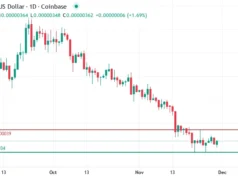
Technical indicators reflect a bearish sentiment. XLM is currently trading near $0.12, well below its 50-day moving average of $0.15 and its 200-day moving average of $0.18, both of which now serve as resistance levels. While the Relative Strength Index (RSI) sits at 31, suggesting the asset is nearing oversold territory, and the MACD has shown a potential slowing in the pace of the decline, sellers remain in control of the trend. Market observers are closely watching the $0.12 support level; a breach below this point could expose the price to further downside toward $0.07.
Why it matters
The situation highlights a common dilemma in the blockchain industry where fundamental network growth does not always translate into immediate token appreciation. Investors are effectively waiting to see if institutional infrastructure projects can eventually create enough demand to offset the inflationary pressure of the circulating supply.
Related reading
- Southeast Asia Tourism Faces Global Economic and Geopolitical Headwinds
- Shiba Inu Struggles Near Annual Lows as Massive Supply Dampens Recovery Hopes
- Why UN Biodiversity Goals And Global Conferences Pose Greater Risks Than Climate Frameworks
Source: cryptodaily.co.uk

Nova Astrax covers crypto, fintech, finance, health and wellness, AI and future tech, and practical life hacks — with original analysis and daily news from around the world.