


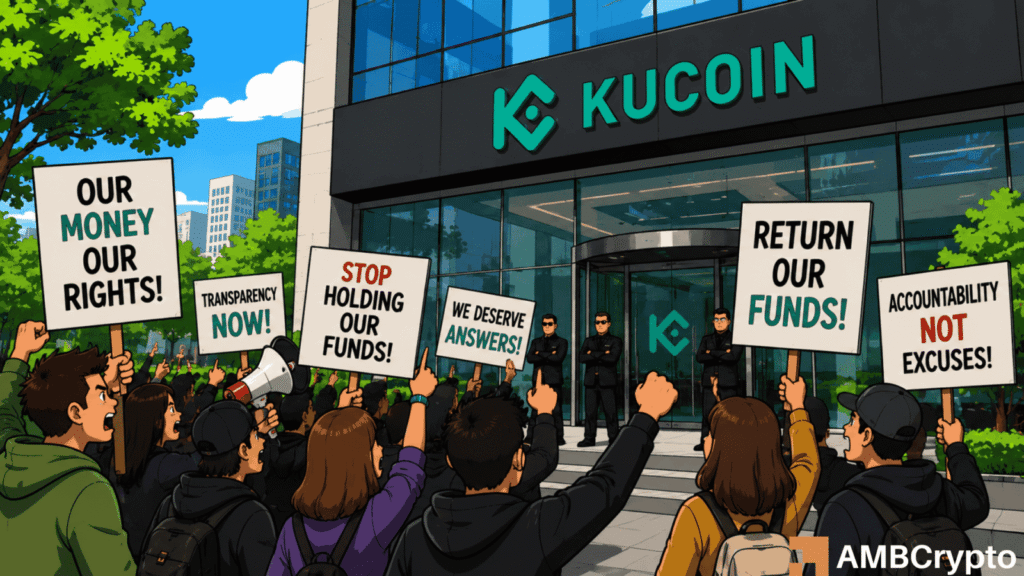
Fresh allegations involving KuCoin are reigniting debate over how centralized crypto exchanges handle stolen funds, law enforcement requests, and blockchain-based financial crime as compliance standards across the industry continue evolving.
The latest controversy emerged after blockchain investigator ZachXBT responded to a user on X who claimed a hacked Trust Wallet resulted in the loss of 15 years of savings, with funds allegedly transferred through KuCoin.
In response, ZachXBT alleged that KuCoin “does not assist victims or law enforcement” and claimed the exchange allows illicit activity to continue “as long as it generates fees.”
The investigator also referenced previous incidents involving alleged laundering activity tied to KuCoin deposit addresses and shared wallet addresses he claimed were connected to illicit fund flows.
KuCoin had not publicly responded to the latest allegations at the time of writing.
Exchange compliance is becoming a larger competitive issue
The dispute reflects a broader shift across crypto markets, where exchanges are increasingly judged not only on liquidity and product offerings but also on their responsiveness to hacks, scams, and law enforcement investigations.
That pressure has intensified as regulators worldwide place greater emphasis on anti-money laundering controls, transaction monitoring, and customer protection standards.
The debate also comes just days after Coinbase publicly highlighted its role in assisting UK authorities in a kidnapping and crypto-robbery investigation.
In an 18 May report, Coinbase said its internal monitoring systems detected suspicious account activity while the crime was still underway. It allowed the exchange to alert law enforcement and assist investigators through blockchain tracing and forensic analysis.
The company later said its investigation contributed to multiple convictions tied to kidnapping, robbery, and money laundering offenses.
Exchanges increasingly position themselves as security infrastructure
The contrast between the Coinbase case and the allegations now circulating around KuCoin highlights how centralized exchanges are increasingly operating as compliance and intelligence platforms rather than simple trading venues.
Large exchanges now maintain internal analytics teams, blockchain monitoring systems, sanctions screening infrastructure, and dedicated law enforcement response units.
That evolution is becoming increasingly important as crypto adoption expands beyond speculative trading and deeper into mainstream finance.
At the same time, critics argue that inconsistent cooperation standards across jurisdictions and exchanges continue creating gaps in how stolen funds are tracked or frozen after hacks and scams.
The latest claims involving KuCoin remain unverified allegations made publicly on social media. However, the growing attention on exchanges’ responses to illicit activity suggests that compliance reputation is becoming a far more important competitive factor across the crypto industry.
Final Summary
- Fresh allegations involving KuCoin and comments from ZachXBT have renewed scrutiny around how crypto exchanges respond to stolen funds and law enforcement requests.
- The debate comes as exchanges increasingly compete on compliance capabilities, blockchain monitoring, and security infrastructure alongside traditional trading services.

