

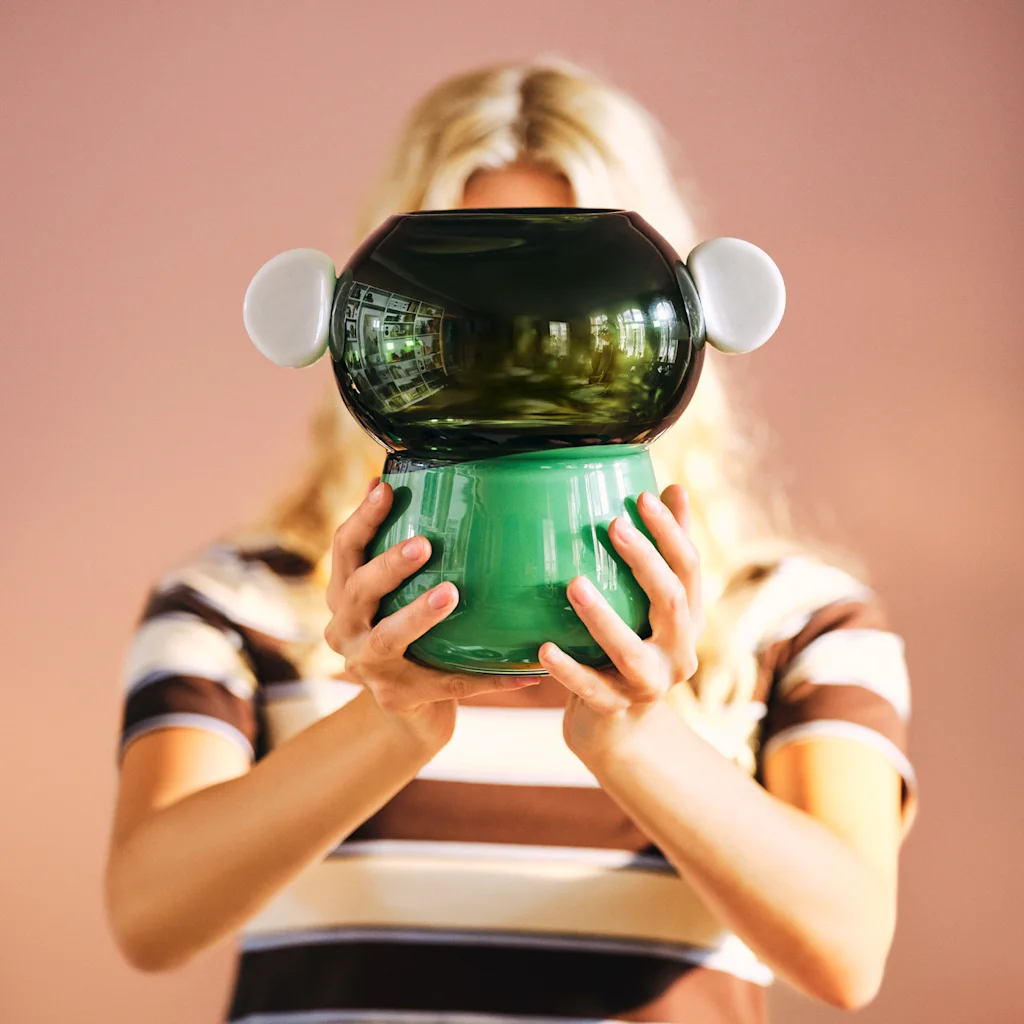
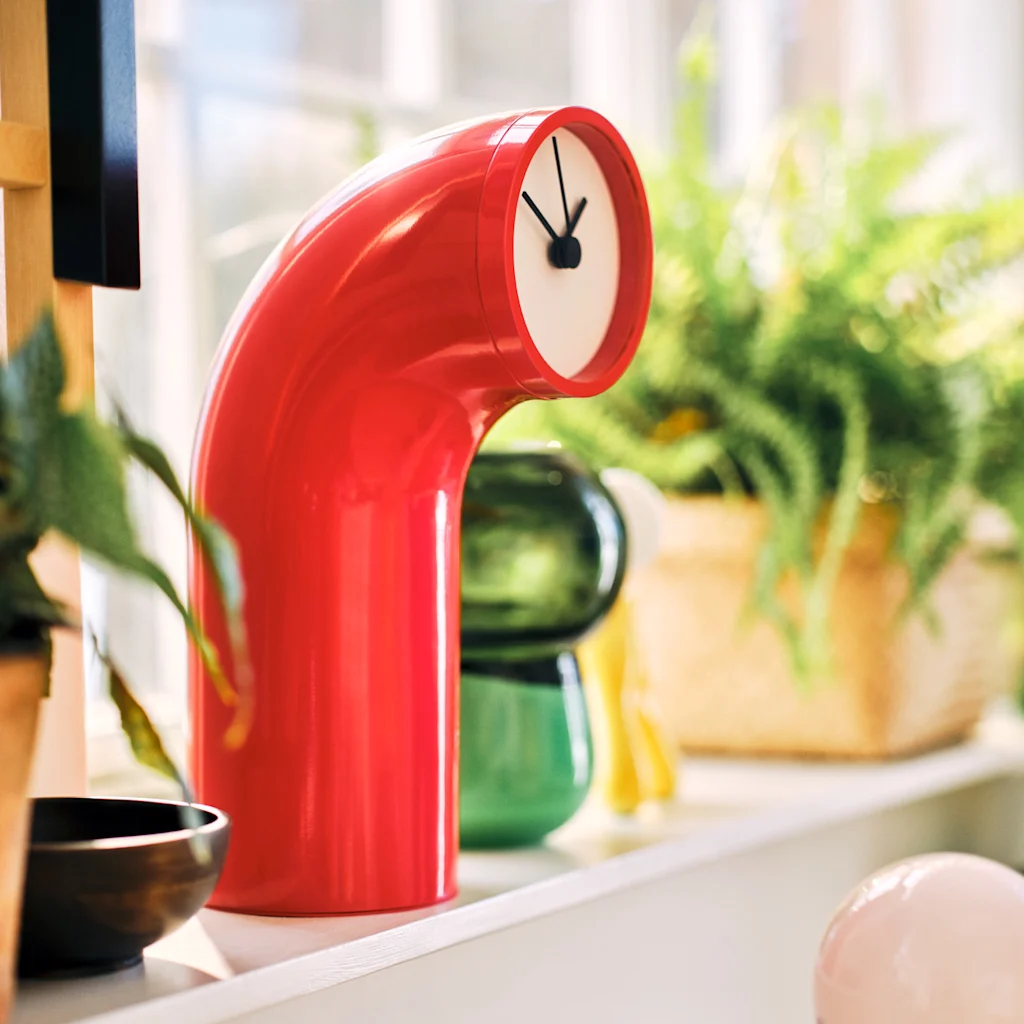
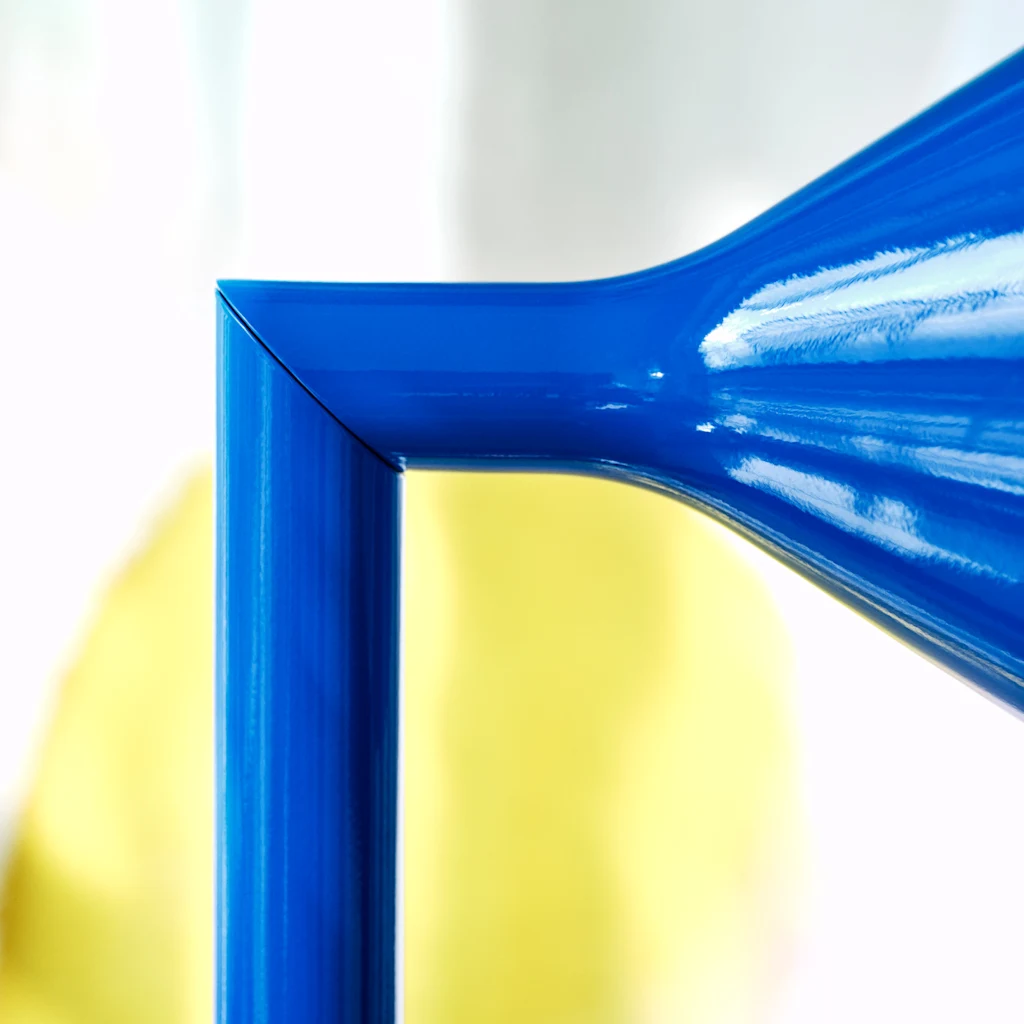
Inside Ikea’s movie studio-size marketing and production facility at the company’s headquarters in Älmhult, Sweden, a corner of a vast soundstage is piled with a multicolored array of what look like props from some fantastical children’s show. There’s a bench that rocks from side to side, a bright blue lamp that hides two transformative elbows in its skinny post, a glass vase with jug ears sticking out from its sides, and a clock on the end of a curvaceous red tube that looks like a worm wiggling its way out of the dirt.
These whimsical items are all part of Ikea’s new PS collection, a once-in-a-while recurring product drop that the company uses to stretch its experimental design muscles. Now available in stores and online, this year’s PS collection is the 10th since the company set out in 1995 with a line of products intended to take some ownership over the increasingly widespread proliferation of Scandinavian design.

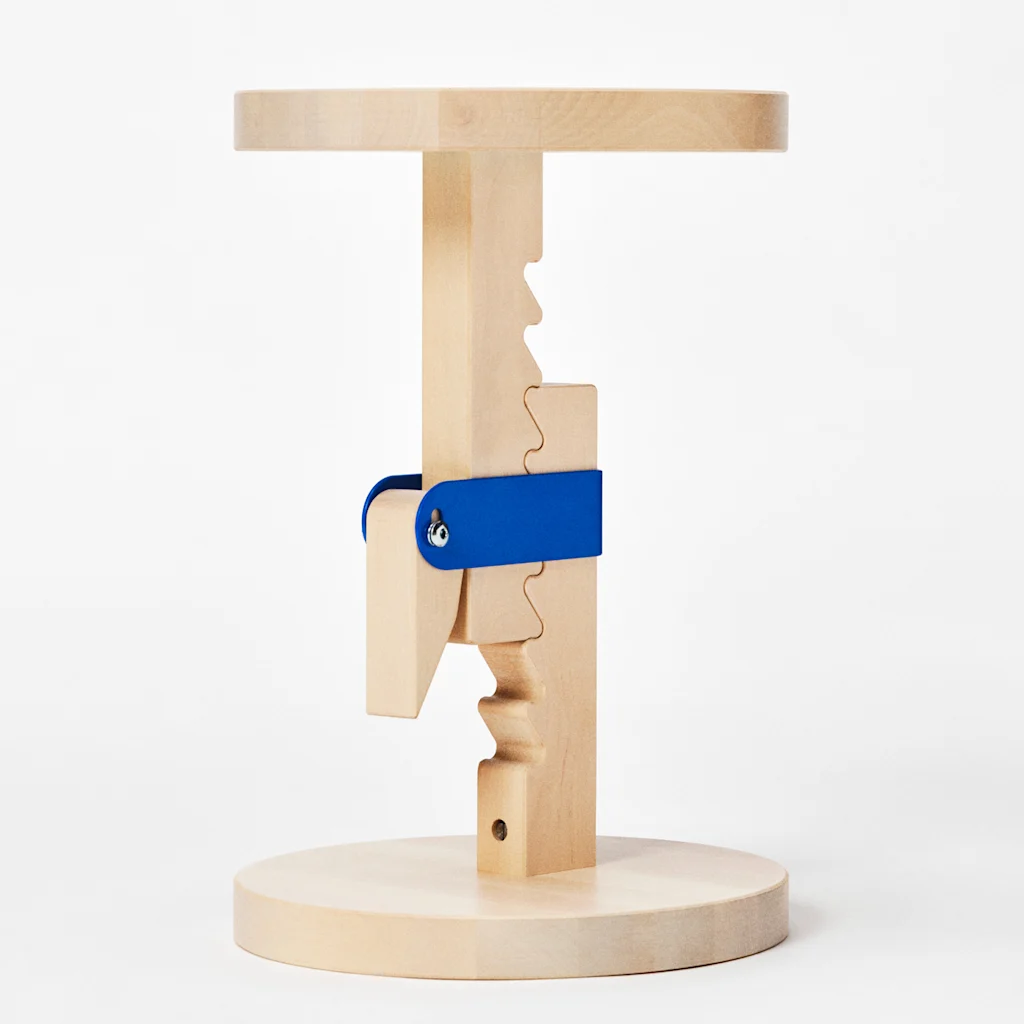
The PS collection is a flag-planting moment for the global home furnishings giant, staking a claim over the present and future of Scandinavian design, and plotting a way forward for its own design intentions. That includes softly curved plywood chairs, a clever square table with a drawer that can slide through from one side to the other, and a wacky adjustable stool that uses a sawtooth mechanism to ratchet up to different heights.
“The brief was ‘less but more, simple but not a bore,’” Maria O’Brian, the creative leader behind the PS collection. “And this is what came back.”
She’s standing amid the collection in Ikea’s soundstage in early April when I visited the company headquarters for an exclusive look at its prototyping shop, where many of the 1,500 to 2,000 new products Ikea releases every year are meticulously developed.
During my visit, part of the collection was being prepped to ship out to Milan for the annual Salone del Mobile furniture fair. Once the exclusive domain of the high-end design world, Salone got its first infusion of Ikea’s low-cost “democratic design” with the inaugural PS collection in 1995. More than 30 years later, O’Brian sees the new PS collection doubling down on its original purpose.
“Scandinavian design is all about simplicity, the material, the functionality, the directness of design. And it’s also about resourcefulness and being smart with the materials and ornamentation. You don’t want to just slap something on there for the sake of it,” O’Brian says. “But it’s not boring.”
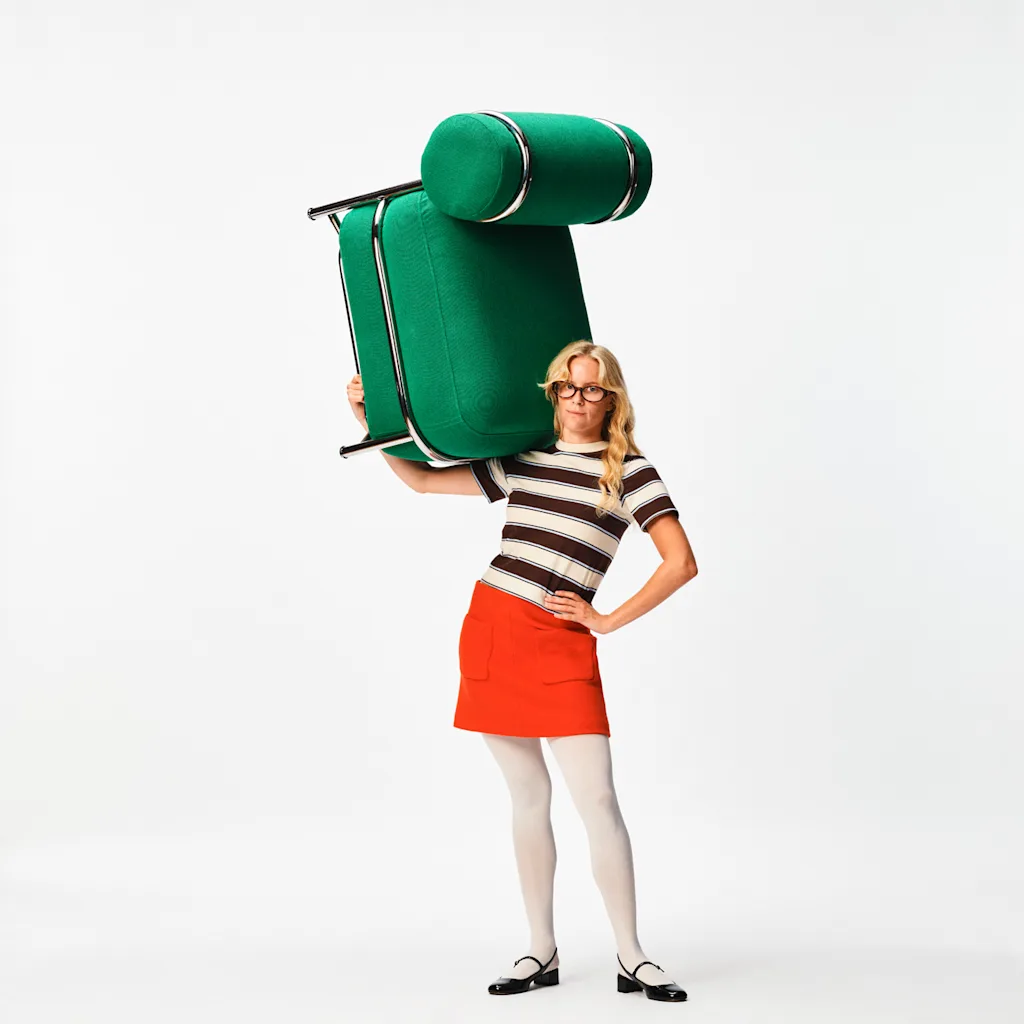
That’s how a seemingly infeasible product like an inflatable easy chair is now making its way into hundreds of Ikea stores around the world. During my visit to Ikea’s headquarters, I saw some of the dozens of prototypes it took designer Mikael Axelsson more than a decade to develop in his aim to turn his inflatable furniture idea into something comfortable that could also be manufactured at Ikea’s vast global scale.
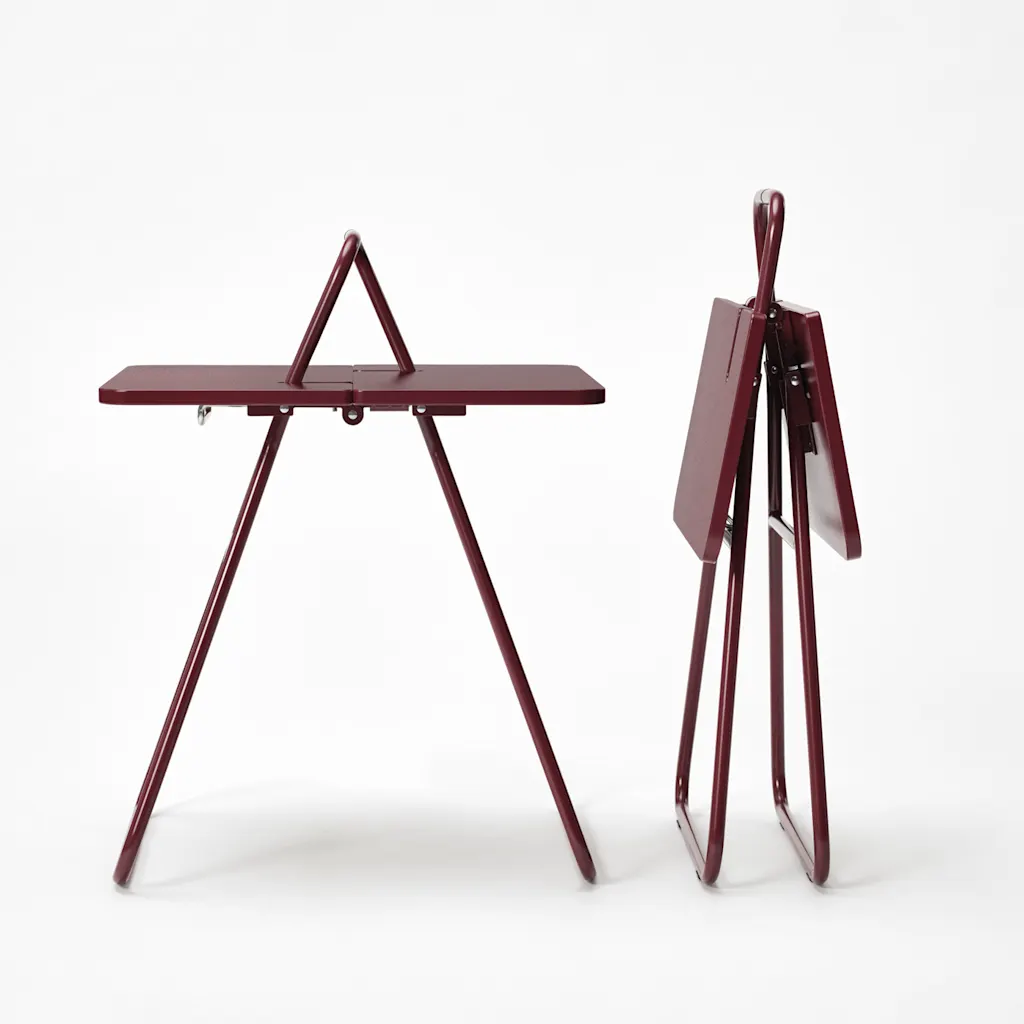
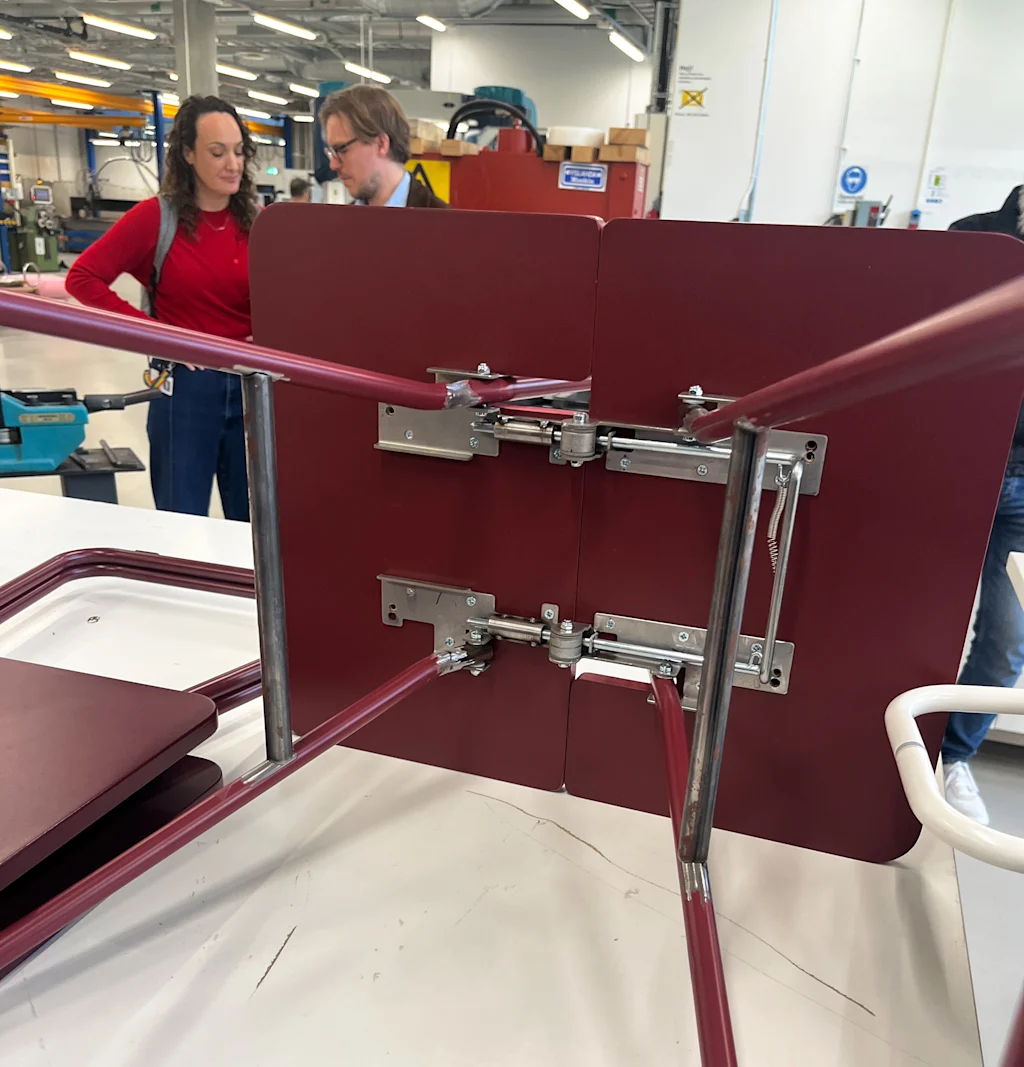
I also saw the grueling trial and error between designers and production facilities to realize designer David Wahl’s foldable side table, a briefcase-like portable table that opens in one smooth motion and clicks into place. In Ikea’s prototyping shop, Wahl pulled out four prototypes of the design, each with slightly different hardware and fittings, and each a wobbly mess. “We called it a dancing table,” he told me, rocking an early version like a hula dancer. It took nearly a year of back-and-forth work to achieve the millimeter-precise locking mechanism that kept the table steady.

Other products in the PS collection have easier origins. The bright floor lamp with two pivot points in the lamp post came from designer Lex Pott sawing 46-degree cuts into a broomstick. Designer Friso Wiersma used his background as a boatbuilder to create a highly refined storage cabinet with doors that look woven like baskets.
“I asked him to make some storage for the collection. He was like, okay, see you in a week,” O’Brian recalls. “He showed up with two final, amazing cabinets. And then we just took the discussion from there.”
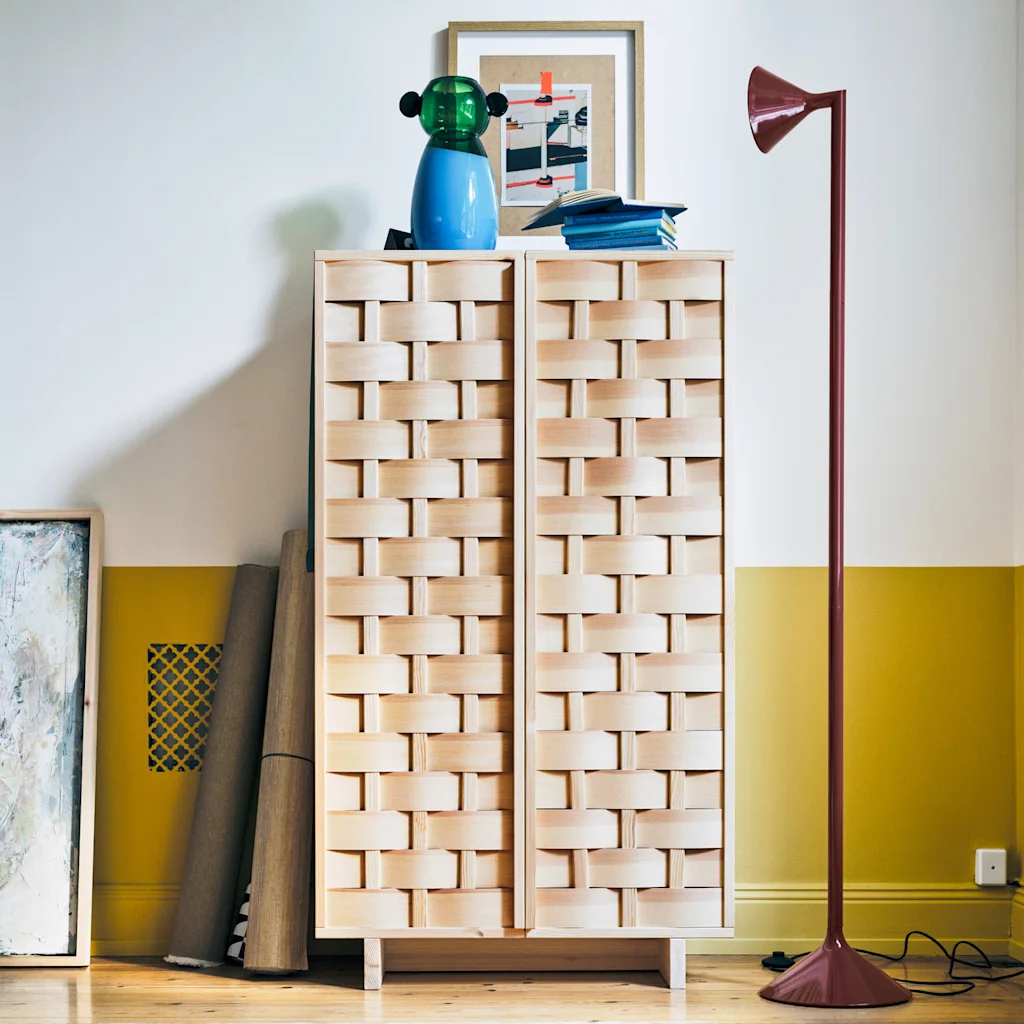
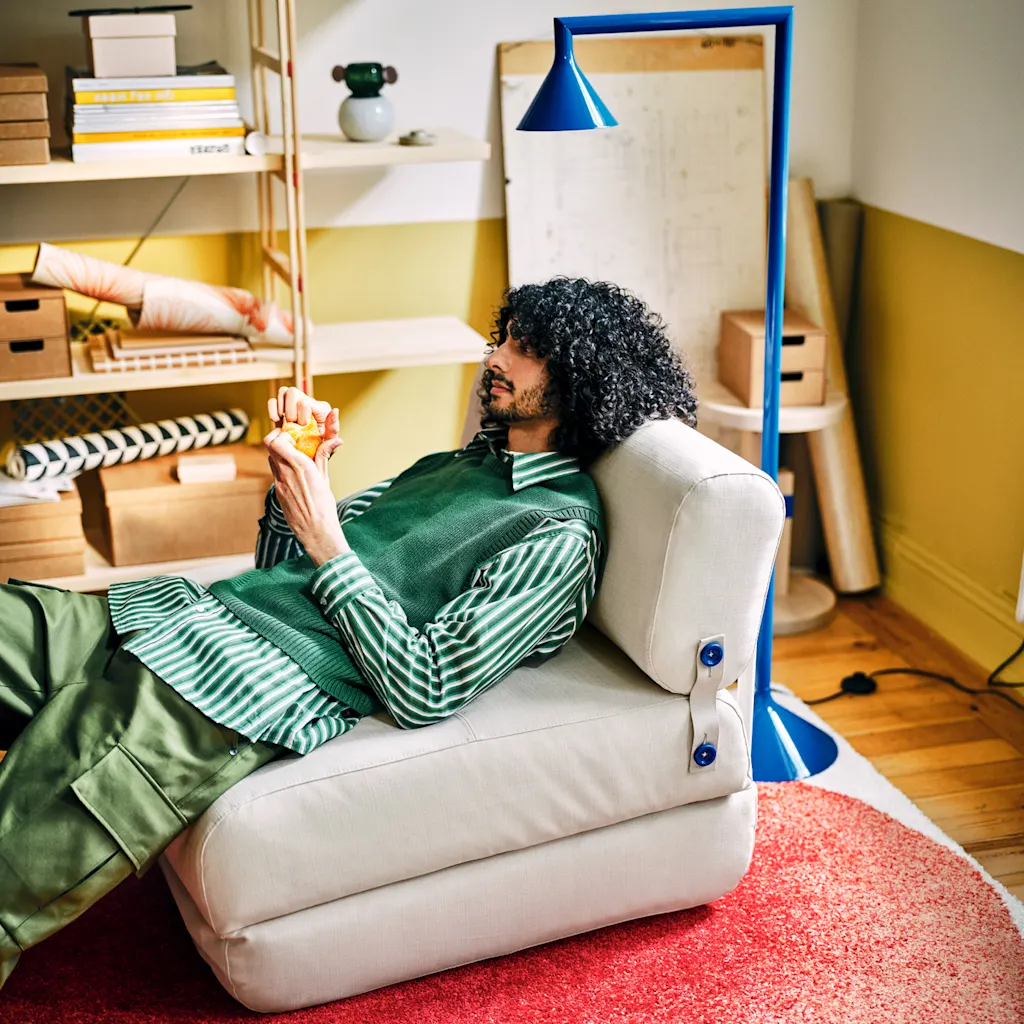
A few other highlights from Ikea’s new PS collection include a puffy chair that flops open to become a bed, and a pared-down chair with a backrest that can be used sideways as an armrest or even backwards as a place to prop up your elbows.
“The point of PS is that we do challenge ourselves. We challenge what we think we can do or how we do it,” O’Brian says. “We wanted to push our boundaries.”

