Key Market Observations
- Samsung Wallet integration now enables US-based Galaxy phone users to conduct USDC transfers via the Sui network.
- Despite positive adoption news, the SUI token continues to trade beneath its critical 50-day and 200-day moving averages.
- Market participants are watching for a breakout above the $0.68 resistance level to validate a potential trend reversal.
The Sui network has secured a significant milestone in consumer accessibility. In late November, Samsung Wallet expanded its stablecoin payment capabilities, integrating the Sui network into millions of Galaxy devices across the United States. This development allows users to handle USDC transactions without needing to install specialized cryptocurrency applications. While this represents a major leap in real-world utility, the SUI token has struggled to reflect this momentum, remaining under selling pressure for several weeks.
Strategic Deployment and Network Competition
The expansion, which follows the integration of Solana on November 2, relies on custody solutions provided by Coinbase and Bastion. With up to 82 million compatible devices in the US, Sui now has unprecedented exposure to mainstream consumers. However, a technical nuance remains: Sui has supported gasless stablecoin transfers since May 2026, meaning users do not need to hold the native SUI token to perform transactions. Instead, revenue generated from these stablecoin activities is utilized for SUI buybacks, which are subsequently reinvested rather than permanently removed from circulation.
Competition remains steep. According to DefiLlama, the stablecoin supply on Solana stands at $13.12 billion, dwarfing the $633.65 million found on the Sui network. While Solana boasts established partnerships with giants like PayPal, Visa, and Western Union, Sui is building its own ecosystem with collaborators including Paga, Phantom Wallet, and now Samsung.
Technical Analysis and Price Outlook
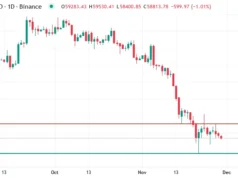
Trading at approximately $0.64 on Friday, SUI has seen a 3% daily decline, contributing to a 27% loss over the past month. The asset is currently positioned significantly below its 50-day moving average of $0.80 and its 200-day moving average of $0.92. These indicators currently serve as overhead resistance, suggesting a bearish trend. Although the Relative Strength Index (RSI) sits near 31—indicating the token is approaching oversold territory—the Moving Average Convergence Divergence (MACD) has crossed above its signal line, hinting that downward pressure may be losing steam.
The immediate path forward depends on the $0.68 resistance zone. A sustained daily close above this mark could signal that market demand is finally absorbing the recent selling pressure, potentially opening a path toward $0.70. Conversely, should the price fail to clear this hurdle, it remains at risk of testing the support floor at $0.56. Traders are waiting to see if the network’s increasing adoption eventually translates into consistent buying activity.
Why it matters
The disconnect between Sui’s growing utility via the Samsung partnership and its current price performance highlights a common challenge for modern utility tokens: decoupling network adoption from speculative market value. If the network successfully converts its massive consumer reach into consistent buyback volume, it may eventually bridge the gap between its technical milestones and its market valuation.
Source: cryptodaily.co.uk
Related reading
- Spanish Election Contenders Face Off in Final Televised Debate
- Bitcoin Faces Downward Pressure as Whale Distribution and ETF Outflows Mount
- Bhutan’s Sovereign Bitcoin Strategy: An Inside Look with 3iQ

Nova Astrax covers crypto, fintech, finance, health and wellness, AI and future tech, and practical life hacks — with original analysis and daily news from around the world.