The Significance of the SEC’s Canton Coin Decision
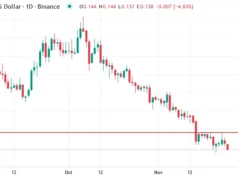
On November 3, the SEC Division of Corporation Finance officially designated Canton Coin as a digital commodity. However, the ruling is strictly contingent upon the factual representations provided by Canton’s legal team, meaning the SEC did not independently verify the network’s structure but rather accepted the provided descriptions to reach its conclusion.
The SEC Staff’s Response
The decision followed an October 30 request from the Canton Network. Deputy Chief Counsel Jonathan A. Ingram, writing to staff members Ted Yu, Andrew Schoeffler, and Mark Vilardo, stated that the Division views the asset as a digital commodity as defined by the agency’s March interpretation. The staff confirmed they would not recommend enforcement action under Section 5 of the Securities Act or Section 12(g) of the Exchange Act, provided the token is minted programmatically by designated entities like Validators and Super Validators.
The Two Key Prongs of the Analysis
- Value derived from network operations: The SEC accepted the claim that Canton Coin’s value is intrinsically linked to the network’s programmatic function rather than the managerial efforts of a central entity. This aligns with the Howey test, focusing on whether holders rely on a team’s work or the autonomous operation of the system.
- The absence of a central party: This is the most critical element. The SEC’s determination relies on the assertion that no central party oversees participation or distributes rewards. The minting process is described as entirely programmatic, governed by protocol rules rather than human discretion.
Interpreting the No-Action Letter
It is vital to understand that a no-action letter does not constitute a formal legal conclusion or a permanent classification. It serves as staff-level guidance based on specific facts provided by the issuer. If those facts change, the protection offered by the letter may no longer apply. The letter functions as an application of the broader March 17 framework, which categorizes crypto assets into five distinct groups, rather than establishing a new legal precedent.
Why it matters
This development serves as a tactical roadmap for other crypto projects seeking regulatory clarity by aligning their operations with the specific criteria of decentralization and programmatic utility. However, because the SEC’s decision is highly fact-dependent, it remains unclear how the agency will treat projects with more complex governance structures, leaving the long-term boundaries of the digital commodity label open to future interpretation.
Disclosure: This is not trading or investment advice. Always do your research before buying any cryptocurrency or investing in any services. Follow us on X @nulltxnews

Nova Astrax covers crypto, fintech, finance, health and wellness, AI and future tech, and practical life hacks — with original analysis and daily news from around the world.