Key Developments for the Cardano Network
- Intersect has identified the first quarter of 2027 as the target window for the Dijkstra hard fork, provided that the necessary node software is finalized.
- The progression of this upgrade relies on the successful pre-release of Node 11.3 and a successful decentralized governance vote.
- Market performance remains a concern, as ADA must overcome significant technical resistance levels to demonstrate renewed investor confidence in the upgrade roadmap.
Cardano development coordinator Intersect has officially outlined a timeline for the upcoming Dijkstra hard fork. According to Upgrade Bulletin #44, published on November 27, 2026, the network is aiming for a mainnet launch in Q1 2027. This ambitious schedule is strictly contingent upon the release of Cardano Node 11.3, which contains the essential consensus and ledger updates required for the hard fork to function.
Governance and Technical Prerequisites
The path to the Dijkstra upgrade involves several critical milestones. Intersect anticipates that a pre-release version of Node 11.3 will be available within two to three weeks. Currently, the mainnet operates on version 11.1.3, necessitating a significant update for node operators. Furthermore, the transition is subject to the approval of constitutional amendment CAP-12. This governance action requires a 75% approval threshold from Delegate Representatives (DReps) and support from two-thirds of the Constitutional Committee. Any failure to secure these votes could result in delays to the proposed schedule.
Testing efforts for the upgrade are currently underway on the DijkstraNet, which has been running protocol version 12 since November 2. However, participation remains limited compared to other initiatives like the MusashiNet testnet for the Linear Leios scaling upgrade. While Leios aims to eventually increase transaction capacity by 10 to 15 times, the Dijkstra upgrade focuses on integrating Plutus V4, guard scripts, BLS keys, and nested transactions.
Market Sentiment and Technical Outlook
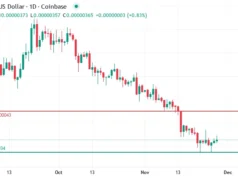
ADA’s price action has struggled recently, with the token trading near $0.15. The asset is currently positioned below both its 50-day and 200-day moving averages, which are acting as significant overhead resistance. While momentum indicators like the MACD show early signs of a cooling decline, the Relative Strength Index (RSI) sits at 35, reflecting overall weak market sentiment. Traders are closely watching the $0.13 support level; a drop below this floor could invite further selling pressure. Conversely, reclaiming the 50-day moving average near $0.18 is seen as a necessary precursor for any potential recovery driven by the upgrade news.
Why it matters
The Dijkstra hard fork represents a critical technical evolution for Cardano, yet its success is inextricably linked to both rigorous software deployment and complex decentralized governance. Whether the network can meet these milestones will serve as a bellwether for its ability to balance rapid protocol innovation with the demands of a distributed stakeholder base.
Source: cryptodaily.co.uk
Related reading
- VTB Bank Initiates Bitcoin Trading Following New Russian Regulatory Standards
- Shiba Inu Outperforms Bitcoin During Thanksgiving Holiday Rally
- Binance Restores Full Withdrawal Services Following Massive Security Breach

Nova Astrax covers crypto, fintech, finance, health and wellness, AI and future tech, and practical life hacks — with original analysis and daily news from around the world.