The world of cryptocurrency is constantly evolving, and Decentralized Autonomous Organizations (DAOs) are emerging as a fascinating new frontier in how we think about governance and community building. DAOs represent a fundamental shift from traditional, hierarchical structures to more fluid, community-driven models, powered by blockchain technology. Instead of a central authority making decisions, DAOs leverage smart contracts and token-based voting to allow their members to collectively manage projects, treasuries, and even entire ecosystems. This innovative approach is not just a niche experiment; it’s actively reshaping how various digital communities operate and make impactful decisions.
What Exactly is a DAO?
At its core, a DAO is an organization that is governed by code and its members, rather than by a board of directors or a CEO. Think of it as a digital cooperative where the rules are transparently written into smart contracts on a blockchain. These contracts automate many of the organization’s operations, from distributing funds to executing proposals. Membership and voting power are typically determined by ownership of the DAO’s native token. The more tokens a member holds, the more voting weight they generally possess. This tokenomics model is crucial for aligning the incentives of members with the overall success of the DAO.
How DAOs Function: The Mechanics of Decentralized Governance
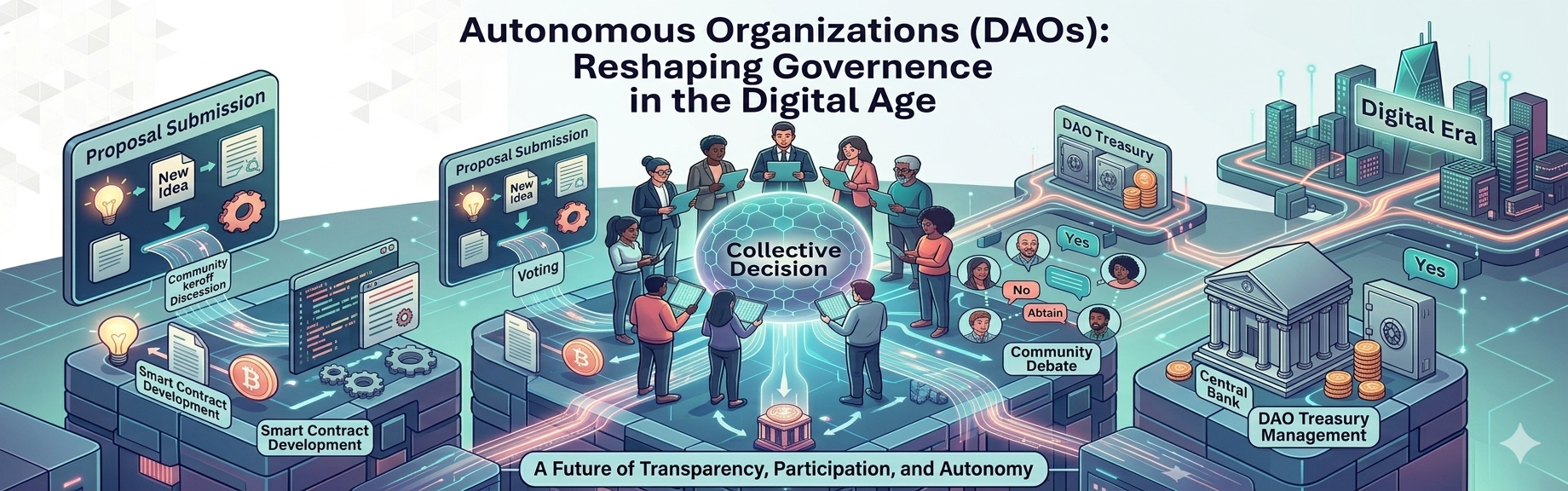
The operational flow of a DAO is relatively straightforward, yet profoundly different from traditional organizations. It generally follows these steps:
- Proposal Submission: Any member, often requiring a minimum token holding, can submit a proposal for the DAO to consider. This could range from allocating treasury funds for a new development to changing a key governance parameter.
- Discussion and Deliberation: Proposals are then typically discussed by the community on forums or dedicated platforms. This is where members debate the merits, potential risks, and benefits of the proposed action, fostering a collaborative decision-making process.
- Voting: Once consensus is sought, the proposal moves to a formal voting period. Token holders cast their votes, with the weight of their vote usually proportional to their token holdings. The smart contract automatically tallies the votes.
- Execution: If a proposal reaches the predefined consensus threshold (e.g., a certain percentage of “yes” votes), the smart contract automatically executes the proposed action. This could involve transferring funds, deploying new code, or any other pre-programmed action.
This automated and transparent process ensures that decisions are made by the collective will of the community, and actions are executed without the need for intermediaries.
https://novaastrax.com/best-defi-lending-future/
The Advantages of DAO Governance
The appeal of DAOs lies in several key advantages they offer over conventional organizational structures:
- Transparency: All transactions and governance decisions are recorded on the blockchain, making them publicly auditable and transparent. This builds trust among members and stakeholders.
- Decentralization: Power is distributed among token holders, reducing the risk of single points of failure or censorship by a central authority. This fosters a more resilient and democratic system.
- Community Engagement: DAOs empower their members by giving them a direct say in the organization’s future. This can lead to higher levels of engagement, loyalty, and a stronger sense of ownership.
- Efficiency: Smart contracts automate many administrative tasks, potentially leading to faster decision-making and execution compared to bureaucratic traditional systems.
- Global Reach: DAOs are inherently borderless, allowing individuals from anywhere in the world to participate and contribute, fostering diverse perspectives and talent pools.
Real-World Applications and Growing Ecosystems
The potential applications for DAOs are vast and continue to expand. We’re already seeing them utilized in various capacities:
- Decentralized Finance (DeFi) Protocols: Many DeFi projects use DAOs to govern their protocols, allowing users to vote on parameters like interest rates, collateral types, and protocol upgrades. Examples include Uniswap and Aave, which have robust DAO structures in place.
- Investment DAOs: These DAOs pool capital from members to invest collectively in various assets, from NFTs to early-stage startups. Members vote on which investments to pursue.
- Grant DAOs: Focused on funding public goods or specific ecosystem development, these DAOs distribute grants based on community proposals and votes.
- Social DAOs: These DAOs are centered around shared interests or communities, using tokens for membership and governance of community initiatives or events.
- NFT Collectibles and Gaming DAOs: Projects are increasingly using DAOs to manage the future development of their games or the collective ownership and management of high-value NFT collections.
The rapid expansion of these ecosystems demonstrates that decentralized coordination is moving beyond simple financial use cases. As Web3 technologies mature, these governance frameworks are proving essential for scaling global, open-source communities without sacrificing user sovereignty.
Challenges and the Road Ahead for DAOs
Despite their promise, DAOs face significant hurdles that need to be addressed for widespread adoption:
- Legal and Regulatory Uncertainty: The legal status of DAOs is still largely undefined in many jurisdictions. This ambiguity creates risks for participants and hinders mainstream integration.
- Security Vulnerabilities: Smart contracts, while powerful, can be susceptible to bugs and exploits. A single flaw could lead to the loss of substantial funds, as demonstrated by past incidents. Rigorous auditing is paramount.
- Voter Apathy and Plutocracy: Achieving sufficient participation can be challenging, leading to low voter turnout. There’s also a risk of “plutocracy,” where large token holders can disproportionately influence decisions, undermining true decentralization.
- Scalability of Governance: As DAOs grow, managing a large number of proposals and ensuring efficient decision-making becomes increasingly complex. Developing effective governance mechanisms for scale is an ongoing challenge.
- User Experience: Interacting with DAOs can still be technically complex for the average user, requiring familiarity with cryptocurrency wallets and blockchain concepts.
The journey for DAOs is still in its early stages. As the technology matures and the legal frameworks evolve, we can expect DAOs to play an increasingly significant role in shaping the future of digital organizations and decentralized ecosystems. Their ability to harness collective intelligence and distribute power democratically positions them as a compelling model for the internet’s next evolution.
For more exclusive tech, business, and crypto updates, visit