

Metal DAO is heading into a hard fork, and the timing is awkward. A few exchanges just pulled the plug on MTL pairs, while others are pausing deposits and withdrawals to support the upgrade. That kind of mixed liquidity picture creates more noise than signal.
The big question on everyone’s mind: could a move toward Optimism’s Superchain be the narrative shift MTL needs, or is this just another upgrade that comes and goes with little lasting effect?
Let’s unpack the moving parts, line up what we can verify, and map out what would actually convince the market this is more than a technical chore.
| Point | Details |
|---|---|
| Fork logistics | Binance plans to suspend MTL deposits and withdrawals around July 8, 2026 to support the network upgrade and hard fork Binance Announcements. |
| Liquidity hits | Bitget delisted the MTL/USDT spot pair June 18, 2026 Bitget; INDODAX delisted MTL June 30, 2026 INDODAX; Phemex followed on July 3, 2026 Phemex. |
| Superchain angle | If Metal aligns with the Optimism Superchain, it could tap shared tooling, liquidity routes, and distribution. This is a potential path, not confirmed at time of writing. |
| What to watch | Public repos for OP Stack work, testnets, bridge endpoints, governance posts, and exchange reactivation timelines. |
| Practical steps | Confirm custody setup, avoid deposits during exchange suspensions, verify contract addresses post-fork, and beware phishing or spoofed tickers. |
| Risk map | Smart contract and bridge risk, liquidity fragmentation, listing uncertainty, replay or migration confusion, regulatory headwinds. |
What this hard fork changes, and what it does not
Hard forks are surgical. They change rules. They rarely change a project’s market story on their own. In this case, we know Binance plans to pause MTL deposits and withdrawals around July 8, 2026 to support the upgrade Binance Announcements. That tells you timing is real and coordination is happening.
What we do not have at the time of writing is a full public spec of the upgrade contents from Metal DAO. So let’s keep the focus on operating assumptions that matter to holders:
- Token continuity: Most chain upgrades do not change ticker, total supply, or balances. If any of that were changing, expect explicit communications and a migration plan. Until then, assume continuity but verify.
- Chain identifiers: Forks can change chain ID or node rules, which can temporarily break RPC endpoints, indexers, or wallets. Expect some rough edges immediately after the switch.
- Bridges and replays: If there is any change to bridging contracts or message formats, be careful with cross-chain moves until official endpoints are confirmed.
- Custody and I/O: Exchanges pausing I/O is normal during a fork. That does not guarantee instant reopen. Liquidity can feel thin even after trading resumes.
Pro tip: Post-fork, always re-add the token in your wallet by contract address rather than ticker search. That simple step filters out scam clones that pop up around upgrades.
The exchange picture just shifted under MTL holders
Three exchanges stepped back from MTL spot trading within two weeks of the fork window. Bitget delisted the MTL/USDT pair on June 18, 2026 and suspended new deposits for affected tokens, with withdrawals open for a defined period Bitget. INDODAX announced MTL’s removal with trading stopped and withdrawals opened on June 30, 2026 at 14:00 WIB INDODAX. Phemex delisted the MTL/USDT spot pair on July 3, 2026 and noted deposits and withdrawals would be unavailable after that time Phemex.
That is a clear contraction in accessible venues. Meanwhile, Binance is pausing I/O to support the fork, not delisting, which is a different signal entirely Binance Announcements. The market will see both headlines and struggle to price the difference.
What liquidity contraction actually does
- Wider spreads, more slippage: Even if top books look healthy, the depth under them often thins out. Market orders bite harder.
- Price discovery migrates: If a few venues become primary price sources, volatility can spike around local order flow or isolated news.
- Funding and borrow dynamics change: For derivatives, borrow rates and inventory availability on remaining platforms can swing. Watch for knock-on effects.
Pro tip: If you must trade, work limit orders, size down, and watch the 1 percent and 2 percent market depth before you click. Thin books punish imprecision.
Superchain alignment, in plain English
Superchain is Optimism’s idea of a network of chains that share common standards and infrastructure. Most of them run on OP Stack, which gives you Ethereum-style smart contracts with rollup economics. The pitch is simple: use familiar tools, interoperate with sibling chains more easily, and plug into a larger distribution surface and governance model. You can read more in Optimism’s public docs if you want the deep dive Optimism.
For a project like Metal DAO, alignment could mean:
- Shared tooling: Same dev stack as other OP Stack chains. Easier hiring, faster integrations, fewer custom edges.
- Liquidity bridges: Tighter routes to major L2 liquidity hubs. Potentially faster onboarding for wallets and on-ramps that already support OP ecosystems.
- Governance visibility: A seat, even if small, at a broader table. That can accelerate ecosystem grants and co-marketing opportunities.
But alignment is not free:
- Sequencer and infra decisions: Who runs the sequencer, what revenue model, what the roadmap to decentralize looks like, and how that interacts with OP governance.
- Token role: Many OP Stack chains use ETH for gas. If MTL wants direct fee capture, it needs a careful design that still plays nicely with alignment goals.
- Roadmap constraints: Shared standards help, but they also limit bespoke features. Customization usually carries long-term maintenance cost.
Important caveat: at the time of writing, there is no official public confirmation that Metal DAO will align with the Superchain. Treat this as a possible direction, not a done deal. The market is already speculating. Your job is to filter signals from noise.
Could MTL realistically plug into the Superchain? Signals that matter
If Metal DAO chooses this path, you should expect a trail of breadcrumbs before it becomes reality. Here is what to monitor:
- Repository shifts: New or forked repos referencing OP Stack, Bedrock components, or rollup tooling. Look for public testnets, CI pipelines, and chain configuration files.
- Chainlist updates: A new chain ID request that matches an OP Stack deployment. Devs usually publish RPC, explorer, and bridge endpoints once testnets open.
- Foundation touchpoints: Mentions in Optimism governance forums, grant submissions, or co-announcements. Partners often soft-signal before the press release.
- Bridge UX: Native support in established Superchain bridges, or a Metal-branded bridge that advertises OP Stack compatibility.
- Wallet metadata: Wallets like MetaMask and popular mobile clients add chains quickly once endpoints are stable. Watch for that toggle to appear.
Put differently, an L2 pivot leaves footprints. If you cannot find them, price any “alignment” narrative as speculation.
Token mechanics: what really accrues to MTL if alignment happens
Let’s separate hope from flow of funds.
- Gas and fees: Many OP Stack chains set ETH as gas, which means transaction fee demand does not automatically bid the native project token. If Metal chose to keep ETH gas, MTL would need another role to capture value.
- Sequencer revenue: Chains can generate revenue at the sequencer. Some projects route that toward public goods or ops. Whether any of that reaches token holders depends on governance and legal design. Nothing here is guaranteed.
- Staking and security: If Metal introduced staking or validation roles tied to MTL, that could create demand. It also introduces new risk, like slashing and smart contract exposure.
- Utility inside the app layer: Metal DAO’s history is tied to consumer payments. If MTL gets deeper utility in fees, discounts, or access within those apps, that is a clearer path than trying to be a generic L2 token.
Case studies from OP-aligned ecosystems are instructive. OP and ARB serve as governance and incentive assets, while gas remains ETH on their main networks. The lesson is simple: do not assume a chain move boosts token value. Watch the exact mechanism. If you cannot point to it in a document, it is probably not there yet.
A simple holder checklist for the fork window
This is the boring part that saves money.
- Know your venue: If you hold MTL on Bitget, trading ended June 18, 2026 and deposits were suspended, with withdrawals allowed for a period Bitget. INDODAX halted trading and opened withdrawals on June 30, 2026 INDODAX. Phemex took the pair offline July 3, 2026 and disabled deposits and withdrawals after that time Phemex. Binance is suspending deposits and withdrawals for the upgrade on or around July 8, 2026 Binance Announcements.
- Avoid dead windows: Do not deposit right before a suspension. Funds can get stuck in limbo until services resume.
- Self-custody prep: If you use a wallet, back up your seed, update your client, and save verified RPC endpoints. Post-fork, re-add the token by contract address.
- Phishing hygiene: Expect fake upgrade sites, “claim forked token” lures, and cloned tickers. Check domains and never sign blind messages.
- Migration clarity: If the team issues any new contract or bridge, wait for a signed message from official channels. Cross-check in multiple places before moving size.
Pro tip: If you are unsure whether your assets are on an exchange that will support the fork, withdraw to a wallet you control before the suspension window and sit tight until there is clarity.
Trading the upgrade: setups and risk controls
Upgrades and delistings create a weird mix of narratives and microstructure quirks. If you trade around them, think in risk units, not hero trades.
- Volatility bands: Expect wider intraday ranges. Trade smaller size and give your stops more air. Ten times less size beats ten times tighter stops.
- Liquidity checks: Watch live order book depth and recent slippage. If you cannot move a test clip without impact, do not scale.
- Event path: Map the calendar. Delistings already hit. The fork window is around July 8, 2026. Price often has two waves: narrative front-run and then reality repricing post-event.
- Venue risk: One venue dominating price is a risk. If that venue hiccups, your trade does too. Diversify execution where possible.
- Information asymmetry: If the team drops a technical post or testnet, the market can move before summaries filter through. Set alerts on repos and official channels.
Consider the opposite trade as well. If everyone expects a catalyst and none materializes, relief rallies fade. Flat is a position.
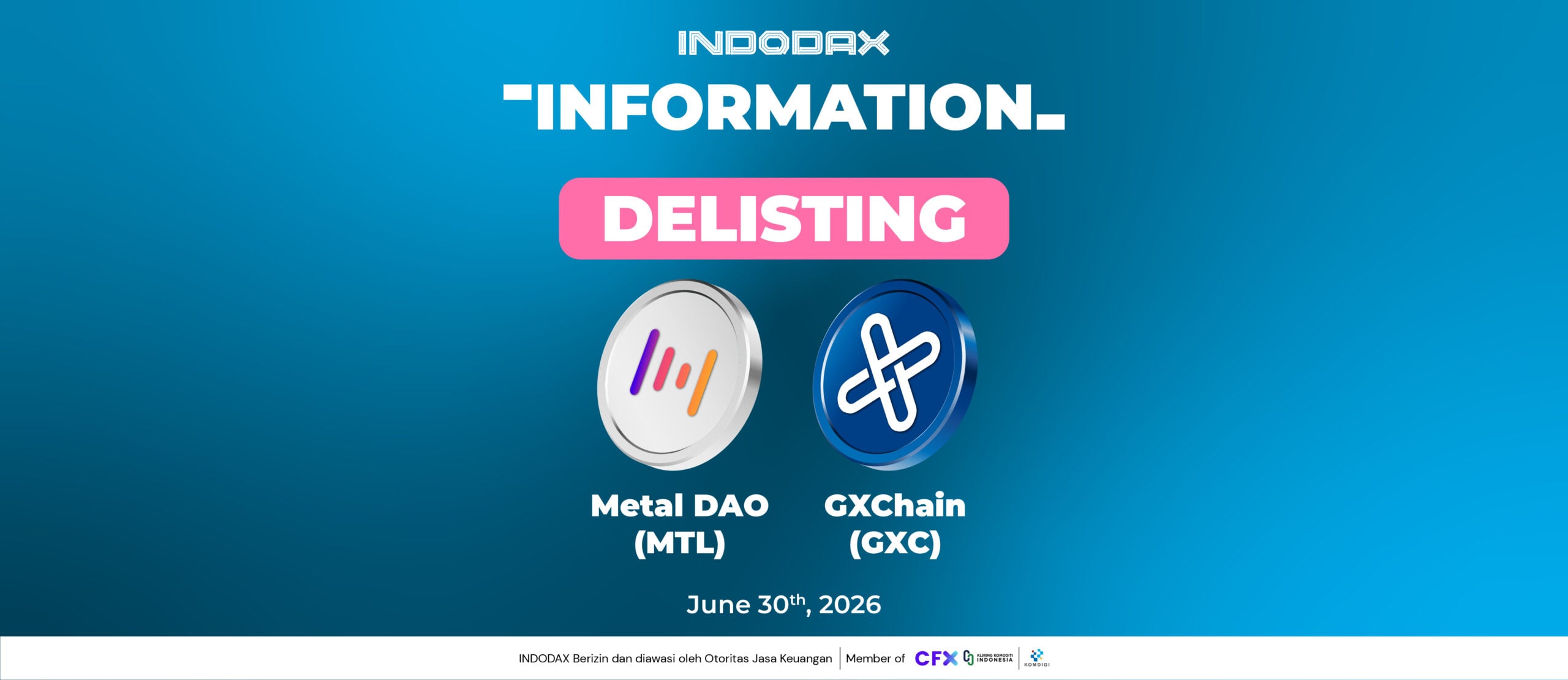
INDODAX delisting banner for MTL & GXC (effective June 30, 2026) — official exchange notice showing removal of a material market on‑ramp and withdrawal window details. — Source: INDODAX (official blog)
What would convince the market this is a real catalyst
Here are the concrete milestones that would make Superchain alignment feel real, not theoretical:
- Public testnet on OP Stack with docs, RPC, and explorer. Bonus points for third-party auditors reviewing contracts.
- Bridge live with limited caps and a staged rollout. Clear security disclosures and kill switches during the early days.
- Token economics spelled out. If MTL is not gas, what is the accrual path. If it is gas, how is that sustained without fragmenting the user experience.
- Governance integration notes. How Metal DAO plans to participate in Superchain governance and what checks and balances exist.
- Developer commitments. Named partners shipping on day one. Wallets and oracles signed on.
- Exchange coordination. Clarity from top venues on I/O reactivation post-fork and any re-listing conversations if the venue previously delisted.
Hit three or four of these within a quarter, and the market will start to price a different future than the one implied by recent delistings.
Pitfalls worth avoiding during the transition
- Chasing ticker lookalikes: Fork chatter tends to spawn scam tokens on long-tail chains. Verify contract addresses every time.
- Assuming gas token changes: Do not pre-position on a thesis that MTL becomes gas on a new chain without explicit confirmation.
- Over-trusting snapshots: If there is any airdrop or migration tied to a snapshot, confirm the block number and the chain. Screenshots are not proofs.
- Underestimating bridge risk: Bridges break in subtle ways. Treat any new bridge like beta software until proven otherwise.
Closing thoughts
The fork is mandatory maintenance. The Superchain idea, if pursued, is a strategy choice. Recent delistings tell you liquidity is in motion, not gone forever. Markets have short memories if the build is credible and the integrations land.
If Metal DAO wants the market to see this as a real pivot, it needs public artifacts, working endpoints, and a clean story for how MTL participates in the economics of whatever comes next. Until then, keep risk tight, respect the calendars, and do the boring operational checks that keep funds safe.
If you want ongoing context without noise, Crypto Daily tracks these upgrade windows and the follow-on exchange actions as they evolve. You can skim the latest updates at Crypto Daily.
Frequently Asked Questions
Will the Metal DAO hard fork create a new token?
There is no public indication of a new token at the time of writing. Most hard forks keep the same ticker and balances. If that changes, expect explicit instructions from official channels before it happens.
Why are some exchanges delisting MTL while Binance only pauses I/O?
Delisting is an exchange-level decision about long-term support. Pausing I/O for a fork is a short operational suspension to protect user funds. Bitget, INDODAX, and Phemex have delisted within the fork window, while Binance has announced a temporary suspension for the upgrade.
What does Superchain alignment actually give Metal DAO?
Primarily shared infrastructure and easier integrations through OP Stack standards, plus potential visibility in a larger ecosystem. It does not automatically boost token value. The benefit depends on how MTL fits into fees, governance, or app utility.
Could MTL become the gas token on a new chain?
It is possible in design terms, but many OP Stack chains use ETH for gas. Unless the team publishes a plan that makes MTL gas and explains the trade-offs, do not assume this outcome.
How should I handle MTL during the suspension window?
Avoid deposits to exchanges during their posted suspension times. If you need control, consider self-custody ahead of the window. After the fork, verify token contracts and endpoints before moving assets.
What on-chain signals would confirm a pivot toward OP Stack?
Public repos referencing OP Stack components, a live testnet with RPCs, listings on chain registries, and bridge endpoints integrated with Superchain tooling. Ecosystem partners will usually confirm early support.
Are there risks of replay or stuck transactions around the fork?
Forks can cause brief instability across RPCs and explorers. Replays are unlikely if chain IDs and rules change as expected, but patience helps. Wait for official green lights before pushing large transactions.
Disclaimer: This article is provided for informational purposes only. It is not offered or intended to be used as legal, tax, investment, financial, or other advice.