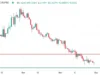
Katana has taken direct ownership of the operational venues that generate its fees, allocating a portion of this income toward open-market KAT buybacks for stakers. While modest under current network activity, this mechanism differs from conventional DeFi buybacks regarding the origin of the capital and the final destination of the acquired tokens.
For its initial year, Katana separated network revenue from its token economics. Incubated by Polygon Labs and GSR on Polygon’s Agglayer, bridged capital instantly produced yield destined for the Foundation. Meanwhile, KAT holders utilized vKAT, a vote-escrowed position that directed emissions and gathered pool fees without holding any direct claim to the chain’s underlying income.
On November 11, 2026, the Katana Foundation internalized its Sushi integration and Vault Bridge, merging them with the IDEX perpetual futures business acquired in March, while simultaneously phasing out vKAT voting. Staking has transitioned to a unified token, avKAT, which gathers open-market KAT purchases fueled by percentages drawn from four distinct network revenue streams. While DeFi has increasingly focused on activity-funded tokens over the prior two years, Katana applies this concept across an entire blockchain rather than a lone application.
Unlike alternative buyback designs, the acquired tokens are deposited directly into the staking pool instead of being burned. Furthermore, the funding originates from multiple proprietary products, heavily weighted toward swap and sequencer fees rather than perps, which represents the largest individual revenue stream. Based on activity levels from the prior week, the program generates an annualized purchase rate of roughly $700K in KAT, equating to approximately 7% of market capitalization.
KAT’s initial design: voting on emissions
KAT features a fixed supply of 10 billion tokens minted entirely in 2025. Per Katana documentation, zero tokens were allocated to venture investors, and user allocations unlocked initially. Approximately 48% resides inside an ecosystem and community treasury, roughly 16% belongs to core contributors, 15% was distributed via an airdrop to POL stakers through vKAT, 10% went to app liquidity mining, 10% to early depositors, and 1% was sold publicly.
Our vKAT: Taking veTokenomics Chain-Wide report from October 2025 outlined how this architecture expanded the ve model from a single app to an entire network:
Holders locked KAT into vKAT at a 1:1 ratio,
acquired immediate full voting power,
and directed emission distributions to pools across the network, beginning with Sushi.
avKAT functioned as a liquid wrapper providing automatic compounding and voting, while exits mandated a 45-day period alongside a fee decreasing from 25% to 2.5%.
The revenue streams currently financing buybacks previously operated outside this structure, as Vault Bridge yield, sequencer fees, and AUSD stablecoin treasury yields remained with the Foundation. Vault Bridge represents the mechanism Katana deployed to put bridged capital to work, depositing assets into Morpho vaults on Ethereum and returning the generated yield to Katana. As highlighted in our Katana’s VaultBridge: A Self-Funding Rewards Engine analysis from December 2025, vKAT holders lacked any direct claim to those funds.
The November restructuring preserves the buyback concept but repurposes its function. Rather than financing pool emissions, purchases now compound directly into avKAT, granting stakers a direct claim on network revenues.
What changed on November 11
The Foundation’s announcement and tokenomics post outline two synergistic adjustments, beginning with vertical integration. Katana acquired its Sushi deployment, relaunching on November 11 as Katana Swap using identical contracts while retaining swap fees internally within the ecosystem. The protocol also secured ownership of Vault Bridge, aligning them alongside Katana Perps, which utilizes the execution engine and team acquired from IDEX in March 2026.
The network now directly oversees four revenue streams:
Swap fees
Perps fees
VaultBridge yield
Sequencer fees
The second structural change involves the token layer, where vKAT and governance voting are retired in favor of avKAT as the exclusive staking mechanism. Portions of the four revenue streams fund open-market KAT acquisitions, with 100% of purchased tokens directed to avKAT to compound across every epoch. The Foundation established revenue split allocations at 50% for swap fees, 5% for perps fees, 5% for Vault Bridge revenue, and 30% for sequencer fees.
Starting today, fee revenue begins distribution to avKAT, while the unstaking period drops from 45 days down to seven, accompanied by an early-exit fee starting at 25% and scaling down to zero. Programmatic on-chain buybacks are scheduled for a later implementation phase following additional security and engineering reviews. The KAT token remains unchanged, and holders can convert vKAT at any time, noting that vKAT ceases to accrue yields once sunsetted.
This consolidation simplifies the architecture from three tokens and recurring voting rounds down to KAT alongside a single staking claim. Removing the governance voting layer permits revenue routing from any protocol product, with the Foundation noting that native or third-party builders can introduce new income sources over time.
Sizing the buyback
DefiLlama tracks the underlying fee channels feeding the initiative, enabling approximate sizing calculations. Across the preceding seven days, the four streams generated roughly $123K in total fees:
$80.5K derived from perps;
$27.3K derived from sequencer fees;
$13.9K derived from VaultBridge;
And $1.4K derived from Sushi-based swap pools.
Applying the Foundation allocations yields a weekly buyback of approximately $13.6K, or roughly $700K annualized if weekly rates persist. This represents 7.3% of KAT’s $9.7M market capitalization, and 2.4% of its fully diluted valuation of roughly $29.0M.
The proportional distribution shifts the funding burden across business segments. Perps generated 65% of tracked fees but contribute roughly 30% of the buyback funding, whereas sequencer fees account for 22% of total fees while funding roughly 60% of the program. Sequencer fee generation experienced a recent surge, climbing from a few hundred dollars daily up to several thousand starting October 30.
INTERACTIVE CHART — Model your own $KAT buyback scenario
To evaluate potential scenarios for KAT buybacks, users can model the metrics directly utilizing an embedded live model built with LlamaAI generative UI, marking a DefiLlama Research first. Utilizing baseline figures from the week of November 9 to 15 alongside the 50/5/5/30 split, readers can modify individual fee streams, program capture ratios, and perps weightings.
The simulated line replays historical weekly performance dating back to April 2025 based on user parameters. Sliders terminate at each stream’s peak weekly historical high, triggering notification flags for unprecedented parameter combinations.
How Katana’s buyback compares
Buybacks function as a primary mechanism linking token value to business performance. Utilizing DefiLlama token-rights records and holder-revenue metrics—where holder revenue defines the portion of income reaching token holders via buybacks, burns, or distributions—peer comparisons illustrate various approaches:
On a trailing 12-month basis, Aerodrome returned approximately 28% of its market cap to holders, while Pump returned 22.5%. Established protocols cluster between 4% and 5%: Raydium at 4.7%, Jupiter at 4.6%, Sky at 4.6%, and Hyperliquid at 4.4%. Uniswap returned approximately 2.1% and Aave 1.1%.
Katana’s metric relies on a modeled run-rate rather than a full annual performance history, placing it third behind Aerodrome and Pump under current fee assumptions. At median fee levels over the prior 13 weeks, the metric rests near 2.5% of market cap, placing it slightly above Uniswap. This positioning stems equally from KAT’s $9.7M market cap—the smallest among peers by a wide margin—as the absolute buyback volume.
The primary architectural distinctions involve the final destination of acquired tokens:
Burned: Hyperliquid (where HYPE within its Assistance Fund is categorized as burned), Sky, Pump (representing roughly 36% of circulating supply as of April 2026), and Uniswap, where participants can burn 4,000 UNI via the FirePit contract to claim accumulated fees.
Locked: Jupiter preserves acquired JUP inside a trust for a three-year term.
Staked: Katana deposits acquired KAT directly into avKAT, keeping circulating supply unaffected.
Katana’s structure functions similarly to revenue sharing, directly rewarding stakers while maintaining the issuance schedule. Aerodrome serves as the closest relative, directing 100% of exchange revenue to sAERO stakers. Control mechanisms vary similarly, ranging from programmatic contract execution on Uniswap and Hyperliquid to governance-dependent adjustments on Aave, Sky, and Aerodrome.
What to watch
Automation. Transitioning from scheduled execution to automated on-chain buybacks will enhance verifiability and curtail Foundation timing discretion.
Sequencer fees. Comprising roughly 60% of current buyback funding, the persistence of the early-November jump significantly impacts overall program scale.
Swap volume. Carrying a 50% allocation share, Katana Swap fees provide higher impact per dollar than other streams. At roughly $1.4K weekly, swap volume requires an approximate twelvefold expansion to match current sequencer fee contributions.
Perps. Representing the largest revenue stream and an active area of expansion, perps maintain only a 5% allocation share. Each additional percentage point of share would contribute approximately $800 weekly at current volumes.
Unlocks. Contributor and treasury allocations unlock across four annual tranches starting from the March 2026 transfer date, with the initial unlock scheduled for March 2027. At current pricing, the initial contributor tranche alone of roughly 400M KAT equals approximately $1.2M, compared to annual buybacks of roughly $700K.
Why it matters
This structural overhaul exemplifies how an entire blockchain network can capture internal revenue streams to sustain its native token instead of depending entirely on inflationary emissions. By channeling yields from owned protocol products directly into a unified staking pool, Katana establishes a distinct model for aligning network growth with token holder value. The ultimate viability of this approach will depend heavily on sustained activity across its proprietary swap, perpetual, and sequencing products.

Nova Astrax covers crypto, fintech, finance, health and wellness, AI and future tech, and practical life hacks — with original analysis and daily news from around the world.