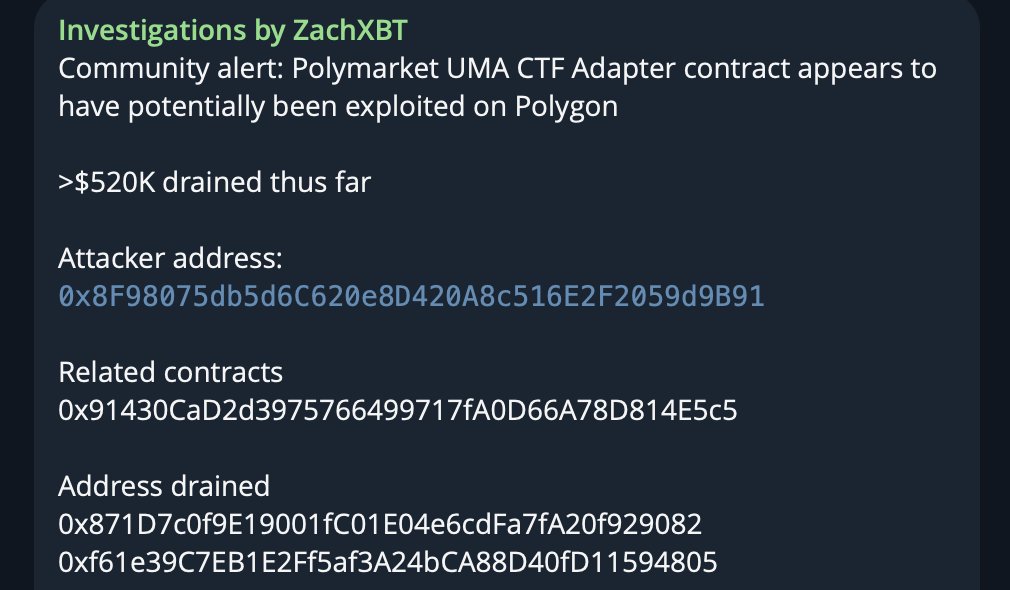
The prediction market platform Polymarket is once more in the spotlight, this time for an exploit that reportedly siphoned off 660,000 from wallets associated with it.
Onchain analysts identified dubious transactions from a contract expected to carry key responsibilities for market settlement operations shortly after the incident attracted industry-wide concern. According to blockchain investigators, the attacker remained relentless and moved stolen funds at an unprecedented rate across many wallets in a bid to muddy tracking efforts.
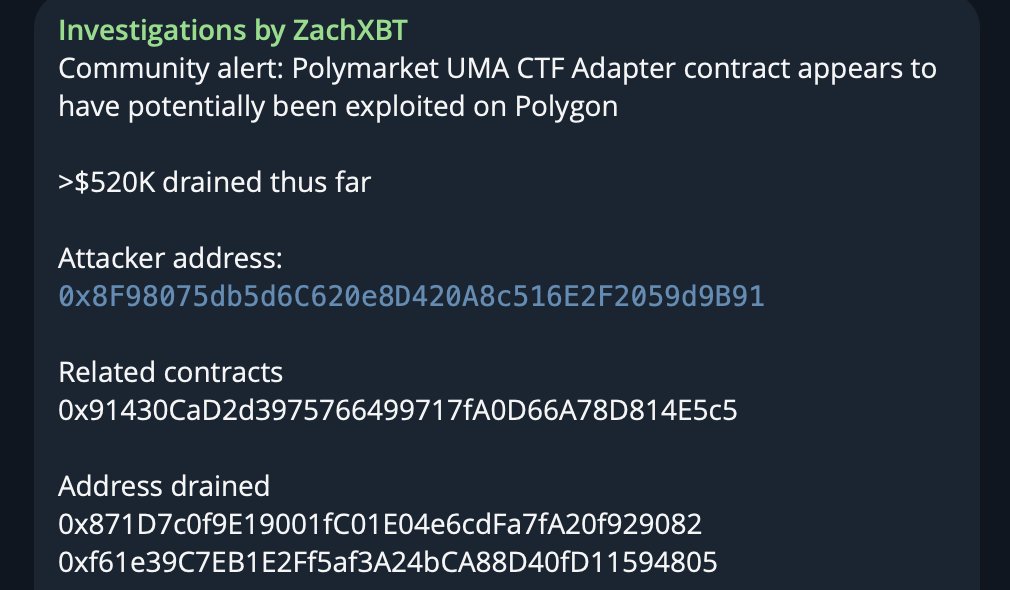
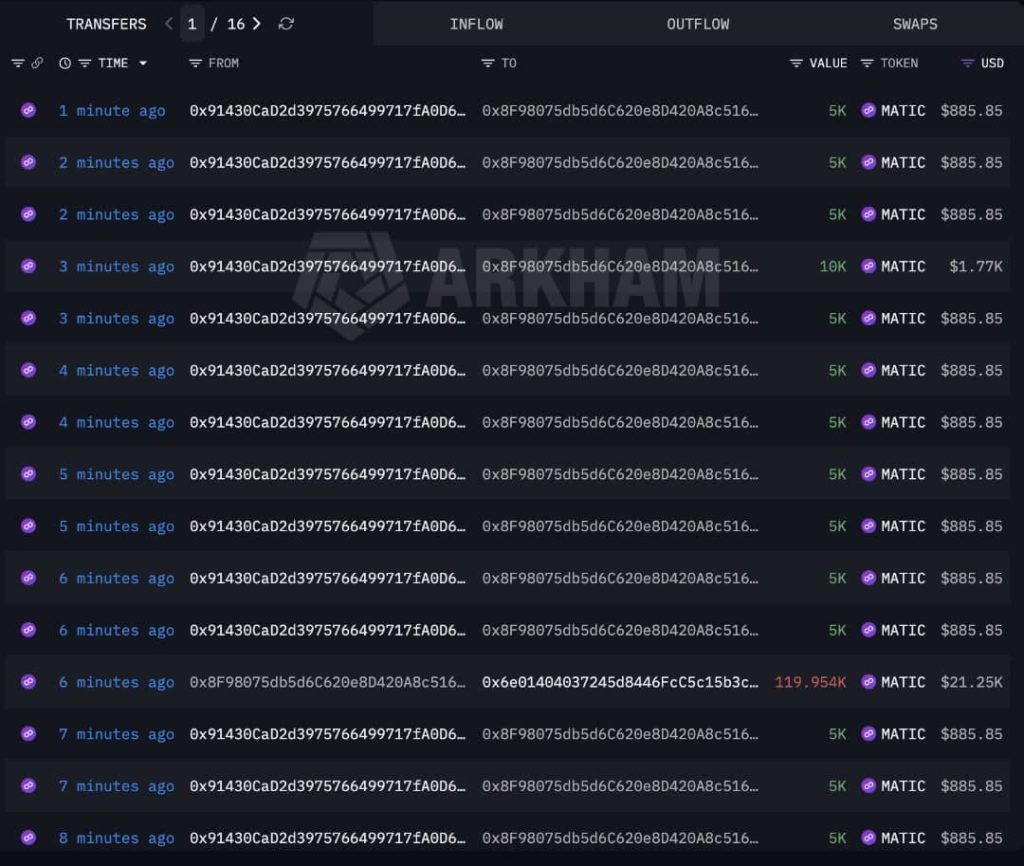
Reports in crypto security channels said nearly 5,000 POL tokens per 30 seconds were drained through the exploit. According to analysts, the stolen assets were processed through at least 15 distinct wallets in the days immediately following extraction, a well-known practice by thieves to break trails of suspicious transactions before recycling revenues via balancer-like services or exchanges.
Due to the fact that Polymarket is currently the worlds largest blockchain based prediction market platform, this exploit instantly turned into one of the most talked about, seismic events in the history of crypto. The episode led to a renewed focus on operational security practices for high value crypto applications that deal with very large amounts of user activity and liquidity.
Warning: #Polymarket‘s contract appears to be exploited, and the attacker is stealing funds.
So far, more than $660K has already been stolen.
Source: @zachxbt pic.twitter.com/sIa0FWEEzo
— Lookonchain (@lookonchain) May 22, 2026
Onchain Investigators Trace The Attack
According to several posts on social media and monitoring platforms, the suspicious activity associated with the exploit was noticed by crypto investigator ZachXBT among others.
Researchers monitoring the attack noticed immediate fund transfers aligned with mechanical draining action. Wallets were drained at specific time intervals prior to the funds being split into thousands of different addresses, making it difficult to trace.
As it unfolded quickly, our worry was amplified because the affected infrastructure involved functionality around settlement for on-chain prediction market operations. Settlement contracts are key components of prediction markets, as they define the settlement of events (by finalizing outcomes) and their respective awards to users after an event resolves.
Initial responses from the crypto world raised concerns that Polymarket’s core protocol may have been directly compromised. Due to the sensitivity of settlement infrastructure in event-driven trading platforms, concerns soon arose as to how it would affect user balances and open market positions.
At the same time, traders and users slammed the platform for its initial silence after the incident. With news of the exploit loosed into the wild, many in the market noted that an extension of time before disclosure introduced even greater uncertainty and deepened apprehensions about platform transparency when security crises arise.
Polymarket Says Core Contracts Remain Safe
Polymarket issued a public statement in response to ongoing speculation, stating that user funds were safe and the platform was still functioning correctly.
We’re aware of the security reports linked to rewards payout. User funds and market resolution are safe.
Findings point to a private key compromise of a wallet used for internal top-up operations, not contracts or core infrastructure.
More updates to follow.
— Polymarket Developers (@PolymarketDevs) May 22, 2026
The breach did not exploit Polymarket’s core smart contracts, protocol architecture. Instead, the hack was apparently tied to a compromised private key or an internal operational wallet.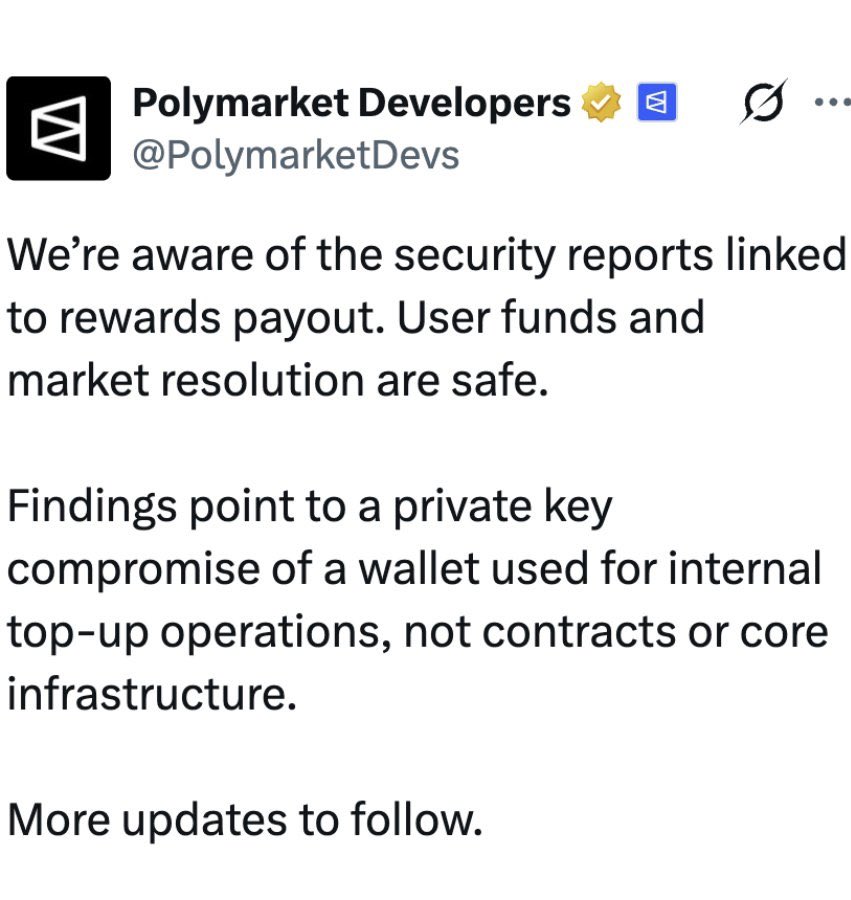
It is an important distinction since it fundamentally changes the character of a security event. The incident has therefore appeared to be more related to operational security management of delegate-controlled access to privilege wallets rather than directly exposing a vulnerability in the protocol core logic.
Polymarket stated that its core contracts were never compromised and stressed that the structure of the overall architecture remains intact. The company described the exploit as an internal- rather than protocol-level security failure.
However, the event has serious implications for how infrastructure is managed, which are not mitigated by a TLS migration without protocol compromise. Leaked private keys corresponding to a working wallet can expose an attacker to sensitive systems, treasury capabilities at least for the timespan during which that pair is alive, and even related operations depending on general wallet permission in crypto environments.
Multiple Security Incidents Raise Concerns
The new exploit has drawn particularly increased scrutiny due in part to being the latest blow in a series of security incidents that have beset Polymarket over a short time-frame.
Some reports suggest that the platform experienced a compromised user account (breached through login). Two months later, in February 2026, alleged trading bots connecting to Polymarket were compromised.
So this most recent attack is actually the third notable kind of security-related incident that Polymarket has seen in just about a six-month period.
This trend elevates conversations within the industry from isolated incidents to more high-level issues of the safety culture at large in platform operations. While the technical causes are different, a repeat of incidents can sometimes shake user confidence when-in-fact, the underlining protocol works as intended.
If you plan on being a trading and prediction platform layer decentralized, the key to upfront growth is trust. Users rely primarily on the belief that both code and protocols managing assets, payments, consulting system failures are resistant to external attacks as well as internal corruption.
Well-publicized and repeat security incidents complicate branded reputation efforts, particularly for platforms with increasing trade volumes from speculative capital in a decentralized finance ecosystem facing growing international trading activity.
Prediction Markets Face Growing Security Pressure
This incident comes at a time of accelerated growth in blockchain prediction markets.
Polymarket and similar platforms have gained major traction due to traders continuing to use event-based markets as a way of speculating on elections, macroeconomic developments, cryptocurrency movements, sports outcomes, and geopolitical events. The attractiveness of these platforms as targets from attackers due to rising liquidity and public visibility combined.
With the prediction market sector maturing, operational security is becoming as much of a focus as protocol design. While smart contracts can be secured, weaknesses lie in wallet management or internal permissions, as well as infrastructure coordination.
This exploit at Polymarket is just a small example of a more systemic reality with crypto: decentralized applications are often a collaborative system that allows onchain contracts and offchain operational systems to function, but some part of it can have malfunctions. However, security failures in either layer can cause downstream risks.
In both insights and beliefs about users, the distinction between a protocol exploit and an operational compromise for platform functionality may be irrelevant to how reliable the platform will be for managing funds and positions.
Although Polymarket stands firm that user funds were protected, and core systems were not breached, it is the latest reminder of just how critical infrastructure security must be for expanding crypto platforms. With so much latent adoption potential, and capital flowing into decentralized prediction markets, operational resilience, along with transparent incident response will become the new criteria for platforms to establish long-term user trust.
Disclosure: This is not trading or investment advice. Always do your research before buying any cryptocurrency or investing in any services.
Follow us on Twitter @nulltxnews to stay updated with the latest Crypto, NFT, AI, Cybersecurity, Distributed Computing, and Metaverse news!