
A few weeks ago, a Rhode billboard appeared on the road along the way to Coachella. Powder pink background, hot pink type, and multicolored daisies. It didn’t look like Rhode’s typical visual brand, which is defined by subtle Swiss minimalism, conveyed in cool grays, white, and boxy sans serifs. It signaled something new. “See you down the Rhode,” it said. What was at the other end?
The billboard was part of a larger product launch teed up on social the week before: “spotwear” pimple patches and banana peel eye patches in partnership with Rhode founder Hailey Bieber’s husband, Justin Bieber, who performed at the festival (shout-out, Beliebers and lonely girls).
The products weren’t yet available, but they would be at the brand’s festival activation, Rhode World. If you didn’t have one of the multi-tiered wristbands that got you into Rhode’s house party, you could still feel you were part of it when the products launched the following week. No matter where you are, all roads lead to the brand. That was kind of the point.
That consistent, discerning attention to 360 degrees of detail is also what’s made the brand a success. Bieber, along with business partners Michael D. Ratner and Lauren Ratner, flipped a billion-dollar business in three years. Rhode launched direct-to-consumer (DTC) in 2022, and E.l.f. Cosmetics acquired it a mere three years later in 2025 (and is now in retail).
Rhode’s aesthetically refined brand and packaging position its products as aspirational. And its brand marketing, which centers on an elevated, tightly configured visual identity, highly editorial campaigns, is a huge reason why. That it often involves a revolving door of talent we’re all already talking about online (Sarah Pidgeon from FX’s Love Story! Harris Dickinson in his Babygirl moment!) doesn’t hurt.
Call it advertorial, call it brandtainment, call it a proven formula: whether it’s Skims, Gap, J Crew, or Rhode. Only one of those companies is a beauty brand, though.
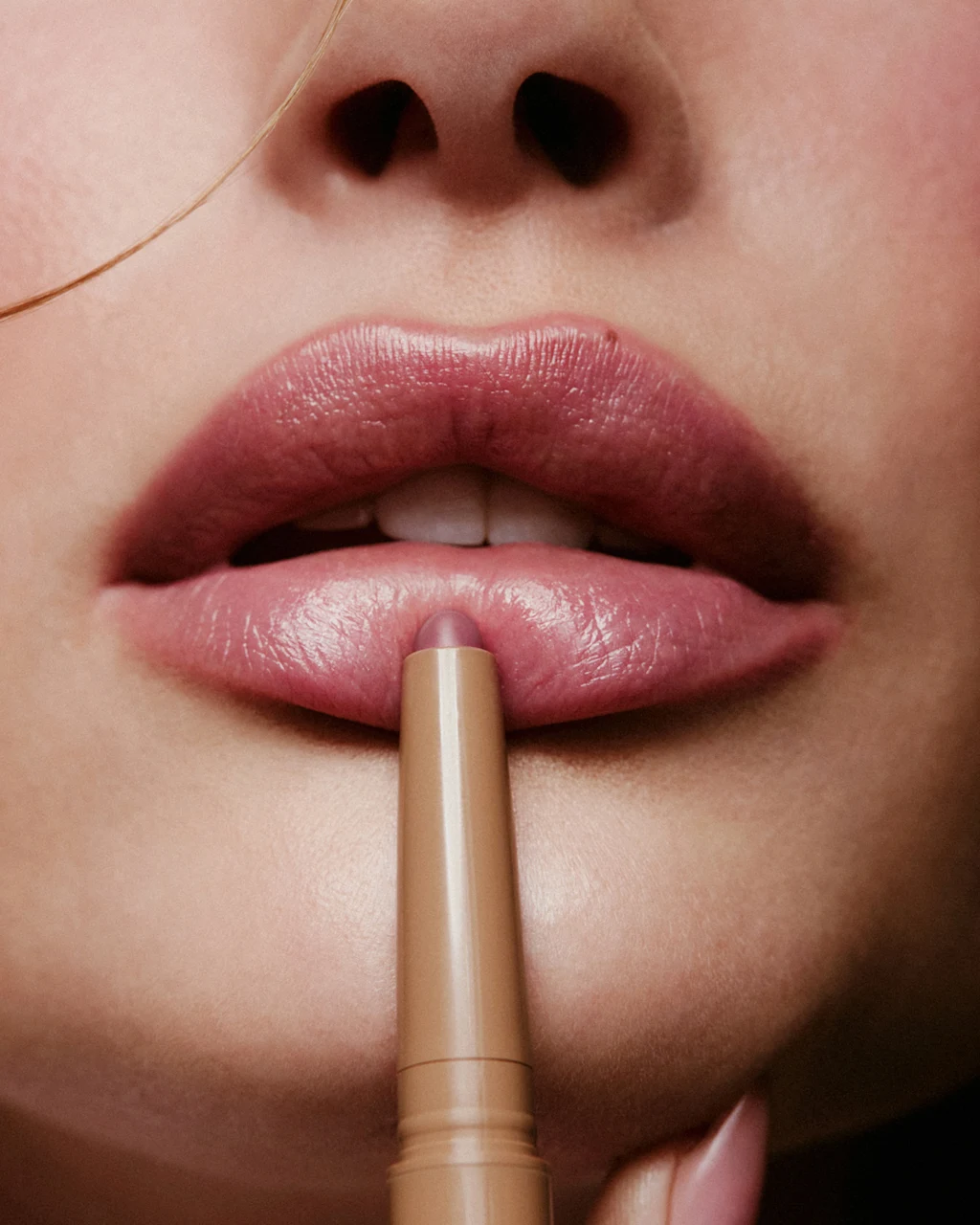
That’s because, even though Rhode differentiated its products early by focusing on peptides and “research-backed ingredients,” it doesn’t really position itself as a beauty brand. Instead, it has successfully grabbed the mantle of a lifestyle brand with endless opportunity for expansion, as every brand wants to do these days.
“I’ve always approached our marketing and campaigns through a very editorial, fashion-first lens, which helped Rhode stand out early on,” Bieber tells Fast Company. “It’s never been about following a traditional beauty playbook, it’s about what feels organic to me and the aesthetic I’m naturally drawn to.”
Bieber says that same instinct drives everything the brand does. “From our campaigns to the talent we work with, it all comes from a genuine place of what I’m excited by in the moment,” she says. “More than anything, I think our success comes from the world we’ve built around the brand. I hesitate to call it a ‘lifestyle’ because it’s really an extension of my own world, something we’re inviting people into through Rhode.”
Logging on to its universe
I was first struck by Rhode’s creative direction when it launched pocket blushes in June 2024. It was a clear signal of a playbook it’d tap into again and again. A consistent core brand—bright white background, high flash that reflects off the packaging—that created a set fans are familiar with, with set pieces that can change. For the launch, Bieber and her in-house team, which worked with the agency Chandelier Creative, leaned into the pocket size of the blushes by visually playing with the idea of scale.
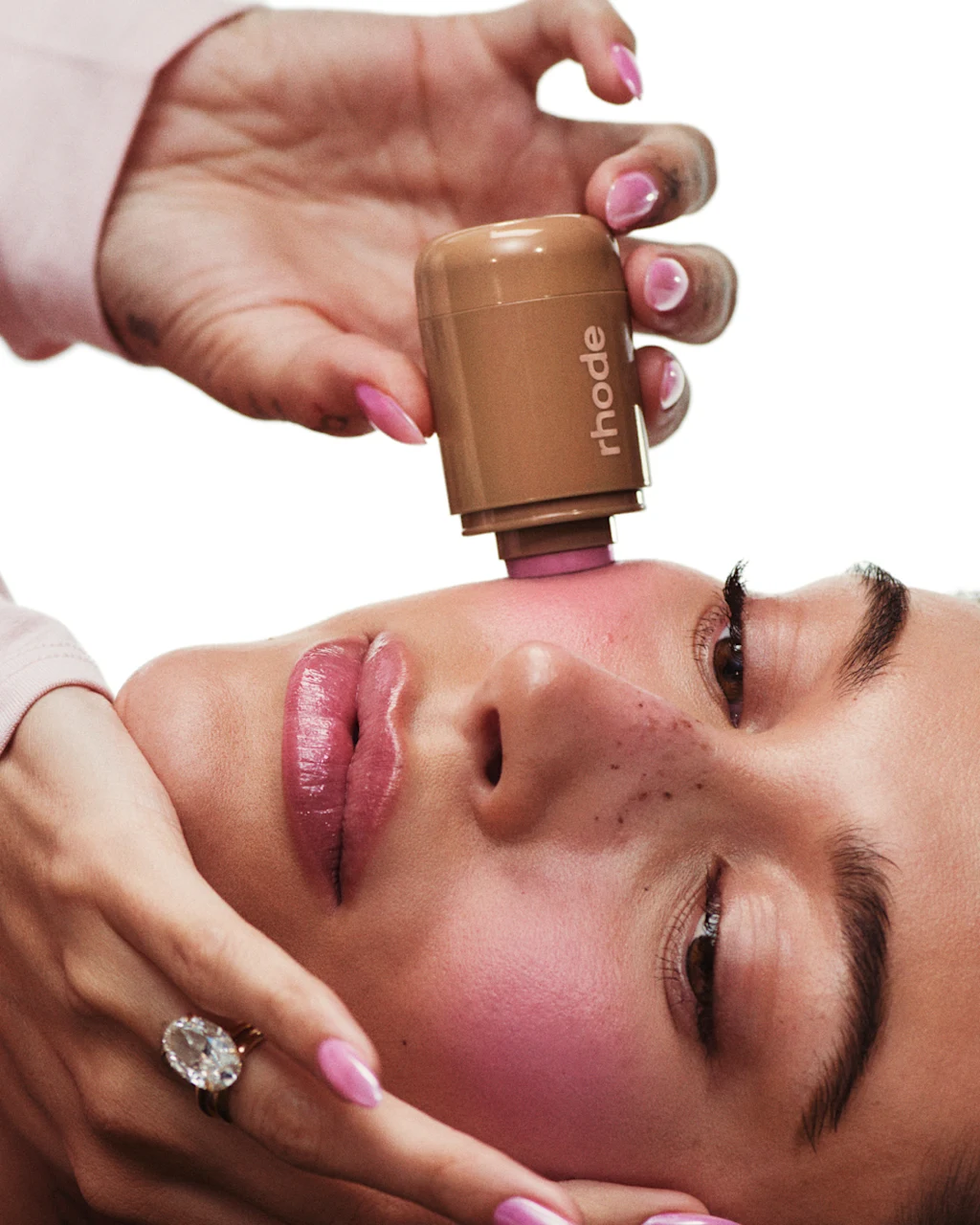
One video features an oversize Bieber waving back to teeny-tiny it-girl models Alex Consani and Paloma Elsesser. In other images, Elsesser and Bieber are perched atop the blush, and Consani peers at one blush the size of a fingernail. In others, they signal the blush name with prop styling: atop a juice box or a burnt marshmallow (Scarlett Johansson’s skincare brand, the Outset, recently posted a very similar image).
The strokes of the logo blur with a soft pink gradient, signaling the flush a dab of the product adds to your cheeks. The result is a playful but cleverly sophisticated visual take on the product offering itself.
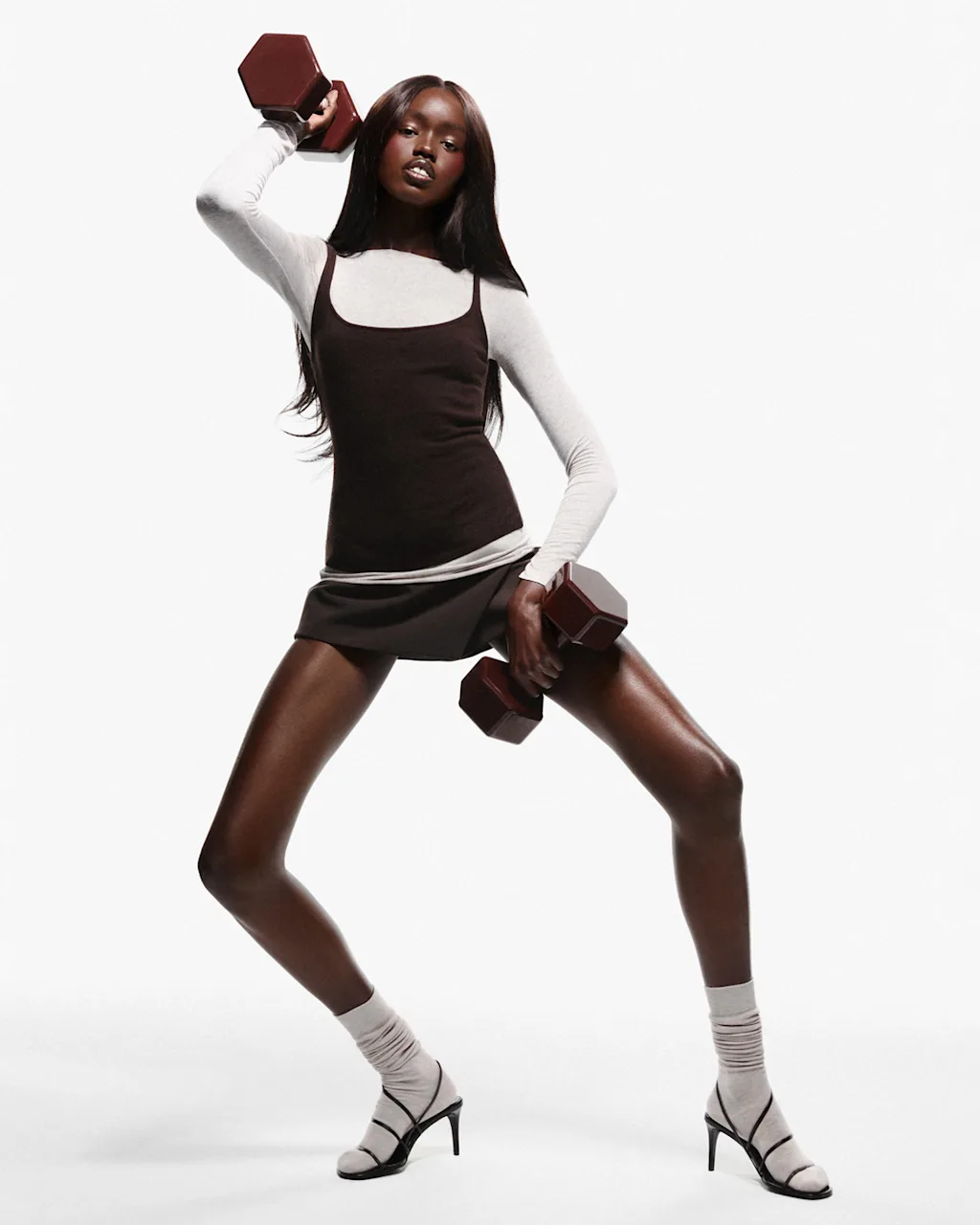
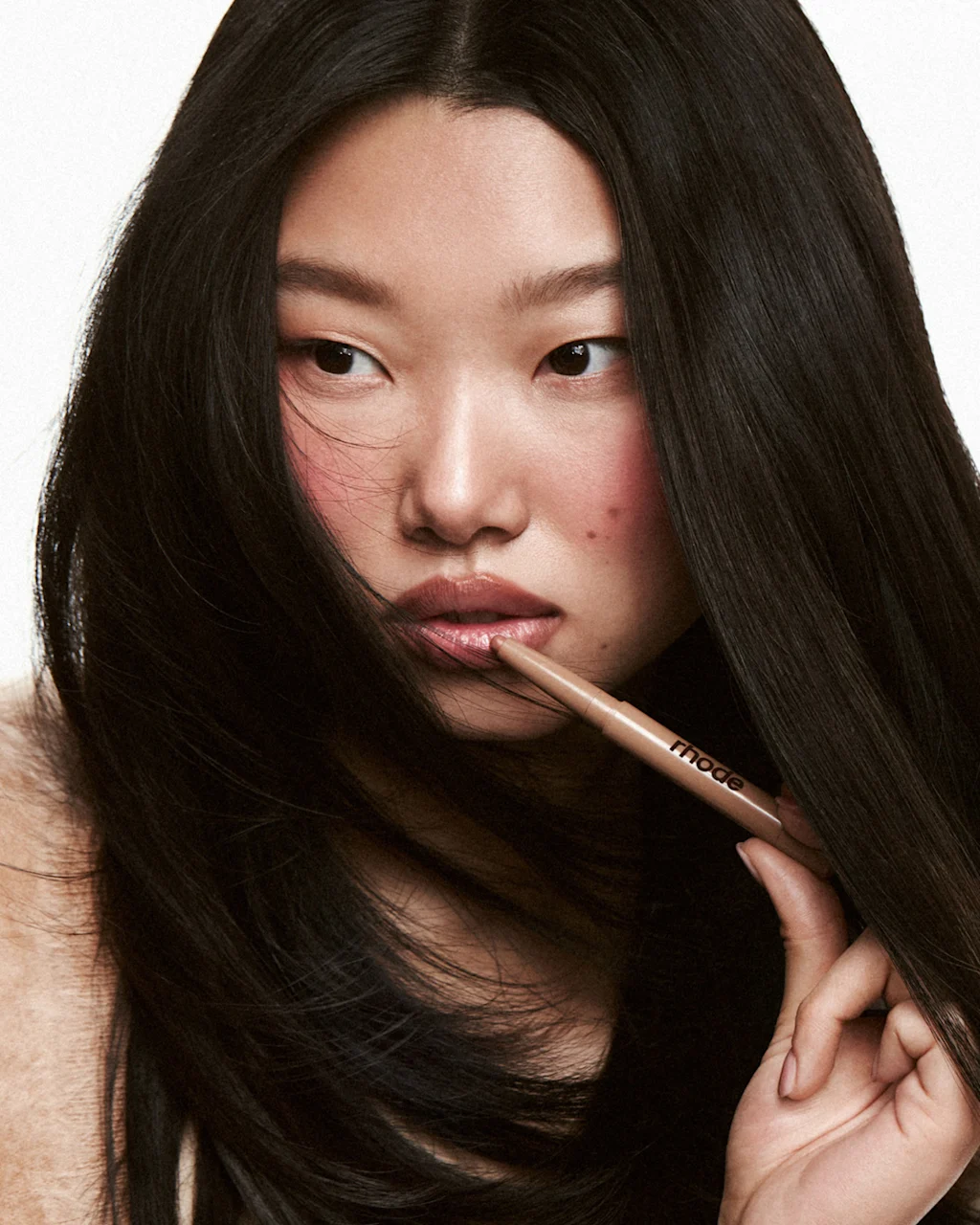
The same is true for the launch of Rhode’s lip shapes (or liners), which again lived within the same tight visual brand codes. This product drop played with scale, but used product naming conventions—spin, move, and lean, for example—as visual inspiration. “I used to be a dancer,” Bieber says, adding that she used that personal experience to lean into body movement as creative inspiration, and tapped Tate McRae to bring it into the campaign in a visual way.
Bieber then directly referenced high fashion for styling inspo—specifically these iconic ’90s Versace ensemble ads, which she revamped with socks, strappy heels, mini skirts, and sweaters.
But instead of fashion, Bieber is selling beauty—and a highly considered, culturally plugged-in point of view. If you know the reference, it builds cachet and high-end affinity for the brand. If you don’t, it looks like an original and clean take on ’90s nostalgia that’s everywhere these days.
“We always really love to tap on nostalgia,” Bieber says. “We always are looking for different ways to be inspired in different ways to articulate the story of that product.”
Stepping into Rhode World
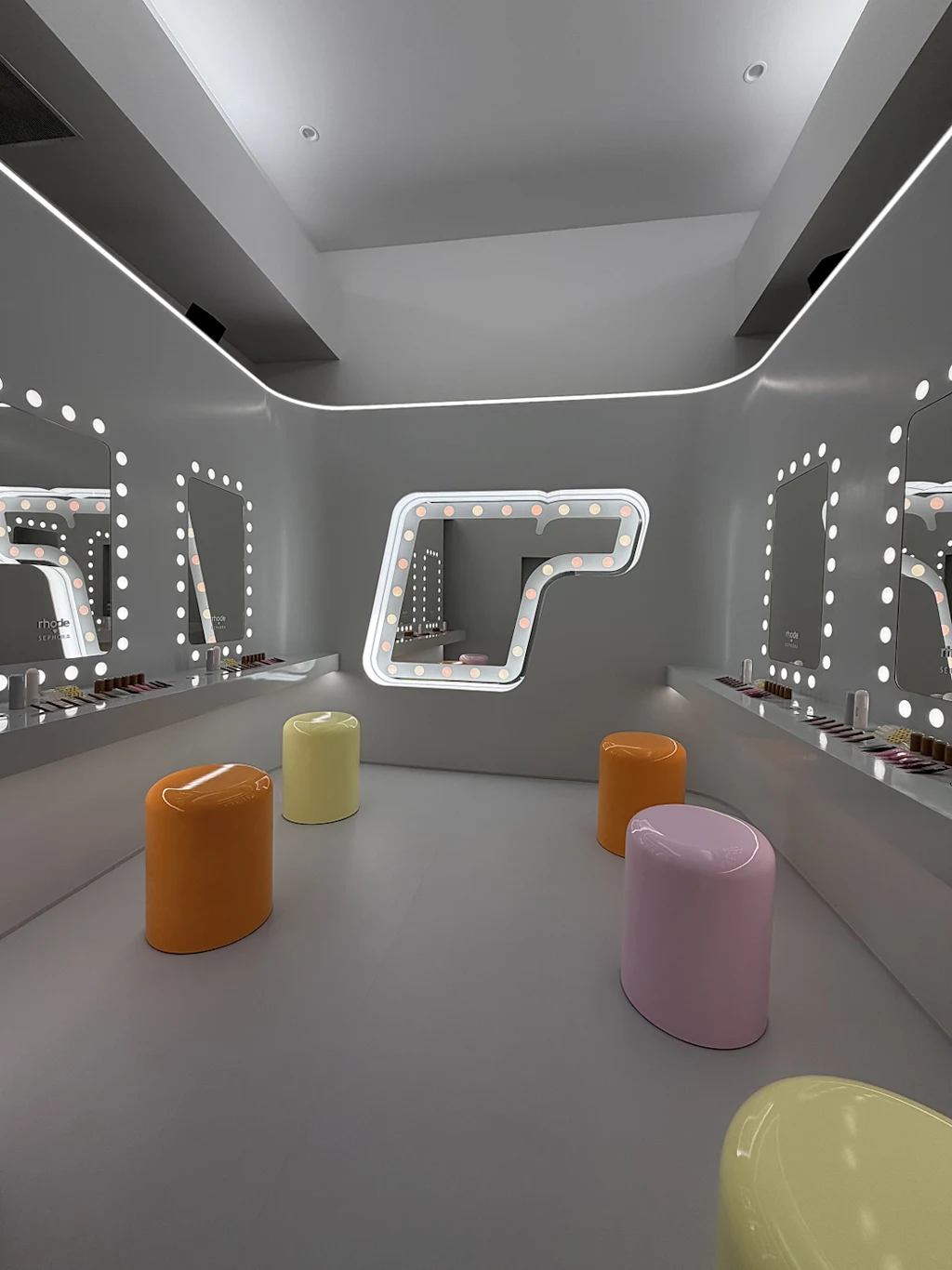
Rhode World is only the most recent example of this. The brand rented a mansion in Indio, California, where Coachella takes place, and decked it out in colors that synced with the brand’s new spotwear. (If you’re curious what Justin Bieber would be like as a creative director, look to the Rhode x the Biebers collection—he chose the colors, spotwear shapes, and overall look of the campaign, including the logo.) Hailey Bieber, who is the brand’s chief creative officer, was central to the look and feel of the activation.
Bieber tells me she wanted the activation to feel like an amusement park, a nostalgic “Rhode World,” with drinks, food, games, and of course, new product. Unlike an actual carnival, Rhode World was invite-only, but everyone had access to all of the online content that came out of it, and that leads to major brand engagement, which leads to sales. (The brand doesn’t have any stand-alone stores, but it does do pop-ups that lead to long lines and lots of content.)

In this case, the brand acquired more than 60,000 new consumers in one week, and unit sales of the collaboration were over six figures, according to the company. Rhode-related content surrounding the activation and the Rhode x the Biebers collaboration generated a combined 290 million views, 16.6 million engagements, and $32 million in earned media value, according to CreatorIQ.
That’s the highest engagements and likes ever, according to the company. If you can’t tell from those numbers, most fans engage with brand online anyway.
To view beauty through Bieber’s lens
Engaging today’s consumer requires consistency, community, and tapping into broader culture to gain relevance. Increasingly, it also requires adopting hi-fi editorial practices and the creative talent once only found in magazines and fashion to create cultural moments.
“From the beginning of creating Rhode and launching it, I always said that I wanted it to be very editorial storytelling,” says Bieber. “Coming from the world of modeling, editorial was my favorite thing to shoot, because you create a world by doing that. You’re often telling a story through visuals. And that was something that felt really important to me with this brand because, to me, it’s so much more and so much bigger than just the skincare and beauty brand.”
Bieber’s creative process begins with the product. From there she considers it how she wants it to be represented and how it makes her feel. “I love when something evokes a feeling,” she says. “That is something that’s really, really important to me, and that was important to me with the packaging, important to me with the imagery, storytelling—with all of it, really, but I think that you invoke those feelings the most through your visuals, through your storytelling and through the product itself. ”
Then she digs for inspiration. “I’m like, ‘Okay, well, this product makes me feel this way, and that reminds me of this photographer, and how he used to shoot this, and that reminds me of this one campaign I remember happening in 1994.’ I start with the product, and then I collect the data around it, and then it goes from there, in terms of turning it into our own world and making it the Rhode representation of that product.”
What it doesn’t do is engage in social trends. You won’t find any trending sounds, dances, or tiny mics. Instead, there’s a steady stream of lifestyle images that include seemingly candid photos of Bieber and influencers alike, sitting in the back of cars, wearing furs or Miu Miu boxers, and drinking martinis, or that place Rhode products next to Dior makeup or a particular Alaïa Le Teckel bag that subtly build high-end brand affinity.
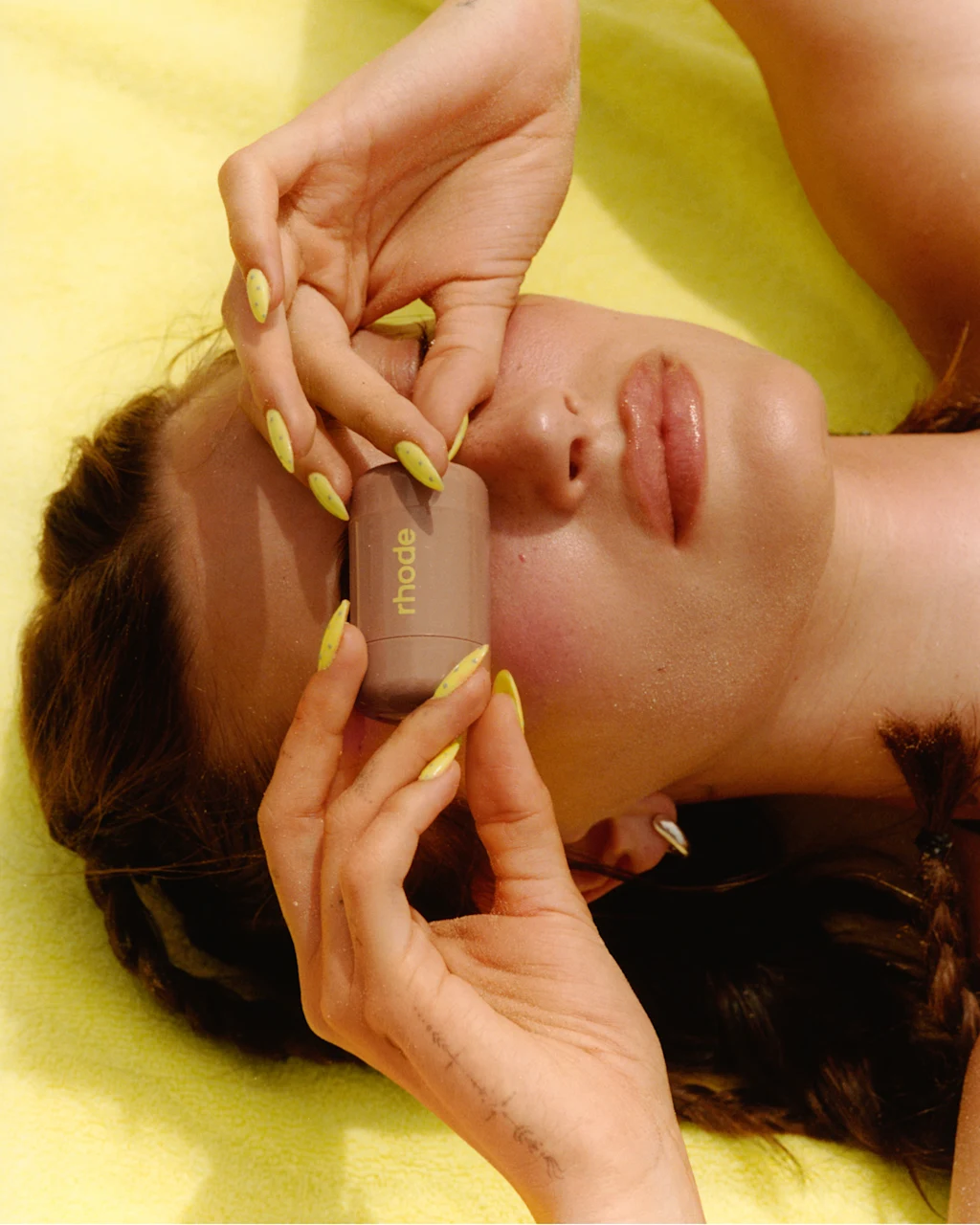
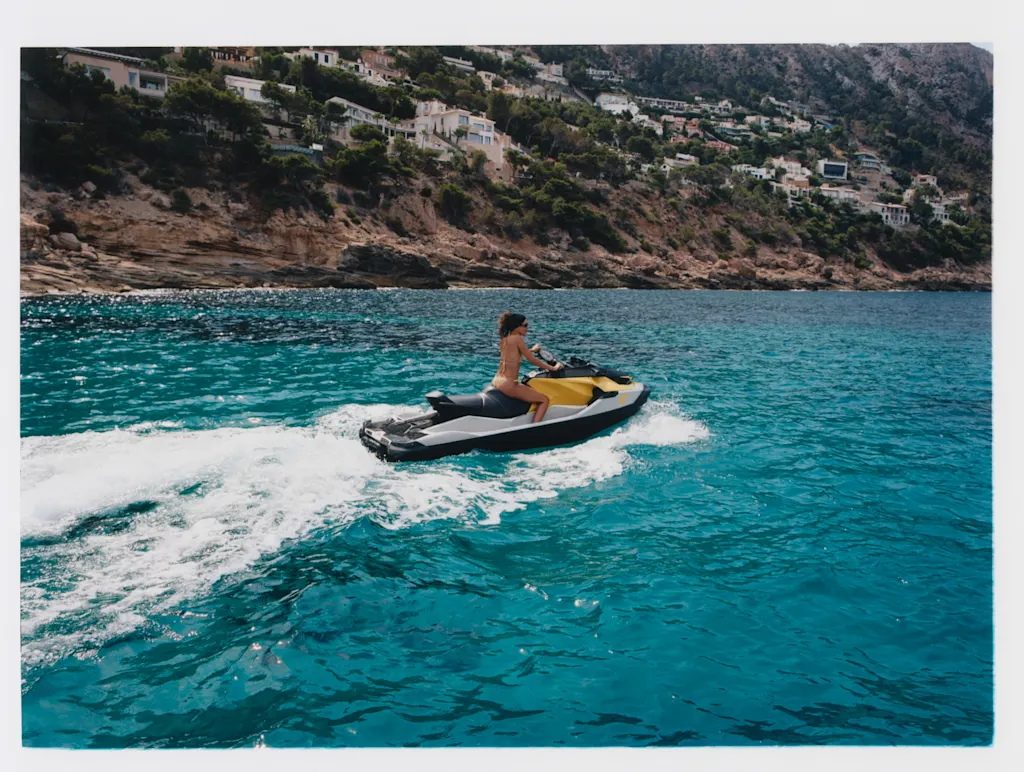
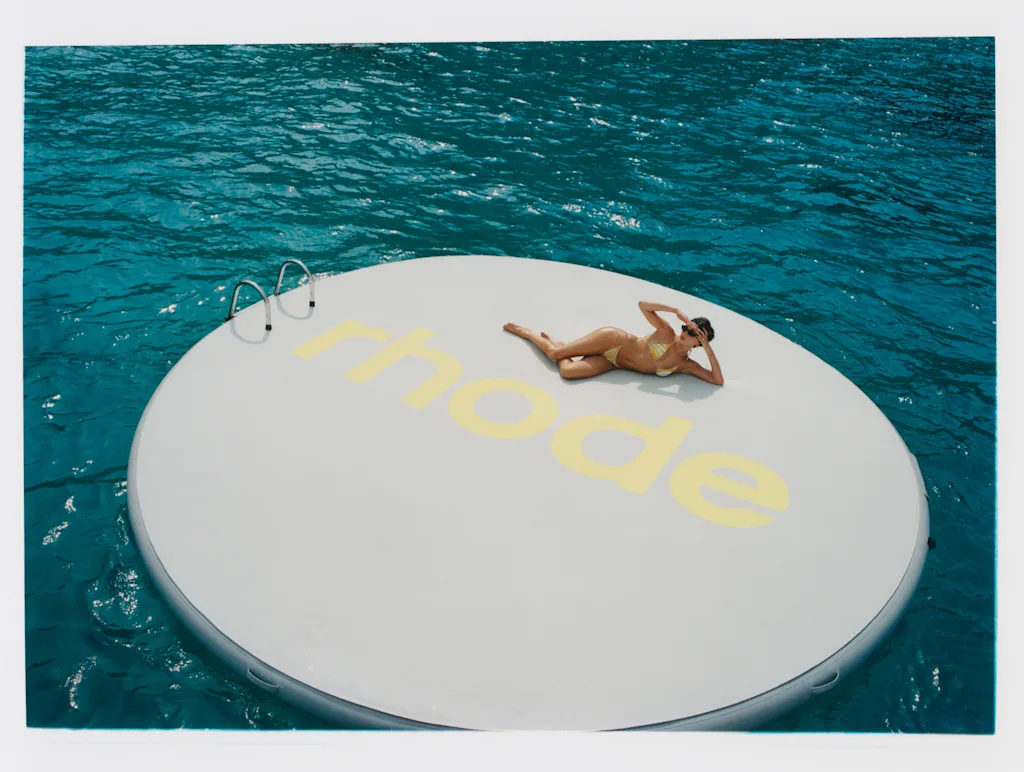
User-generated content (UGC), how-to slides, and product photography closely follow the brand’s neutral color palette too, occasionally with one accent color tied to a product launch, like yellow or pink. This creates a tightly cohesive, if variable, grid (and brand) look for its 4.6 million Instagram and 2 million TikTok followers.
“They want to know why they should spend any of their hard-earned money on it,” says Bieber of online brand building and visually forward explainers on its website. “Within the branding and the storytelling, I also think information is important: showing people, explaining to people, describing to people why you want to use it.“
The brand has a vibe, and the vibe communicates a holistic persona. It’s a world consumers can opt into. It balances authenticity with curation; communicating a premium skincare product used by young people with disposable income (though perhaps not La Mer-level spending power), cultural fluency, and discerning taste. Moisturize? No. Peptide-fluent Rhode girls flush, tint, and glaze their way through the day.
And build an industry-leading modern brand
So how exactly did Bieber, without formal creative or design training, make products that are so covetable? The reach of her public persona and that of the talent she works with is one reason, but the slew of celebrity skincare brands that aren’t B-level (and by that, I mean, billion-dollar level) show that alone is not enough.
“The product itself has to be great,” says Bieber. “Especially when it comes to skincare and beauty, the thing that people care about most, the thing that I personally care about most as a product-obsessed person, is that the product itself works really well and it’s really great and it does what it says it’s going to do.”
The packaging also helps. “As a woman, I like things that are visually and aesthetically pleasing. I like pulling something out of my purse that is cute. It makes me feel something,” she says.
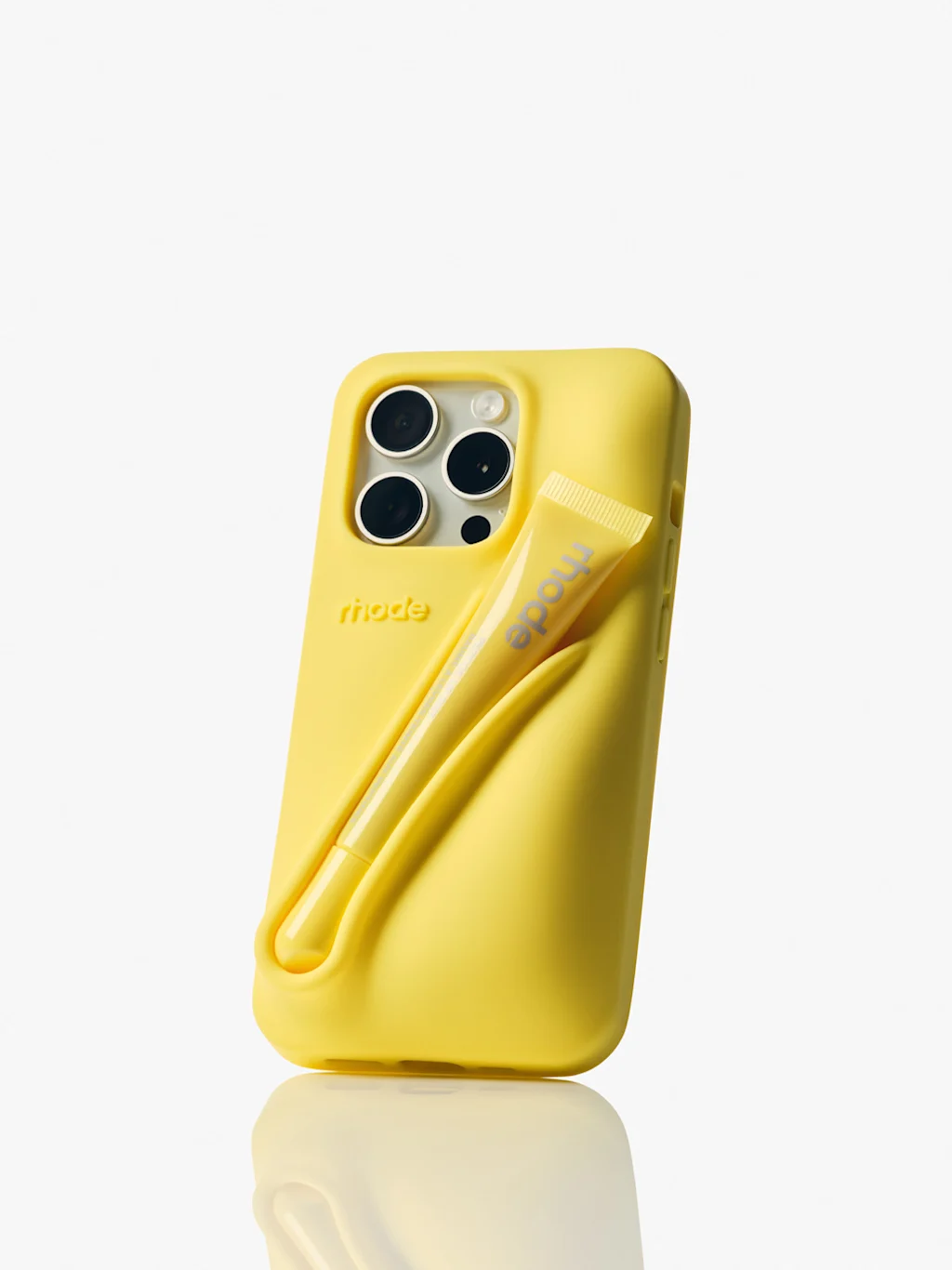
Aesthetics matter, too, online—and especially when her skincare universe makes products into accessories. That might be a lip pencil pulled out of a purse at dinner, a pimple patch, one of its makeup bags, or most notably, its genius lip case, which stores Rhode lip peptide treatment on the back of one’s phone. Content related to the case drove 126 million impressions and 1.1 billion in reach, according to the company—not to mention a cottage industry of dupes.
Bieber describes herself as specific and picky. “I know what I like, what I don’t like,” she says. “I’m able to make decisions pretty quickly on how I want something to look, feel, how I want you to experience it.” Although the brand approaches each campaign conceptually, it continuously changes the photographers and concept itself, so the storytelling is always different.
I ask Bieber for her do’s and don’ts of branding today, and her response is fittingly decisive. “I think a through line is a do and repetition is a don’t,” she says. “I never want us to repeat ourselves, but I do think a through line that feels consistently familiar is important.”