

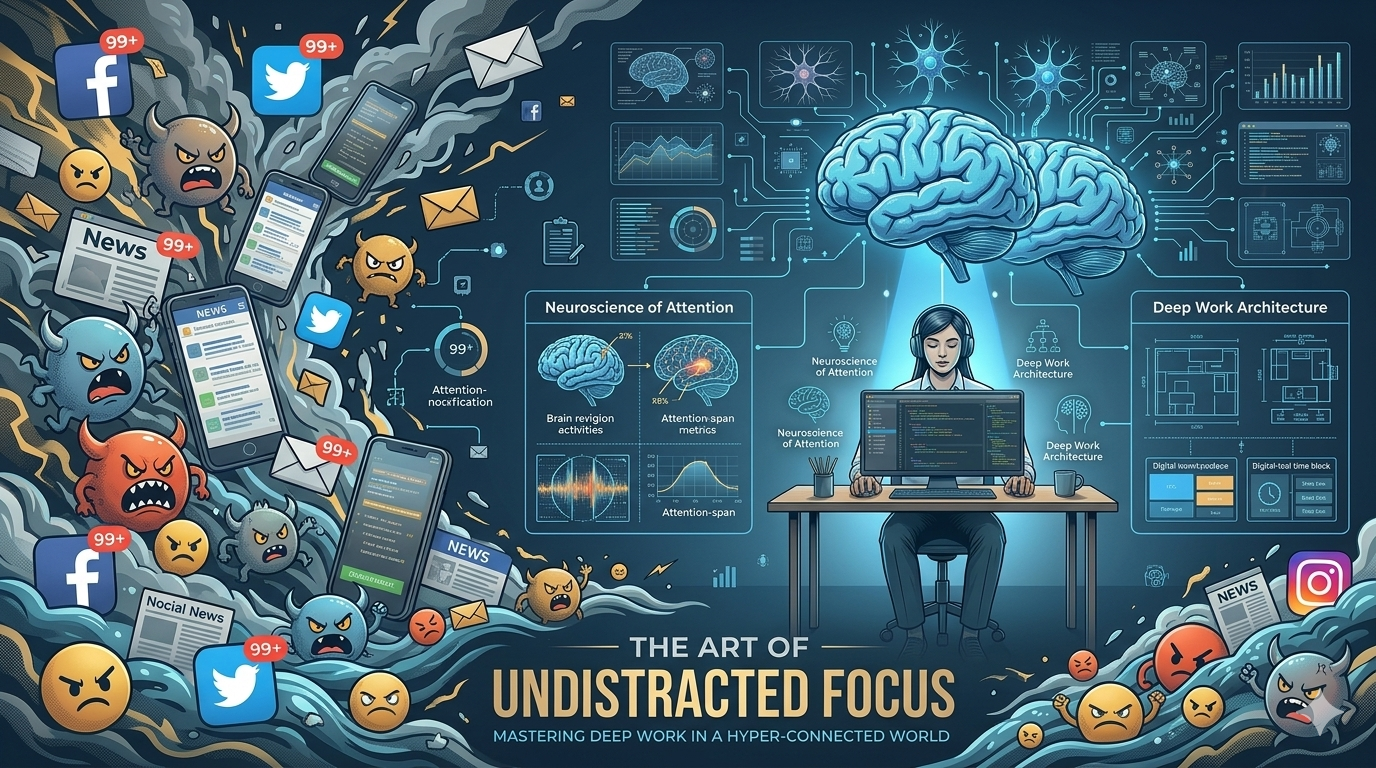
In an era defined by constant digital bombardment, the ability to concentrate deeply on a single task is becoming an increasingly rare and valuable commodity. Developing sophisticated techniques for sustained attention, often referred to as deep work, is not merely about improving productivity; it is a fundamental strategy for achieving higher levels of cognitive performance, fostering genuine creativity, and deriving greater satisfaction from our endeavors. This article delves into the core principles and actionable strategies for cultivating an undistracted focus, transforming how we approach work and life.
The Neuroscience of Attention and Distraction
Understanding the underlying mechanisms of our brain’s attention system is crucial for developing effective strategies to combat distractions. Our brains are wired with both a “focused attention” system, responsible for concentrating on a specific task, and a “diffuse attention” system, which allows for broader scanning and associative thinking. However, the modern environment, with its incessant notifications and readily available digital diversions, actively hijacks the focused attention system. This constant switching between tasks, known as task-switching or cognitive switching, incurs a significant “switching cost.” Studies have shown that each interruption can take an average of 23 minutes and 15 seconds to recover from, leading to a substantial loss of productive time and increased error rates. Moreover, the dopamine-driven feedback loops associated with checking emails, social media, or news updates create a cycle of shallow engagement that degrades our capacity for prolonged, deep concentration. Effectively managing these distractions requires a deliberate and structured approach, moving beyond mere willpower to implement systemic changes in our work habits and environment.
Architecting Your Environment for Deep Work
Creating a physical and digital workspace conducive to deep work is a foundational step. This involves consciously designing an environment that minimizes external stimuli and reinforces your commitment to focused tasks.
Optimizing Your Physical Space
Clear physical boundaries are essential. Designate a specific area for focused work, free from the clutter of everyday life. This could be a dedicated home office, a quiet corner of a library, or even a specific time block at your workplace.
Declutter Ruthlessly A tidy workspace is often associated with a tidy mind. Remove any non-essential items from your desk and surrounding area.
Minimize Auditory Distractions Consider noise-canceling headphones or ambient sound machines that play white noise or nature sounds. Inform colleagues or family members about your focus periods to minimize interruptions.
Control Visual Stimuli Position your workspace away from high-traffic areas or windows that offer distracting views.
Curating Your Digital Environment
The digital realm presents a unique set of challenges. Proactive management of your digital tools and platforms is non-negotiable for sustained focus.
Disable Non-Essential Notifications Turn off alerts for email, social media, instant messaging, and news applications during your deep work sessions.
Utilize Website Blockers Employ browser extensions or applications that temporarily block access to distracting websites.
Schedule Communication Designate specific times for checking emails and responding to messages, rather than allowing them to dictate your workflow. This approach can significantly reduce the cognitive load of constant context switching.
https://novaastrax.com/productive-environment/
Implementing Deep Work Methodologies
Beyond environmental controls, adopting specific methodologies can systematically train your brain for sustained concentration. The key is to move from reactive, shallow work to proactive, deep engagement.
The Monastic and Bimodal Approaches
Philosophers of deep work, like Cal Newport, categorize approaches to deep work. The “Monastic” approach involves attempting to maximize deep work by eliminating or drastically reducing shallow obligations. This is often suited for those with significant autonomy over their schedule. The “Bimodal” approach, more practical for many, involves dividing your time into clearly defined blocks, dedicating some periods to intensely focused deep work and others to more administrative, shallow tasks. This ensures that both types of work receive appropriate attention without constant intermingling.
The Four Disciplines of Execution (4DX) Applied to Focus
While 4DX is typically applied to organizational goals, its principles are highly relevant for personal productivity and deep work:
Focus on the Wildly Important Identify the single most crucial deep work task that will have the most significant impact. Make this your priority.
Act on Lead Measures Track activities that directly contribute to achieving your focus goal, rather than just the outcome itself. For instance, if your goal is to complete a complex report, track the hours spent in deep writing sessions.
Keep a Compelling Scoreboard Visualize your progress. This could be a simple tally of deep work hours completed or a progress bar for a specific project.
Create a Cadence of Accountability Schedule regular check-ins with yourself or an accountability partner to review progress and adjust strategies. This consistent reinforcement is critical for maintaining momentum.
The Long-Term Benefits of Cultivating Undistracted Focus
The commitment to deep work yields benefits that extend far beyond immediate task completion. It fosters a profound sense of mastery, enhances problem-solving capabilities, and contributes to overall well-being by reducing the stress associated with constant digital overload. By developing the capacity for sustained attention, individuals can tackle more complex challenges, produce higher quality output, and achieve a more fulfilling professional life. This deliberate cultivation of focus is not just a productivity hack; it is a strategic investment in one’s cognitive capital. It allows for a more profound engagement with challenging material, much like how a robust investment strategy can lead to significant long-term financial growth. For example, a deep dive into market dynamics, as outlined in certain financial analyses, requires similar sustained attention to uncover nuanced trends.
For more exclusive updates and deep market analysis, visit Nova Astrax Nova Astrax
Meta Description: Master undistracted focus and elevate your productivity with deep work strategies. Learn to architect your environment and implement methodologies for sustained concentration in a hyper-connected world.