
As job vacancies vanish, young entrepreneurs are pitching up at markets, discovering new opportunities in an old trade
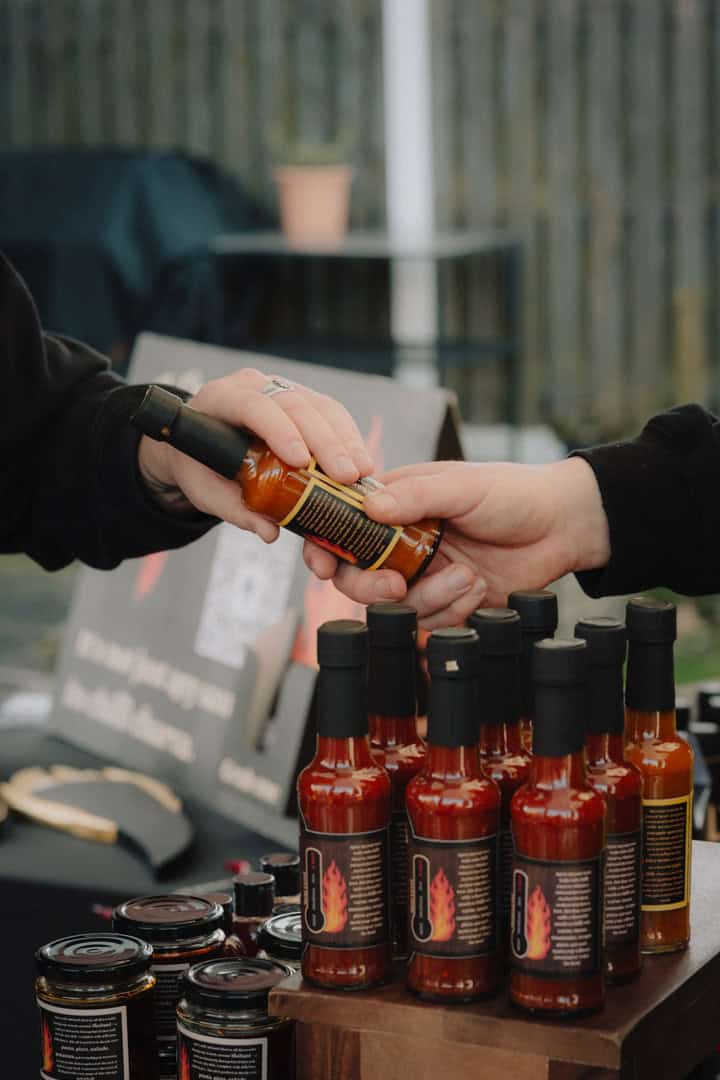
From behind his market stall Alex Ward watches children dare each other to try spoonfuls of Charva Lava, a pineapple and mango hot sauce with a sting in its tail. Some swagger forward, while others bottle it.
“That’s the great thing about market stalls: you meet your customers, you immediately see how they react to your products. You also see the geezers who run a mile as they don’t want to look like wimps ’cause they can’t handle their chilli,” he laughs.
Ward, aged 27, runs Chilli Charva with his older brother Tom, 32, trading across the north of England from their Rotherham base. The brand evolved from their childhood Sunday dinners, when the brothers used to douse them in Tabasco and dare each other, as Alex puts it, to “go big” with competitive chilli consumption.
‘Charva’ is northeastern slang for a flashy, working-class lad, and today they lean into their brand, manning their stall in black leisurewear, bucket hats and chain necklaces.
They are among an estimated 30,000 market traders operating in the UK, and are the new generation of young traders who are picking the market stall over a university place or an apprenticeship.
According to the Office for National Statistics, 957,000 young people aged 16 to 24 were not in employment, education or training (NEET) in the last three months of 2025. That is one in eight young people and a 26% rise from pre-pandemic levels. A further 110,000 graduates under 30 are out of work. Youth unemployment stands at 16%, compared with 3.6% for adults overall, with hotspots in the West Midlands at 20%, East Yorkshire at 18%, Northumberland at 17% and outer London at 19%.
The reasons are layered: fewer entry-level vacancies amid economic uncertainty and AI adoption; higher employer National Insurance contributions and minimum wage costs; and a mismatch between employer demand and graduate supply. The long-term damage for people not in employment can be severe. Research suggests that a six to 12-month spell of unemployment between 18 and 24 can cut lifetime earnings by 10%. Young people who are NEET are two to three times more likely to report poor mental health than peers in work or education.
Policy ideas range from paid military-style gap years to wage subsidies and expanded digital skills training. A less obvious intervention has come from a partnership between the Department for Work and Pensions and the National Market Traders Federation (NMTF), the trade body founded in 1899. For the past decade the NMTF has run its Young Traders Market scheme, offering free market space to 16 to 30-year-olds and culminating in an annual Young Market Trader of the Year competition in Warwickshire. In 2025, Chilli Charva won the grocery category.
“The business has taken off because of the market stalls,” Alex says. “We get immediate feedback on recipes from customers and when we run the stall somewhere [affluent] like Leeds we get online subscriptions the next day.”
The business has taken off because of the market stalls
After a decade experimenting in their mum’s kitchen, the brothers had their epiphany in 2023 while backpacking through southeast Asia. In December 2024 they launched at a Christmas market in West Melton, South Yorkshire.
Although there are plans to be working on Chilli Charva full-time by the end of the year, Alex is still working construction shifts to fund a professional kitchen on land once owned by their grandparents, Bryan and Helena Ward, who ran a Rotherham fruit and veg shop.
Joe Harrison of the NMTF calls stalls “ideal business incubators”. They allow young people to test ideas cheaply and visibly. They can also suit those who do not thrive in formal work structures. He says he loves seeing shy traders “blossom in confidence” once they start talking to customers.

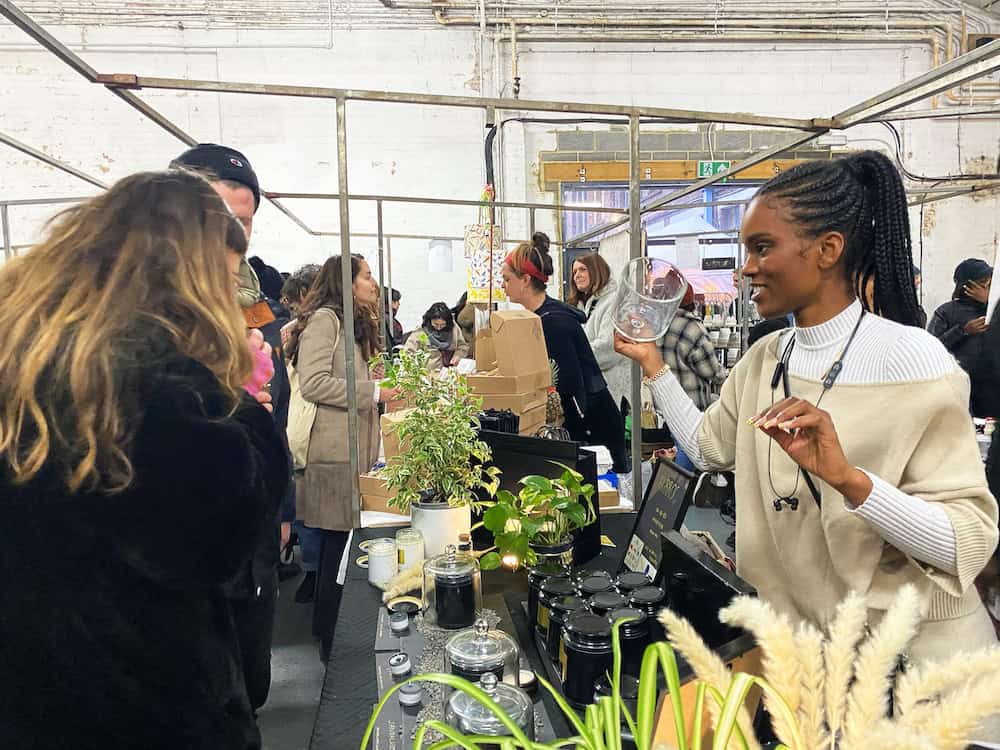
For Shanice Palmer, 31, from Croydon, opening a marketstall was a lifeline. “It was the pandemic and I had been let go from a job as an administrator at a women’s co-working space in London and I thought: what the hell do I do?” she says.“I’d made scented candles as a hobby for ages so on a whim I applied for a stall at Greenwich Market.”
She entered the NMTF scheme, traded at markets in Peckham, and in 2023 won Young Market Trader of the Year in the retail category for her fragrance brand, Kurroc. A six-month rent-free lease in Doncaster followed. She relocated 200 miles north and now runs a permanent stall.
“It’s like a live R&D lab [as a market trader]: you test price points and products in real time and you get new ideas; it’s market stall shoppers who told me to launch reed diffusers, which are now one of my most successful lines.”
It’s not always easy, she admits. “When it’s coming down with rain and zero degrees, and you’re wearing the wrong clothes you need a lot of coffee to keep smiling,” she laughs. But the stall built the brand.
It’s like a live R&D lab – you test price points and products in real time and you get new ideas
Jayden Roberts, 19, in the West Midlands, also found his footing in public. He began screen printing at sixth form and launched Purgatory Clothing at Walsall Makers Market in 2024. “Nerve-wracking,” he recalls of those first exchanges. “But then it dawned on me: I’ve made this, I’ve printed this, and now I’m selling this and I should be proper proud.”
Roberts, of British and Caribbean descent, notes that his grandfather sold watches at markets in the ’80s and ’90s. “It’s in the blood, I guess.” He plans to “make a go of it” full-time after his studies.
Bernadette Fong, 31, in Reading, did not set out to become a trader. She began making candyfloss art as a teenager, shaping spun sugar into cartoon animals and puppets such as Elmo and a yellow duck she calls Duckie. Inspired by hawker markets in China and South Korea, she added her own twist. She was working as an physio when she tried a Christmas market in Hertfordshire in 2023. A TikTok video of her crafting Duckie at a stall in Droitwich went viral. Now she runs Cloud Nine Candyfloss Art at markets and festivals through the summer and holds a permanent stand near Hatfield shopping mall. She is training freelance sugar-spinners to expand nationwide.
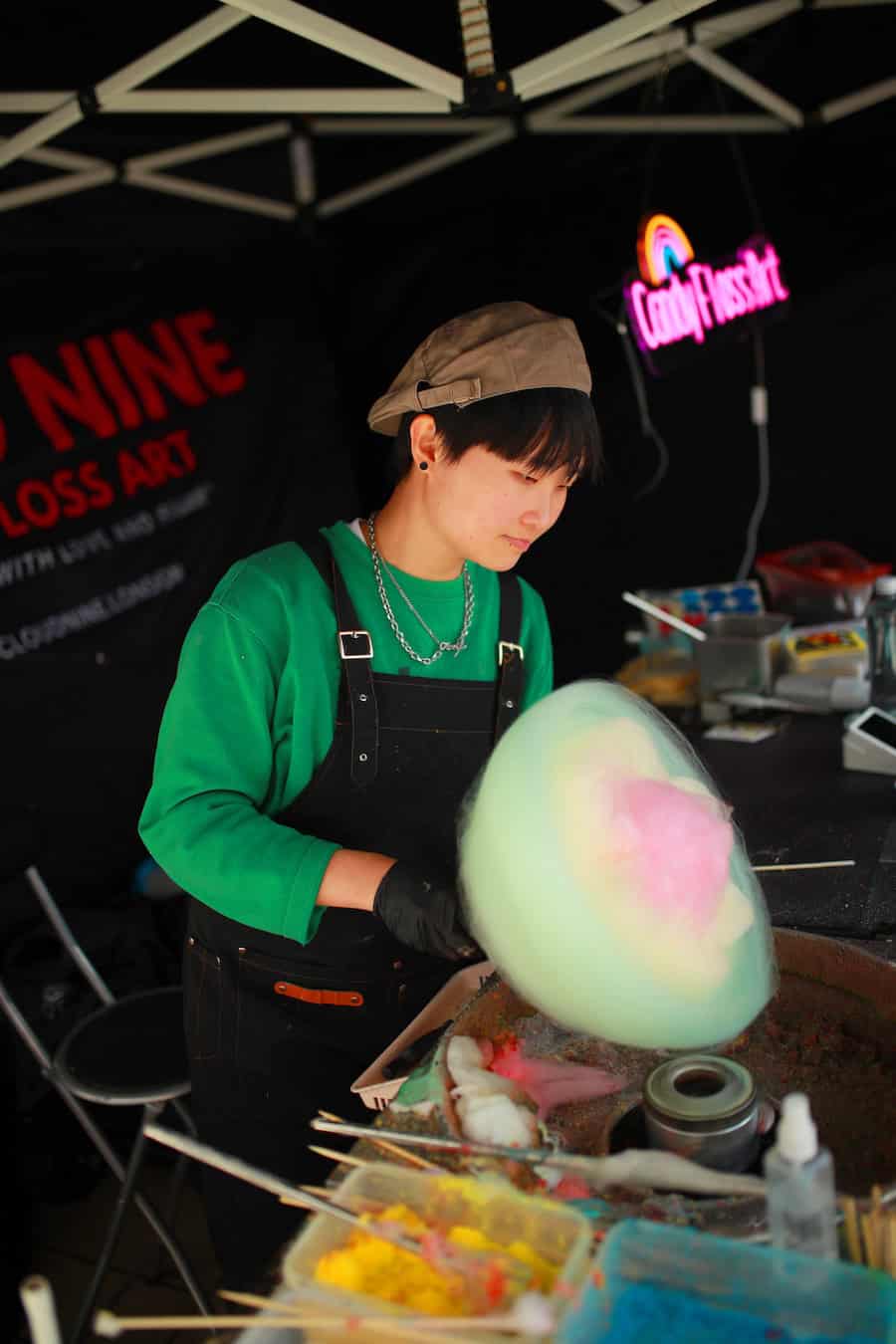
“I think having a small treat as well as the fun of watching the creations happening in front of you really works at markets and as a business in 2026,” she says.
Amy Bennett, 26, in Leeds, started trading after work dried up during Covid. She was studying sustainability at the University of Leeds at the time. “I’d applied for part-time jobs that suddenly didn’t exist due to lockdown,” she says.
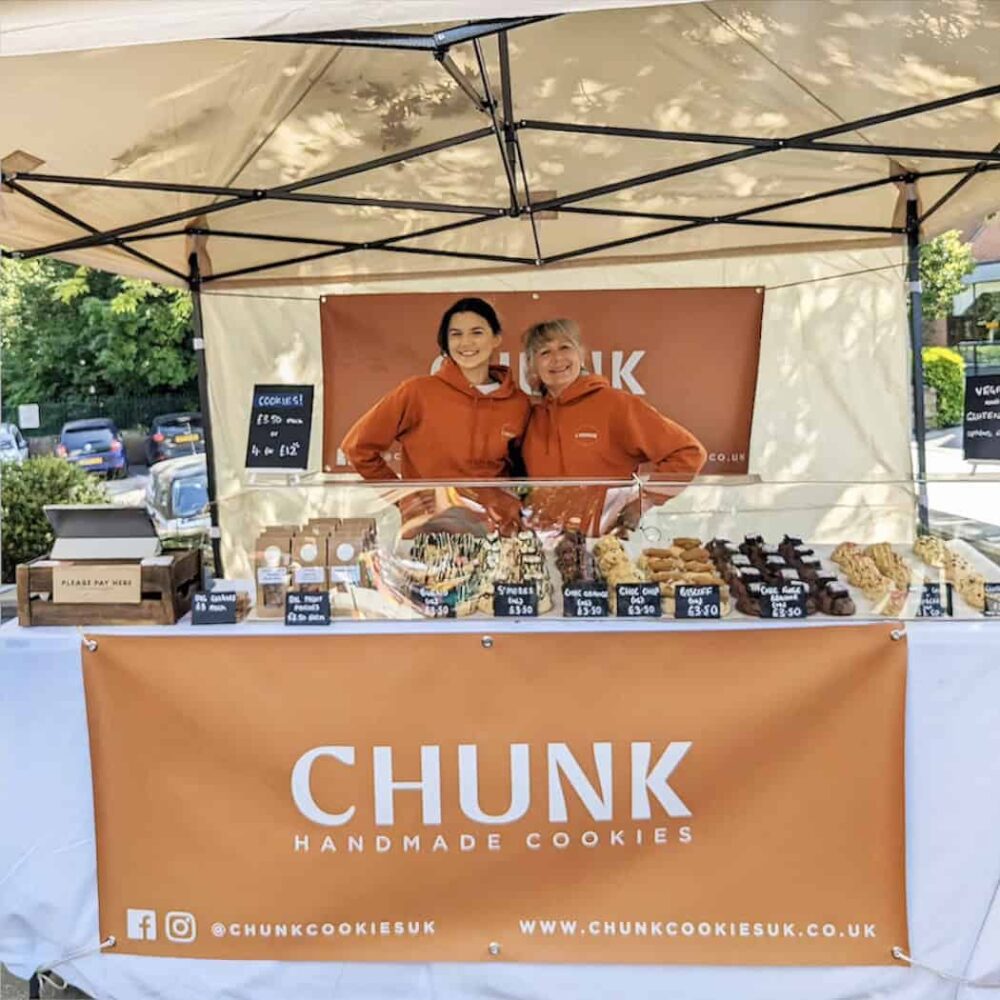
Instead, she started baking cookies, then sold them to fellow students. Her boyfriend Diego Espinosa, 32, whom she met backpacking in Australia, became Chunk Cookies’ cycle delivery driver, and when lockdown eased and deliveries slowed, they pivoted to markets.
“We got on to the [NMTF] young traders’ scheme and criss-crossed the whole of Yorkshire from Keighley to Hull on market stalls,” she says.“It taught us loads, particularly that customers want experiential retail, not just a tasty product.”
In 2023, they signed a lease on a bricks and mortar Chunk Bakery shop in Leeds. They now employ 10 staff and still trade at markets. Bennett sees small entrepreneurship as one route through a shrinking graduate premium. “I do use my degree in a way as the business is all plant-based and sustainable, but not many of the people that I went to uni with have actually gone into graduate jobs,” she says.
It dawned on me: I’ve made this, I’ve printed this, and now I’m selling this – I should be proper proud
More than half of recent graduates in some studies are considered underemployed. Yet critics including Sir Alan Milburn argue that small entrepreneurship schemes risk being marginal in a structural crisis. Self-employment carries exposure: no holiday pay, patchy pensions, volatile income. Average pre-tax turnover for market traders is around £34,000 a year. Milburn calls for a system-wide response tied to major employers and local labour markets.
Markets themselves are in flux. Landmark sites such as Grainger Market in Newcastle and Cardiff Market are undergoing multi-million pound renovations. Others, including Birmingham Bull Ring indoor market and London’s Smithfield meat market, face closure. The total number of UK markets has held steady at around 1,150 over the past decade, but many council-run sites now trade fewer days, with artisan, experiential and night markets replacing traditional daily produce.
Back at the chilli stall, the Wards are scaling up. A professional kitchen is coming online. New products include One Charva To Kill, a barbecue sauce reformulated to replace a synthetic smoke favour with natural hickory drops after customer feedback. “Hopefully some chilli-loving kids will give us their feedback,” Alex laughs.
Harrison likes to temper expectations with a nod to Britain’s best-known fictional trader, Derek ‘Del Boy’ Trotter. “I tell them: ‘this time next year Rodney, you probably won’t be a millionaire’,” he says. “But I say: ‘you might make a living, and have some fun while you’re at it’.
Main image: Owen Richards
Be part of the solution
At Positive News, we’re not chasing clicks or profits for media moguls – we’re here to serve you and have a positive social impact. We can’t do this unless enough people like you choose to support our journalism.
Give once from just £1, or join 1,800+ others who contribute an average of £3 or more per month. Together, we can build a healthier form of media – one that focuses on solutions, progress and possibilities, and empowers people to create positive change.
Support Positive News




![Curve DAO [CRV] price prediction - Traders, watch out for this market opportunity!](https://novaastrax.com/wp-content/uploads/2026/05/Curve-DAO-CRV-price-prediction-–-Traders-watch-out-for.webp-100x75.webp "Curve DAO [CRV] price prediction – Traders, watch out for this market opportunity!")