U.S. Treasury Secretary Scott Bessent has voiced opposition to a significant increase in the Federal Reserve’s interest rates, urging the central bank to avoid a half-point hike at its upcoming December 8-9 meeting. Bessent’s comments came on a Friday as the cryptocurrency market saw Bitcoin fall below the $60,000 mark for the first time since July, and stock markets experienced a downturn amid speculation that the Fed might continue its tightening policy despite market sell-offs.
Speaking to CNBC, Bessent pointed to recent shifts in energy markets, specifically an energy supply shock and a subsequent drop in crude oil prices, as reasons for the Federal Reserve to exercise caution. He highlighted that a Fed governor, who has recently advocated for a 50 basis point increase, had previously supported a rate cut approximately a year ago. Bessent described this shift as “somewhat peripatetic,” suggesting a lack of consistent direction. “I would encourage the Fed to look forward, not backwards,” Bessent stated, emphasizing the need for the central bank to consider future economic conditions rather than past inflation data.
Federal Reserve Officials Divided on Rate Strategy
Bessent’s remarks followed statements made two days prior by Fed Governor Christopher Waller. Waller had indicated to CNBC that a half-point hike in December was likely necessary, suggesting the Fed might need to “shock people” due to inflation trends that he described as “headed in the wrong direction, and it’s spreading out.”
Waller is not the only official expressing concern. Minutes from the Fed’s October meeting revealed that most officials anticipate a quarter-point hike in December, though two members had suggested a larger increase. Chicago Fed President Austan Goolsbee also declined to rule out a more substantial hike on Thursday, telling reporters that “multiple months in a row of borderline disturbingly high inflation rates with little progress” meant “everything’s always on the table.”
However, not all Fed officials are leaning towards aggressive action. New York Fed President John Williams stated on Tuesday that he did not believe the current situation warranted “dramatic action.” In contrast, St. Louis Fed President Alberto Musalem has projected as many as four rate hikes by the spring of 2027.
The Federal Reserve had previously raised rates in September for the first time in over three years and maintained them in October. Inflationary pressures have persisted, partly influenced by the earlier impact of geopolitical events on energy prices.
Market Reactions to Fed Outlook
Major financial institutions and market traders largely anticipate a more moderate approach. Citi continues to expect a quarter-point increase in December. Nathan Sheets, Citi’s Global Chief Economist, stated on Thursday that he did not see a justification for a 50 basis point hike despite persistent inflation. The bank’s analysis suggested that Fed officials would likely be hesitant to implement aggressive hikes during an equity market sell-off.
Citi forecasts that the Fed will hold rates steady after December and commence rate cuts later in 2027. Market sentiment aligns with a smaller hike, as indicated by the CME Group’s FedWatch tool, which showed over a 98% probability of a quarter-point increase. The yield on the 10-year Treasury note subsequently fell by more than 10 basis points to 4.95% as investors sought safer assets.
Equity markets reflected the uncertainty and sell-off sentiment. The Nasdaq Composite saw a decline of over 2% in morning trading, and the VIX volatility index surpassed 30, reaching its highest level since March.
Impact on Bitcoin and Digital Assets
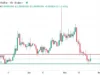
The cryptocurrency market experienced significant volatility, with Bitcoin trading around $59,700 shortly before 11 a.m. ET, marking a drop of over 5% for the day. This decline pushed Bitcoin below the $60,000 threshold for the first time since early July and put it on track for a seventh consecutive weekly loss, the longest such streak since 2022.
Higher interest rates generally act as a deterrent for assets that do not generate yield, and companies holding Bitcoin have also felt the impact. MicroStrategy’s stock, a prominent holder of Bitcoin, fell for a sixth consecutive session on Thursday. The price of Bitcoin itself has depreciated by approximately 25% over the past month, a trend that Bitcoin Magazine Pro had noted earlier in the week.
James Butterfill, head of research at CoinShares, linked the cryptocurrency market’s outlook to inflation trends in a note dated November 18. He stated, “Our base case remains range trading around USD 60k to 90k through much of 2027, until falling inflation gives monetary policy room to ease.” At the time of writing, the Bitcoin price hovered near $59,300.
Why it matters
The differing views between Treasury Secretary Bessent and certain Fed officials highlight the ongoing debate about the appropriate path for monetary policy in the face of persistent inflation and market volatility. The Fed’s decisions have significant ripple effects across financial markets, influencing everything from stock prices to cryptocurrency valuations and the cost of borrowing for businesses and consumers.

Nova Astrax covers crypto, fintech, finance, health and wellness, AI and future tech, and practical life hacks — with original analysis and daily news from around the world.