Home Blog Page 62

A customer used AI to trick DoorDash into issuing a refund. The company’s response is going viral

0


Food delivery service DoorDash is quick to hold restaurants accountable for their mistakes—but not without evidence. Dissatisfied customers have to provide proof that something was wrong with their order, be it a missing item, late delivery, or improperly prepared food, before the company will issue a refund (potentially on the restaurant’s dime, depending on the nature of the mistake).

But in the AI era, verifiable proof is harder to come by, and one customer’s viral post about tricking DoorDash into giving her a refund shows that despite the company’s best efforts, its anti-fraud measures aren’t foolproof.

On TikTok, a user named Starr (@mi5under5t00d) posted a montage of images showing how she used an AI-doctored image to get a full refund on her DoorDash order.

@mi5under5t00d

Shout out to chatGPT Cuz who tfuck was they feeling like forgetting my carrots and ranch that I paid EXTRA for and had the nerve to send some cold ass chicken yea ok ! 😭😭🤪 #chatgpt #trending #fyp #youngho

♬ original sound – Oh Deezy

First, an actual picture of her order of chicken wings, including a piece with a bite taken out of it. Next, that same image, but edited with AI to make the bitten chicken wing appear raw. Finally, a screenshot from her DoorDash app, showing that the company issued her $39.24 of credit to use on future DoorDash orders.

“Shout out to ChatGPT,” reads text overlaid on the video.

Starr’s refund strategy went viral on TikTok, garnering 4.4 million views and thousands of comments—including one from DoorDash itself.

‘This gets people fired’: Social media responds

Though Starr seemed flippant about using AI to make her food look undercooked, social media wasn’t on her side.

“This gets people fired btw,” one commenter wrote. “Some people’s [lives] depend on DoorDash or Uber and [you’re] gonna get [them] fired over a few dollars? Selfish.”

“This is honestly a disgusting thing to do, why would you take advantage of small businesses?!” commented another.

DoorDash itself even chimed in with a comment that went viral in its own right. “Oop should’ve blocked us!” the company commented.

“Now why would I do that if my chicken was raw?” Starr replied.

In the video’s caption, Starr explained that she did have problems with her order, including two missing items and that her chicken was cold when it arrived—but the chicken being raw, a much more serious issue, was apparently her own invention. 

DoorDash has policies in place to protect merchants from fraudulent claims like Starr’s, including flagging users who repeatedly request refunds and conducting manual review of those customers’ claims. But as AI images become more and more convincing, even manual review can fall through.

DoorDash’s love-hate relationship with AI

Though DoorDash’s comment may imply it’s anti-AI, the company uses AI throughout its business practice, including a newly announced suite of AI tools for merchants.

One of DoorDash’s more controversial AI uses is enhancing and editing images of food. As DoorDash explains on its Photo FAQs page, any photos on the app labeled “AI-enhanced” have been altered by AI to re-plate dishes, replace background elements, fill in missing portions of images, or change the perspective to make food more visible. DoorDash writes that these AI-generated changes are meant to “better showcase menu items and create a more consistent browsing experience.”

DoorDash has not responded to Fast Company’s request for comment.



Fujimori and Sanchez lead Peru's presidential runoff as count enters final stretch

0


Conservative ​Keiko Fujimori is leading the first round vote of Peru’s presidential election with leftist Roberto Sanchez in second place as the count enters the final stretch. The final result is expected on May 15 after weeks of delays due to logistical failures ‌and allegations of fraud.

Ondo Finance moves $63.9mln: Is a sell-off looming?

0
Ondo Finance moves $63.9mln: Is a sell-off looming?


ONDO broke out aggressively after major wallet transfers and rising exchange inflow activity.

Digg is back (again), this time as an AI news aggregator

0


When the history of the internet is written, the story of Digg might be one of its most fascinating chapters.

The site that established the template later popularized by Reddit has ebbed in and out of relevance for much of its existence. Two months ago, it shut down. Now it’s back once again, and it wants to keep users up to speed on the fast-growing world of artificial intelligence.

Like an overly determined game of whack-a-mole, the Digg website is live once more, with a headline reading “Hello Again” on its home page and a new mission statement.

“The bet is simple: the internet has more noise than ever, and the people who can sort signal from it have never been more valuable,” reads the note from founder Kevin Rose. “We’re starting with AI. It’s the noisiest, fastest-moving space on the internet right now. Papers, launches, threads, hot takes flying past faster than anyone can keep up with. If we can surface what actually matters here, we can do it anywhere.”

Digg says it plans to monitor the 1,000 “most thoughtful voices in AI” to see what they’re paying attention to. It will then rank those stories to let users know what matters most. Among the sources the site is following are Sam Altman, Elon Musk, Andrej Karpathy, and Geoffrey Hinton. The list also includes professors, investors, researchers, and reporters focused on the AI beat.

Rather than using the site’s well-known URL, though, the home page currently refers users to a secondary site: di.gg/ai. That’s only temporary, Digg says. “When things are ready, we’ll move home to digg.com,” the website reads.

Also, other areas of focus beyond AI will be forthcoming, Rose said.

Déjà vu

If you’re viewing this latest direction for Digg with skepticism, that’s understandable. Last year, Rose and Alexis Ohanian bought Digg back with plans to revive it. Backed by True Ventures, where Rose is a partner, and Ohanian’s Seven Seven Six, the revived Digg said it would offer a more human-centered experience.

That proved challenging. Justin Mezzell, who was CEO at the time but has seemingly stepped away from the company, announced in March that the relaunch, which had launched just two months earlier, had been scrapped after the site was quickly overwhelmed by bots and AI agents. Spammers, meanwhile, sought to boost their SEO rankings by exploiting Digg’s still-considerable authority with Google.

“Within hours, we got a taste of what we’d only heard rumors about,” he wrote. “The internet is now populated, in meaningful part, by sophisticated AI agents and automated accounts. We knew bots were part of the landscape, but we didn’t appreciate the scale, sophistication, or speed at which they’d find us.”

Digg also said it underestimated the loyalty users had built with competing sites. Luring them back after such a long absence proved difficult, especially as bots dominated the platform. The latest version of Digg makes no mention of how it plans to overcome those challenges.

Something new, something old

Like the original Digg, the new site eschews the bells and whistles of modern platforms in favor of a bare-bones approach.

The newsfeed sits against a beige background reminiscent of a 1980s computer screen. The site offers headlines and stripped-down summaries of the news, generally just one or two sentences long, followed by what appear to be X.com profiles of the people discussing the story.

The site refreshes in real time, and top stories are displayed for both the current and previous day.

Rose’s goal is to return Digg to the prominence it once enjoyed. When it was founded in 2004, the repository of internet links quickly became a must-visit destination, with users upvoting and downvoting stories they liked or loathed. That formula has since become commonplace across the web. Digg grew to an estimated valuation of $160 million by 2008.

A 2010 redesign was so unpopular, however, that much of its audience migrated to Reddit, which offered a similar voting system. Rose sold the company in 2012 and remained absent until he repurchased it alongside former rival Ohanian last year.

French media tycoon Vincent Bolloré casts shadow over Cannes opening

0


As the 79th Cannes Film Festival opens on the Croisette, politics is competing with glamour for attention. Hundreds of figures from the French film industry have signed an open letter warning about what they describe as the growing influence of the far right within French cinema and media. At the centre of the controversy is French billionaire and media tycoon Vincent Bolloré, owner of Canal+, the powerful television group that plays a major role in financing French films.

Lighter Unveils Multi-Asset Margin Starting With ETH

0
Lighter Unveils Multi-Asset Margin Starting With ETH


Traders can post non-USDC assets as collateral for perps through Unified Trading Accounts, with conservative supply caps at launch.

Arthur Hayes Predicts AI Race Will Push Bitcoin Back to $126K

0
Arthur Hayes Predicts AI Race Will Push Bitcoin Back to $126K


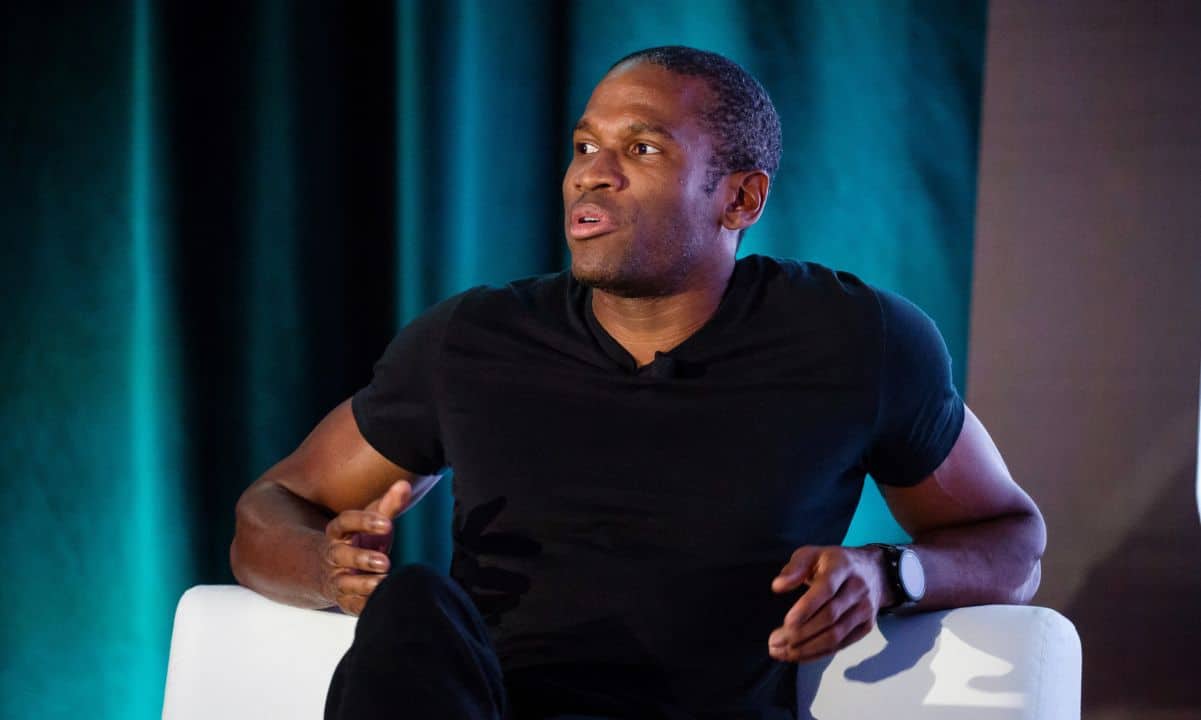
Bitcoin (BTC) could move above $90,000 and revisit its all-time high of around $126,000, BitMEX co-founder Arthur Hayes said.

He says the aggressive spending by governments and banks to fund AI infrastructure, as well as military spending and energy security projects, has helped fuel the crypto bull market.

Hayes Ties Bitcoin Outlook to AI Spending and Wartime Liquidity

The core of Hayes’s argument is that the Chinese and American governments have handed themselves political cover to print money aggressively and that this flood of liquidity will lift Bitcoin more than almost any other asset.

The first driver is the AI arms race, with the former BitMEX CEO saying that both Trump and Xi view machine intelligence as a matter of national survival, not just commercial opportunity.

“The presidents of America and China both believe that AI and tech supremacy are integral to the survival of their fiefdoms,” he stated, adding that the tech industry in each country has been “more than happy to sell them a horror story of what happens to the glorious nation should the other side gain supremacy over machine intelligence.”

That framing, according to Hayes, makes any central bank pushback on inflationary lending politically impossible, meaning both dollars and yuan will flow into AI regardless of what it does to consumer prices.

The second driver is the US attack on Iran, with the crypto investor claiming that the date it started, February 28, is the moment the current bull market began in earnest.

He argued that the conflict has exposed something the rest of the world can no longer ignore: that the US will start wars affecting global commodity flows without consulting the countries most harmed by the disruption.

The consequence, in his opinion, is that sovereign nations will stop recycling surpluses into US Treasuries and S&P 500 ETFs and instead spend that capital on pipelines, defense, and commodity stockpiles.

That will in turn create a structural problem for US markets, which Hayes believes the Fed and Treasury will patch with looser financial conditions, including expanded dollar swap lines and relaxed banking regulations.

Each of these tools will expand the supply of dollars, and more dollars in Hayes’s framework means higher BTC prices.

Where Bitcoin Stands

According to Hayes, Bitcoin’s recovery to its all-time high is a matter of when, not if.

“Retaking the $126,000 is a foregone conclusion,” he wrote.

He believes the surge will get even faster once BTC passes the $90,000 mark because he thinks many covered call sellers will be forced to buy back their positions as the price pushes through their strike levels, creating a self-reinforcing squeeze.

As of this writing, the OG crypto is trading under $81,000, up nearly 13% in the last month but still about 36% below that ATH.

Still, investment flows have shown that there is improving sentiment around Bitcoin. According to CoinShares, digital asset investment products recorded $857.9 million in inflows last week, the sixth consecutive week of positive flows, with BTC alone pulling in $706 million, to bring its year-to-date inflow total to $4.9 billion.

The post Arthur Hayes Predicts AI Race Will Push Bitcoin Back to $126K appeared first on CryptoPotato.

AI is a leadership problem, not a technology problem

0


Most of the executive teams I work with have been investing in AI for a few years. The ones who are frustrated are not the skeptics. They are the believers whose programs have not connected to the P&L. They have the pilots, the internal momentum, the board slide showing everything in flight. What they do not have is a clear line between that activity and business performance, and at this point in the AI cycle, that gap is no longer acceptable.

I spent several years running AI at scale inside Kroger and its data science subsidiary 84.51°, where we processed millions of predictions per second across thousands of store locations. We measured work in margin, basket size, and customer retention rather than how many models were in production, whether the pilots were impressive, or if the work moved the business. That experience shaped how I think about what AI requires from leadership, and what most leadership teams are still getting wrong.

The executives I work with are not confused about whether AI matters. They are managing tighter margins, more expensive capital, and boards that want results rather than roadmaps. In my experience, closing that gap comes down to three things.

1. Value has to show up on the P&L

    Most companies can tell you exactly how many AI models they have running. Very few can tell you what those models are worth to the business. AI can improve both sides of the income statement through better personalization and smarter pricing that support revenue.

    Automation and sharper forecasting cut costs and waste, but most companies are spreading investment across too many initiatives with too little connection to enterprise value. They are generating activity without changing their economics. The question worth asking is not where the company is using AI. It is where AI is changing the unit economics of the business. Most organizations cannot answer the second one.

    2. Velocity is an underrated strategic advantage

    Almost every large organization knows more than it can act on. Data and insight exist, but the distance between signal and response is slow. Decision cycles drag, functions operate from different assumptions, and by the time internal alignment happens, the moment has often passed.

    I watched this play out firsthand in financial services. A team built models to identify customers of competing firms most likely to switch in a specific line of business. The analysis was sound and the models performed. What followed was months of organizational hesitation and revisited governance questions long after the pilot had proven viable. By the time leaders made a decision, the market conditions had shifted, and they exited the business. Someone inside summed it up perfectly, “The surgery was successful, but the patient was dead.” The technology worked. The moment was gone.

    AI can close that gap through faster reporting, better forecasting, and earlier anomaly detection. It is not about doing things cheaper. It is about being able to move when it matters, and that is as much a leadership problem as a technology one.

    3. Confidence is not a soft outcome

    Today, executives are managing risk in a compressed timeframe that most have never experienced. Markets shift quickly, reputational risk moves faster, and the leaders who hold up tend to be the ones with genuine visibility into what is happening and enough discipline to act decisively.

    AI can extend that visibility by leveraging earlier signals, better scenario modeling, and a clearer line of sight into where problems are building. It does not replace judgment. It raises the premium on judgment, because faster decisions with better information still require someone who knows what matters and is willing to act. When it works, it shows up in how the leadership runs the business and how they are perceived by boards, investors, and the teams being led. Risk does not disappear with caution. It accumulates when decisions are delayed.

    OWN THE AGENDA

    None of this happens because a company acquires the right platform or adds AI to someone’s title. It happens because the CEO owns AI as a business agenda, not a technology agenda.

    That means being specific about where AI changes the economics of the business, measuring outcomes rather than effort, and being willing to cut work that generates activity without generating value. That last part is harder than it sounds when there is internal momentum behind programs and people whose identities are tied to them.

    The companies that understand where the connection between the work and the results shows up in the numbers are setting a standard for AI use that is worth following.

    Todd James is the founder and CEO of Aurora Insights.

    DeFi United Fundraising Chips Away at Kelp Exploit Shortfall

    0
    DeFi United Fundraising Chips Away at Kelp Exploit Shortfall


    Bybit CEO Ben Zhou pledged his support for Mantle’s 30,000 ETH loan proposal.

    Online scams: How our personal data is being used against us

    0


    In France, a data breach occurs once every hour. In recent months, several public bodies have been affected: La Poste, France Travail and the ANTS, the portal that issues identity documents. This confidential information, which is sometimes highly sensitive, is sold on forums. It’s then often purchased by cybercriminals and used to fuel all kinds of scams, including fraudulent operations involving bogus bank managers or brokers. It is often impossible for the victims to discern what is actually fake, and they’re then left to deal with the consequences alone. 

    Recent Posts