Home Blog

GoMining Launches GoBTC Pay to Bring Native Instant Payments to Bitcoin

0


[PRESS RELEASE – London, United Kingdom, May 8th, 2026]

  • GoBTC Pay is a protocol that lets consumers make native and instant payments on Bitcoin’s base layer.
  • GoMining launches its own mining pool to prioritize GoBTC Pay transaction confirmation, targeting a 12-hour final on-chain settlement by the end of 2026.
  • The launch marks a strategic expansion for GoMining, a platform with 5 million users. GoBTC Pay extends this ecosystem into everyday payments.

GoMining launches GoBTC Pay a Bitcoin payment protocol that delivers on what the 2008 whitepaper promised: peer-to-peer electronic payments. GoBTC Pay enables free and instant Bitcoin payments on the core Bitcoin layer. This makes it practical to use Bitcoin at the point of sale for everyday purchases. Payments are free for end-users and merchants pay a small acquiring fee that undercuts traditional card processing.

GoBTC Pay is designed as an open infrastructure. GoMining operates the reference implementation, but any wallet provider — from Ledger to Trust Wallet to MetaMask — can integrate the protocol to offer instant Bitcoin payments to their users.

Why this matters 

Bitcoin is the dominant cryptocurrency with a market cap above $1.5 trillion. Over 150 public companies hold BTC on their balance sheets. Spot Bitcoin ETFs, which didn’t exist two years ago, now manage roughly $100 billion in assets across a dozen funds. The U.S. government holds approximately 328,000 BTC. But Bitcoin still can’t process a retail transaction quickly and reliably.

The Lightning Network, introduced in 2018 to solve this problem, took seven years to reach $1 billion in monthly volume and its average transaction of $223 mostly reflects exchange-to-exchange flows, not someone paying for groceries. In the US, about 22% of adults own Bitcoin, yet there are only 2,300 U.S. businesses that accept Bitcoin directly, and the gap between how many people own Bitcoin and how many places accept it is widening.

“The first line of the Bitcoin whitepaper describes a peer-to-peer electronic cash system. Bitcoin was designed to be money, not just an asset. That promise is still unfulfilled, and we intend to deliver on it,” said Mark Zalan, CEO of GoMining. “We already serve millions of users, and run data centers on three continents. All of this provides us a unique position to enable native Bitcoin payments with GoBTC Pay.”

Mining-powered confirmation

GoBTC Pay enables free and instant payments in Bitcoin, using GoMining’s own mining infrastructure to confirm the transactions. It uses a 2-of-3 multi-signature architecture shared between the user, GoMining, and a regulated third-party custodian.

GoMining serves 5 million users globally. The company has created a dedicated mining pool for processing GoBTC Pay transactions, aiming for a 12-hour on-chain settlement by the end of 2026. Where most payment companies depend on third-party pools for confirmation, GoMining mines the blocks itself.

The pool also serves GoMining’s “digital miners” — users who own tokenized hashrate through GoMining’s app. A portion of GoBTC Pay transaction fees flows back to these miners as additional BTC yield: consumers pay with BTC, merchants earn BTC, miners earn a share of payment fees, and GoMining’s pool processes the transactions.

Any wallet provider, whether hardware, software, or custodial, can connect to the GoBTC Pay network and enable instant Bitcoin payments for their users.

Bitcoin payments for Merchants 

For merchants, GoBTC Pay is a Bitcoin-native acquiring network that undercuts every major card processor on cost. Its acquiring fee of 0.2% is substantially lower than traditional card processing, which range from 1.5% to 3.5% in the US. On a $100 sale, the merchant keeps $99.80.

GoMining distributes the entire fee back into the ecosystem: half goes to the miners who confirm transactions, and half goes to the wallet provider that initiated the payment. GoMining retains nothing on third-party transactions to incentivize wallet integrations and accelerate adoption.

Merchants can receive BTC directly to their own wallet, or use GoMining’s custodial merchant solution, which offers yield on their BTC balance — including during the settlement window — and an off-ramp to fiat. GoBTC Pay will ship with a dedicated PoS terminal, a web merchant dashboard, a developer SDK, and plugins for Shopify and WooCommerce in the coming months.

The launch coincides with GoMining’s major expansion in the United States. The company is building combined data centers for Bitcoin mining and AI workloads, with a target of securing 1 GW of compute capacity in 2026.

GoMining presented a live demo of GoBTC Pay at Consensus Miami 2026 (May 5–7, Miami Beach Convention Center).

About GoMining

GoMining is an all-in-one Bitcoin ecosystem that makes it simple and secure to mine, earn, and use Bitcoin every day. GoMining serves 5 million users and ranks among the top-10 Bitcoin miners by hashrate globally, with data centers in the U.S. and internationally. The company makes Bitcoin accessible through tokenized hashrate, daily BTC rewards, and an expanding suite of payment and earning products. For more information, please visit https://gomining.com/


Source link

Major Buy Signal Flashes as Analysts Expect Massive Move Ahead

0


Many analysts have noted in the past few weeks that XRP is close to a break out. Yet, every attempt has been halted so far.

In February, XRP tried to break out after the early-month calamity but was stopped at $1.65. A month later, the bears stepped up even before that when the asset challenged $1.60. During the following couple of months, the cross-border token’s attempts were exhausted long before those levels, at $1.50 in April and $1.47 in May.

On the positive side, all of these rejections were met by fresh buying power at around $1.30, which became XRP’s most important support since then. Now, another buying signal has flashed, and the question is whether this time will finally be any different for the token or if it will be more of the same.

XRP Buy Signal

Ali Martinez, who frequently touches upon the TD Sequential metric, noted that the indicator has flashed a buy signal on XRP’s 4-hour chart. The metric is used to determine the exhaustion of price moves in either direction for the underlying asset. Although it doesn’t have a 100% success rate, it’s generally very reliable when it comes to XRP in particular, as the analyst noted.

The latest example was on May 6, when it flashed a sell signal after XRP tapped $1.46 for the first time in several weeks. The subsequent rejection pushed the token south by over 5% in less than 48 hours.

Martinez said about today’s buy signal flash that it suggests the “local exhaustion is over, and XRP is ready to rebound.” He speculated that the first move would be toward the same resistance at $1.45 and posted a secondary, more bullish target at $1.80 “once we clear the overhead supply.”

Major Move Ahead?

This is not the first time Martinez has brought out the $1.80 target for XRP, as he did so last week when he noted that the asset has been sitting in a tight range for too long and could be primed for a major move ahead. Other analysts have doubled down on this narrative, such as MikybullCrypto. They posted on X that XRP’s triangle consolidation could be coming to an end soon, but the only question is “which side will it break out into?”

Fellow analyst CW believes there’s a bigger chance for an upside breakout as “there is absolutely no downside pressure in the futures market.” They categorized the current drop to under $1.40 as an “artificial decline” and predicted that once it ends, “bigger upward momentum will occur.”

You may also like:


Source link

CLARITY Act sees ‘big step forward’ as markup set for May 14

0


The US CLARITY Act, which aims to provide the US crypto industry with greater regulatory clarity, is set to be voted on by the Senate Banking Committee on Thursday.

On Friday, Senate Banking Committee chair Tim Scott confirmed the legislation will go to a vote on Thursday, triggering a strong reaction across the crypto industry, which has been waiting months for a new markup date.

The bill, introduced in July 2025, was expected to progress earlier this year, but stalled in January after Coinbase withdrew its support for the legislation, citing several concerns, including a lack of legal protections for open source software developers, a prohibition on stablecoin yield, and decentralized finance (DeFi) regulations. 

CLARITY Act is “on like Donkey Kong”: Coinbase exec

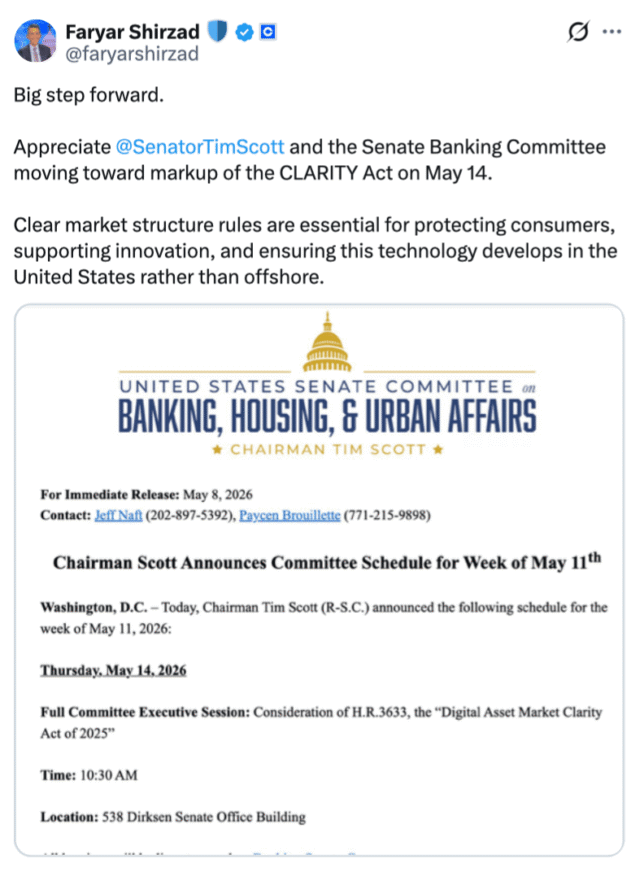
“It’s on like Donkey Kong,” Coinbase chief legal officer Paul Grewel said in an X post on Friday, following the announcement. Meanwhile, Coinbase chief policy officer Faryar Shirzad said in an X post that it was a “big step forward” and the legislation is essential “for protecting consumers, supporting innovation, and ensuring this technology develops in the United States rather than offshore.”

Source: Faryar Shirzad

Uncertainty around crypto regulation during the Joe Biden administration, with crypto skeptic Gary Gensler leading the US Securities and Exchange Commission (SEC), was linked to reports of crypto firms relocating offshore to more crypto-friendly jurisdictions. Industry participants argued it was harming innovation in the US.

US Senator and pro-crypto advocate Cynthia Lummis said in an X post, “Let’s pass the Clarity Act out of the Banking Committee on Thursday!”

Industry execs had predicted the markup would take place

It comes just days after Kara Calvert, the vice president of US policy at crypto exchange Coinbase, told attendees at the Consensus 2026 conference that she expected “a markup next week.”

Related: ‘Visible flaws’ in Bitcoiners’ mid-bear market forecast: Analyst

Calvert said that the bill needs at least 60 votes to pass in the Senate and that the CLARITY bill needs bipartisan support to become law.

Magazine: XRP ‘probably going to $12,’ Bitcoin ETFs add $1B: Market Moves


Source link

Sharpen Your Focus: A Comprehensive Guide to Achieving Lasting Mental Clarity

0

In today’s fast-paced world, many of us grapple with mental fog, a persistent feeling of distraction, and a noticeable dip in cognitive performance. The constant barrage of information and demands can leave our minds feeling overwhelmed, making simple tasks feel Herculean. If you’ve found yourself struggling to concentrate, making minor mistakes, or feeling perpetually mentally fatigued, you’re not alone. This guide offers a holistic, science-backed approach to reclaiming your mental sharpness and cultivating lasting clarity.

Table of Contents

* Understanding Mental Clarity
* The Science Behind a Clear Mind
* Foundational Pillars of Mental Clarity
* Optimizing Sleep for Cognitive Function
* Nourishing Your Brain: The Power of Nutrition
* The Role of Physical Activity
* Mindfulness and Stress Management Techniques
* The Practice of Mindfulness and Meditation
* Effective Stress Reduction Strategies
* Environmental and Lifestyle Adjustments
* Decluttering Your Space for a Clearer Mind
* Managing Digital Overload
* The Importance of Routine and Structure
* Myths vs. Facts About Mental Clarity
* Actionable Steps: Your ‘Start Today’ Checklist

Understanding Mental Clarity

Mental clarity refers to a state of sharp, focused thinking, free from distracting thoughts or confusion. It’s the ability to process information efficiently, make sound decisions, and maintain sustained attention. When you possess mental clarity, you experience heightened awareness, improved memory recall, and the capacity for critical and creative thinking. Conversely, a lack of clarity can manifest as brain fog, forgetfulness, slow thinking, and emotional instability, significantly impacting productivity and overall quality of life.

The Science Behind a Clear Mind

The brain’s ability to function optimally is intricately linked to its neurochemistry. Key neurotransmitters like dopamine and serotonin play crucial roles in motivation, focus, and mood regulation. Conversely, high levels of stress hormones, such as cortisol, can impair cognitive function and contribute to brain fog. Understanding these underlying mechanisms highlights why lifestyle interventions that positively influence brain chemistry are so effective in enhancing mental clarity.

Foundational Pillars of Mental Clarity

Achieving sustained mental clarity is not about quick fixes but about building consistent habits that support brain health.

Optimizing Sleep for Cognitive Function

Quality sleep is paramount for cognitive function and memory consolidation. During sleep, the brain actively clears waste products and repairs itself, essential processes for optimal performance. Aiming for 7-9 hours of uninterrupted sleep each night is crucial for re-energizing your mind and body. Establishing a consistent sleep schedule, creating a relaxing bedtime routine, and ensuring a dark, cool sleep environment can significantly improve sleep quality.

Nourishing Your Brain: The Power of Nutrition

What you eat directly impacts your brain’s function and your mental clarity. A diet rich in antioxidants, omega-3 fatty acids, B vitamins, and healthy fats supports brain health, reduces inflammation, and stabilizes energy levels.

Key brain-boosting foods include:
* **Fatty fish:** Salmon, mackerel, and sardines are rich in omega-3s, vital for brain cell structure and function.
* **Leafy greens and berries:** Kale, spinach, blueberries, and strawberries are packed with antioxidants that protect brain cells.
* **Nuts and seeds:** Walnuts, almonds, flaxseeds, and chia seeds provide healthy fats and nutrients beneficial for cognitive health.
* **Whole grains:** Oats, quinoa, and whole-wheat bread offer sustained energy release for the brain.

Conversely, limiting processed foods, excessive sugar, and unhealthy fats can help prevent brain fog and mental fatigue.

The Role of Physical Activity

Regular exercise is a powerful tool for enhancing cognitive function, improving focus, and boosting mood. Physical activity increases blood flow to the brain, supports memory, and can reduce anxiety and depression. Aim for at least 150 minutes of moderate aerobic activity per week, such as brisk walking, cycling, or swimming. Combining physical activity with mental challenges, like dance classes or learning a new skill, can offer even greater cognitive benefits.

Mindfulness and Stress Management Techniques

Our mental state is profoundly influenced by stress levels. Implementing mindfulness and stress-reduction techniques can significantly enhance mental clarity.

The Practice of Mindfulness and Meditation

Mindfulness involves paying attention to the present moment without judgment, which helps calm mental chatter and improve focus. Regular mindfulness meditation practice has been shown to enhance attention, improve emotional regulation, and reduce stress. Even short daily sessions of 5-10 minutes can yield significant benefits.

Effective mindfulness techniques include:
* **Focused breathing:** Paying attention to your breath’s rhythm can anchor you in the present and calm racing thoughts.
* **Body scan meditation:** Mentally scanning your body to notice sensations can increase self-awareness and reduce tension.
* **Mindful observation:** Engaging your senses to observe your surroundings without judgment.

Effective Stress Reduction Strategies

Chronic stress can negatively impact memory, cognition, and increase the risk of cognitive decline. Managing stress is therefore crucial for maintaining mental clarity.

Strategies for stress management include:
* **Deep breathing exercises:** Quickly calm the nervous system and reduce anxiety.
* **Yoga and Tai Chi:** These practices combine physical movement with mindful breathing, promoting relaxation and harmony.
* **Journaling:** Writing down thoughts and feelings can help process emotions and gain clarity.
* **Connecting with nature:** Spending time outdoors has a grounding effect and can reduce stress.
* **Prioritizing social connections:** Strong relationships provide support and reduce feelings of isolation.
* **Setting healthy boundaries:** Learning to say no and protect your energy is vital for well-being.

Environmental and Lifestyle Adjustments

Small changes in your environment and daily routines can have a significant impact on your mental clarity.

Decluttering Your Space for a Clearer Mind

A cluttered physical environment can lead to a cluttered mind. Minimizing distractions by organizing your workspace and living areas can reduce mental load and improve focus. Keep only essential items visible and store unrelated materials to maintain a sense of order.

Managing Digital Overload

Constant notifications and digital distractions can fragment attention and hinder cognitive performance. Strategies to manage digital overload include:
* **Scheduling focused work periods:** Dedicate blocks of time for uninterrupted tasks.
* **Utilizing “Do Not Disturb” modes:** Minimize digital interruptions.
* **Practicing single-tasking:** Concentrate on one task at a time to enhance efficiency.
* **Setting screen time boundaries:** Limit device usage, especially before bedtime.

The Importance of Routine and Structure

Consistent routines reduce decision fatigue and create predictability, which can be particularly helpful when experiencing brain fog. Establishing a structured morning or evening routine, reviewing your daily tasks, and sticking to a regular schedule can provide a sense of order and make it easier to navigate your day.

Myths vs. Facts About Mental Clarity

* **Myth:** Mental clarity is an innate talent that some people have and others don’t.
* **Fact:** Mental clarity is a skill that can be developed and improved through consistent practice and lifestyle adjustments.
* **Myth:** Brain fog is a sign of serious underlying disease.
* **Fact:** While brain fog can sometimes indicate a medical condition, it is often reversible and can be managed through lifestyle changes, stress reduction, and improved sleep.
* **Myth:** You need to meditate for hours to experience benefits.
* **Fact:** Even short, consistent mindfulness practices, such as 5-10 minutes daily, can significantly improve focus and mental clarity.

Actionable Steps: Your ‘Start Today’ Checklist

To begin enhancing your mental clarity, implement these simple steps:

* **Prioritize Sleep:** Aim for 7-9 hours of quality sleep tonight. Establish a consistent bedtime.
* **Nourish Your Brain:** Include at least one brain-healthy food (e.g., berries, nuts, fatty fish, leafy greens) in your meals today.
* **Move Your Body:** Engage in at least 20-30 minutes of physical activity. A brisk walk counts!
* **Practice Mindfulness:** Dedicate 5 minutes to focused breathing or a short meditation.
* **Hydrate:** Drink a glass of water immediately upon waking and continue to hydrate throughout the day.
* **Reduce Clutter:** Spend 10 minutes tidying your immediate workspace.
* **Set an Intention:** Decide on one realistic goal for the day and focus on accomplishing it.
* **Practice Gratitude:** Take a moment to reflect on three things you are grateful for.
* **Limit Screen Time:** Reduce non-essential screen use, especially in the hour before bed.

By consistently integrating these practices into your life, you can cultivate lasting mental clarity, boost your cognitive performance, and foster a greater sense of well-being.

10 Essential Smart Tips for Success in the Digital Age (2026)

0

In today’s fast-paced world, staying ahead requires more than just hard work—it requires working smart. At Nova Astrax, we believe in empowering our readers with actionable insights that make a difference. Whether you are a tech enthusiast or looking to optimize your lifestyle, these 10 smart tips will help you navigate the complexities of 2026 with ease.

1. Master Your Digital Security

With the rise of sophisticated AI-driven cyber threats, protecting your digital assets is crucial. Always use multi-factor authentication (MFA) and consider hardware wallets for your cryptocurrency holdings to ensure maximum safety.

2. Leverage AI for Productivity

Don’t just use AI; master it. Tools like automated content generators and AI scheduling assistants can save you hours of manual work. Smart users use AI to brainstorm and organize, keeping the final creative touch for themselves.

3. Optimize Website Speed for Better Engagement

As Hostinger suggests, a fast website is the backbone of a successful digital presence. Ensure your images are compressed and your cache is regularly cleared to provide a seamless experience for your visitors.

4. Diversify Your Information Sources

Don’t get stuck in one category. While Crypto is booming, staying updated on Fintech, Global Ventures, and Health & Wellness is equally important for a well-rounded perspective.

5. Adopt a “Privacy-First” Mindset

As we see more privacy-focused cryptocurrencies and tools, it’s vital to protect your personal data. Be mindful of the permissions you grant to apps and browsers.

6. Focus on Organic SEO Growth

Paid ads are great, but organic search traffic provides long-term stability. Use relevant keywords and provide high-quality content that actually solves reader problems to rank higher on Google.

7. Regular Tech Audits

Check your website and gadgets monthly. Update your WordPress themes and plugins to avoid security vulnerabilities and ensure all features work perfectly.

8. Smart Financial Planning

In the world of Fintech and Finance, trends change overnight. Diversify your investments and never put all your eggs in one basket, even if a particular asset seems like a “sure thing.”

9. Continuous Learning

The digital landscape of 2026 evolves daily. Spend at least 30 minutes a day reading about AI agents, blockchain evolution, and future tech to stay relevant. For more insights into evolving data trends, check out Here’s What the Latest On-Chain Data Reveals.

10. Quality Over Quantity

Whether it’s the articles you post or the tools you use, focus on quality. A few well-researched, professional-looking posts will always outperform dozens of low-quality ones.

Success in the modern era is about making informed choices. By following these Smart Tips, you can build a more secure, efficient, and profitable digital life. Stay tuned to Nova Astrax for more global insights, anytime and anywhere!

Bitcoin Rally Stalls At $80K But Bulls Anticipate A Pro-Crypto Fed Chair

0


Key takeaways:

  • A weakening US dollar and higher government debt favor scarce assets, even as spot Bitcoin ETF outflows and low retail demand spark some concern.
  • Traders expect Kevin Warsh to become Fed Chair, which could benefit Bitcoin.

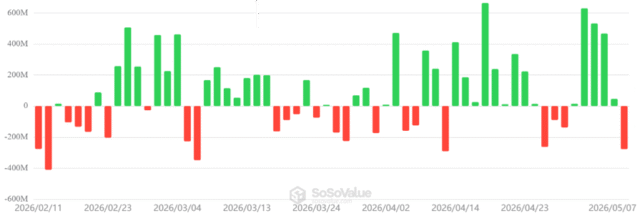
Bitcoin (BTC) stagnated near $80,000 on Friday following a rejection at $82,500. Traders grew anxious after US-listed spot Bitcoin exchange-traded funds (ETFs) posted $268 million in net outflows on Thursday. 

Meanwhile, $270 million in leveraged bullish Bitcoin futures positions were liquidated within 24 hours, forcing investors to evaluate whether a sustained bear market is finally taking hold.

Bitcoin US-listed spot ETFs daily net flows, USD. Source: SoSoValue

The reversal in Bitcoin spot ETF flows on Thursday broke a four-day positive streak. This shift is particularly notable because the S&P 500 Index surged to an all-time high on Friday. There is no evidence of a broad derisking trend across traditional markets, as the US small-cap Russell 2000 Index remains within 2% of its own record peak.

Are Bitcoin retail traders jumping ship?

Underwhelming earnings reports from Coinbase and Robinhood indicated a sharp drop in retail engagement, sparking concerns about Bitcoin’s bull run sustainability. Coinbase recorded a 31% revenue decline compared to the first quarter of 2025, while crypto-related revenue on Robinhood plummeted by 47% over the same period. 

Exchanges’ top traders Bitcoin long-to-short ratio. Source: CoinGlass

Top traders at Binance have slashed their Bitcoin longs to the lowest levels in over four weeks. In contrast, whales and market makers at OKX added bullish exposure as the Bitcoin price broke above $80,000 on Tuesday, but they subsequently reduced those positions on Friday.

Overall, the 0.27 long-to-short ratio among top traders at OKX remains a far cry from the 1.20 mark seen just ten days prior.

Weaker US dollar and odds of Strategic Bitcoin Reserves

While Bitcoin derivatives show moderate bearishness, two distinct factors support a sustained bull run. The US dollar has weakened against other major fiat currencies over the past two months. Whether intended by the US administration or not, this move reduces incentives to hold US Treasuries, especially given the current high oil prices.

Brent crude oil, USD (left) vs. US dollar strength index (right). Source: TradingView

The growing US government debt creates an environment favoring scarce assets. Even if the stock market and gold remain the primary options for most investors, Bitcoin tends to benefit from a weaker US dollar.

Regardless of the macroeconomic environment, expectations are rising that the US Strategic Bitcoin Reserve could start adding BTC, and Kevin Warsh is expected to replace Fed Chair Jerome Powell in the near term. Warsh recently reported significant holdings in cryptocurrency assets and companies and has previously expressed pro-Bitcoin views.

Related: Bitcoin bulls target $115K by December–Does data back the expectation?

Odds of the US adding any amount of Bitcoin to its reserves by 2027. Source: Polymarket

While still considered a long shot, the path to budget-neutral strategies for acquiring Bitcoin has been cited by US Treasury Secretary Scott Bessent in the past. Consequently, potential outflows from fixed-income investments due to a weaker US dollar and higher inflation increase the odds of sustained bullish momentum in Bitcoin.

The recent outflows from spot Bitcoin ETFs do not necessarily indicate that a bear market is underway, even if top traders’ current positioning signals a lack of confidence in a short-term rally.


Source link

Crypto Exchanges Pushed US Lawmakers to Bar Provision on Risky Tokens: Report

0


Earlier in 2026, as a digital asset market structure bill was under consideration in the US Senate, cryptocurrency exchanges Coinbase, Kraken and Gemini reportedly pressed to remove language in the legislation that could have affected their token listings.

According to a Friday Politico report, the three exchanges asked US lawmakers to scrap a provision in the market structure bill that would have required platforms to only offer trading on digital assets “not readily susceptible to manipulation.” The companies reportedly pressed senators to remove the language as it could have made it difficult for exchanges to list smaller tokens.

The edit, which the news outlet reported occurred after the US Senate Agriculture Committee voted to advance its version of the bill in January, signaled the influence crypto companies in communication with the Trump administration and lawmakers could have in legislation affecting the industry. The US Senate Banking Committee postponed its markup on the bill hours after Coinbase CEO Brian Armstrong said that the exchange could not support the legislation “as written,” citing concerns with tokenized equities.

Under the market structure bill, called the CLARITY Act when it passed the US House of Representatives in July 2025, the Commodity Futures Trading Commission (CFTC) would be given more authority in overseeing and regulating digital assets. Both US financial regulators, the CFTC and Securities and Exchange Commission (SEC), announced their intention to coordinate oversight of the crypto industry in March, even in the absence of action from Congress.

Related: US Senator questions Mark Zuckerberg on Meta’s stablecoin plans

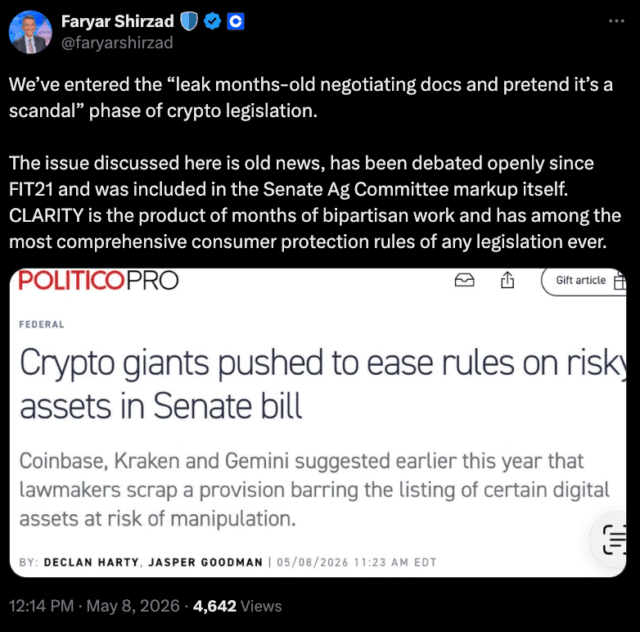
Coinbase chief policy officer Faryar Shirzad responded to the report on social media, calling it “old news” and an issue that was included in the markup by the Senate Agriculture Committee.

Source: Faryar Shirzad

Industry leaders, lawmakers speculate on timeline for market structure bill

Last week, two US senators announced a compromise deal on stablecoin yield between representatives of the crypto and banking industries that could allow the CLARITY Act to advance in the banking committee. Although some lawmakers said they intended to push for ethics language on potential conflicts of interest to be included in the bill, many are speculating that passage could be in a matter of weeks.

Coinbase‘s US policy vice president, Kara Calvert, said on Thursday that the exchange expected a markup in the banking committee by next week. Other lawmakers predicted that the bill would become law before the Senate broke for August recess, while White House crypto adviser Patrick Witt said that the administration was aiming for a July 4 deadline for the bill to pass the House after a June Senate vote.

Magazine: XRP ‘probably going to $12,’ Bitcoin ETFs add $1B: Market Moves

Cointelegraph is committed to independent, transparent journalism. This news article is produced in accordance with Cointelegraph’s Editorial Policy and aims to provide accurate and timely information. Readers are encouraged to verify information independently.


Source link

The AI Revolution Unfolding: Impactful Trends Reshaping 2026 and Beyond

0

Artificial Intelligence (AI) continues its relentless march, transforming the very fabric of our existence at an unprecedented pace. As we navigate 2026, AI is no longer a futuristic concept confined to research labs; it is an omnipresent force, seamlessly integrated into our daily routines and fundamentally redefining professional landscapes. The trends that have emerged and solidified this year are not mere technological novelties; they are foundational shifts, promising a future of enhanced efficiency, personalized experiences, and complex problem-solving. This deep dive explores the most impactful AI trends of 2026, examining their profound influence on both personal lives and global industries.

The Pervasive Power of Generative AI Beyond Text

While large language models (LLMs) captured significant attention in previous years, 2026 witnesses the maturity and multimodal expansion of generative AI. This isn’t just about crafting eloquent emails or coding snippets; it’s about AI systems creating entire virtual worlds, designing novel materials, synthesizing realistic media, and even composing complex musical scores with nuanced emotional depth. The ability of AI to generate high-quality, diverse content across various modalities – text, images, audio, video, and 3D models – is unlocking unprecedented creative and productive potential.

Revolutionizing Creative Industries

In fields like entertainment, advertising, and design, generative AI is a game-changer. Filmmakers can rapidly prototype scenes, generate realistic CGI elements, or even animate entire characters from textual descriptions. Architects and product designers are leveraging AI to explore thousands of design variations, optimize for specific performance criteria, and visualize complex structures in minutes, drastically shortening development cycles.

Personalized Content and Experiences

For the average consumer, this means an explosion of hyper-personalized content. From news feeds tailored not just by topic but by preferred narrative style, to interactive stories where AI dynamically adjusts plots based on user choices, the digital experience is becoming uniquely adaptive. Education is also being transformed, with AI generating customized learning materials, interactive exercises, and even virtual tutors that adapt to individual learning paces and styles.

Edge AI and Distributed Intelligence: AI Everywhere

The concept of AI residing solely in distant cloud servers is rapidly becoming a relic of the past. 2026 is defined by the proliferation of Edge AI, where AI processing occurs directly on local devices – from smartphones and smart home appliances to industrial sensors and autonomous vehicles. This paradigm shift minimizes latency, enhances data privacy by reducing reliance on constant cloud communication, and enables AI to operate effectively even in environments with limited connectivity.

Enhanced Daily Life with Smarter Devices

Imagine smart homes where appliances proactively manage energy consumption based on real-time occupancy and weather patterns, or personal health trackers that provide immediate, context-aware insights without sending sensitive data to the cloud. Autonomous vehicles leverage Edge AI for instantaneous decision-making, crucial for safety and responsiveness on the road. These intelligent endpoints create a truly responsive and integrated environment.

Industrial Transformation and IoT

For industries, Edge AI fuels the intelligent Internet of Things (IoT). Factories are deploying AI-powered sensors on machinery for predictive maintenance, identifying potential failures before they occur and minimizing downtime. Agricultural drones with onboard AI analyze crop health and soil conditions in real-time, optimizing resource allocation. This distributed intelligence makes systems more resilient, efficient, and secure.

AI in Healthcare: Precision, Prevention, and Accessibility

The healthcare sector continues to be a fertile ground for AI innovation in 2026, moving beyond diagnostic assistance to encompass precision medicine, proactive prevention, and improved accessibility. AI is revolutionizing how we understand, treat, and manage health at every level.

Accelerated Drug Discovery and Personalized Treatment

AI algorithms are dramatically speeding up the drug discovery process, identifying potential compounds and predicting their efficacy with unprecedented accuracy. This leads to shorter development cycles and more targeted therapies. Furthermore, AI analyzes vast patient data – including genomics, lifestyle, and medical history – to create highly personalized treatment plans, moving away from one-size-fits-all approaches.

Proactive Health Management and Remote Care

Wearable devices equipped with advanced AI monitors offer continuous health tracking, capable of detecting early signs of illness or chronic conditions. AI-driven virtual health assistants provide initial consultations, manage appointments, and deliver personalized health advice, greatly enhancing access to care, particularly in remote areas. This shift towards proactive, preventative care supported by AI aims to improve health outcomes and reduce the burden on healthcare systems.

Ethical AI and Regulatory Frameworks: A Growing Imperative

As AI becomes more powerful and pervasive, the discussions around its ethical implications and the need for robust regulatory frameworks have intensified. 2026 marks a period where responsible AI development and deployment are not just aspirational but mandated. Governments and international bodies are actively shaping policies to address issues like data privacy, algorithmic bias, transparency, and accountability in AI systems.

Ensuring Fairness and Transparency

Efforts are underway to develop “explainable AI” (XAI), making AI’s decision-making processes more transparent and understandable to humans. This is crucial in sensitive applications like criminal justice, finance, and hiring, where biased algorithms could perpetuate or exacerbate societal inequalities. Regulations are pushing for clear guidelines on how AI is trained, tested, and deployed to ensure fairness and prevent discrimination. Consumers and businesses alike are becoming more aware of these considerations, prompting a greater demand for ethically developed AI solutions. If you’re interested in how global frameworks are evolving, particularly around international agreements and their implications for technology and trade, you might find valuable context on broader policy discussions, similar to how political leaders address complex agreements on platforms like NovaAstrak’s reporting on trade deals.

AI Governance and Public Trust

The establishment of AI ethics boards within organizations, mandatory impact assessments for AI systems, and certifications for ethical AI practices are becoming standard. Building public trust in AI hinges on these measures, ensuring that AI development aligns with societal values and safeguards individual rights. This proactive approach to governance is essential for AI’s sustainable growth and widespread acceptance.

AI for Sustainability and Climate Action

In 2026, AI is increasingly recognized as a vital tool in the global fight against climate change and for promoting sustainable development. Its ability to process vast datasets and identify complex patterns makes it invaluable for environmental monitoring, resource optimization, and the development of green technologies.

Optimizing Energy and Resources

AI-powered smart grids are optimizing energy distribution, integrating renewable sources more efficiently, and predicting demand to reduce waste. In agriculture, AI is used for precision farming, minimizing water usage, and optimizing fertilizer application. Supply chains are becoming more sustainable through AI-driven logistics, reducing fuel consumption and emissions.

Environmental Monitoring and Conservation

AI analyzes satellite imagery and sensor data to monitor deforestation, track pollution levels, and predict extreme weather events with greater accuracy. It assists conservation efforts by monitoring endangered species, identifying poaching activities, and managing natural resources more effectively. These applications demonstrate AI’s potential to drive significant positive environmental impact.

The Future of Work: Augmentation, Not Replacement

The narrative around AI and employment has shifted from fear of mass job displacement to an emphasis on augmentation and collaboration. In 2026, AI is predominantly seen as a powerful co-worker, enhancing human capabilities and automating repetitive, mundane, or dangerous tasks, allowing humans to focus on higher-level strategic thinking, creativity, and interpersonal interactions.

Reshaping Professional Roles

In virtually every industry, AI tools are becoming indispensable. Financial analysts leverage AI for predictive modeling and fraud detection, freeing them to focus on complex market strategies. Customer service representatives are augmented by AI chatbots that handle routine inquiries, allowing human agents to address more intricate customer issues with empathy and problem-solving skills. Developers use AI for code generation and debugging, accelerating development cycles.

Upskilling and Lifelong Learning

The evolving professional landscape necessitates continuous learning. AI-powered platforms are emerging as key enablers of skill development, offering personalized training modules and real-time feedback to help individuals adapt to new roles and acquire AI-related competencies. The focus is on cultivating skills that complement AI, such as critical thinking, emotional intelligence, and complex problem-solving. For more insights into how technology is shaping our world and future advancements, consider exploring resources like NovaAstrak’s homepage.

Conclusion: An Intelligent Horizon

As we stand in 2026, the trends in Artificial Intelligence paint a vivid picture of a world undergoing profound transformation. From the boundless creativity unleashed by multimodal generative AI to the pervasive intelligence of edge computing, the precision of AI in healthcare, the imperative for ethical governance, and its critical role in sustainability, AI’s impact is undeniably deep and wide-ranging. It is reshaping daily life by offering more personalized, efficient, and responsive experiences, and revolutionizing professional industries by augmenting human potential and automating complex tasks. The journey of AI is far from over; these current trends are merely stepping stones towards an even more interconnected, intelligent, and potentially transformative future, one that demands thoughtful development and strategic integration to harness its full, positive potential.

Word Count: 1200 words

Swiss National Bank Bitcoin Reserve Push Fails as Campaign Falls Short

0


A campaign to require the Swiss National Bank to hold Bitcoin is set to lapse after failing to gather enough signatures to trigger a national referendum, Reuters reported.

The initiative sought to amend Switzerland’s constitution to require the central bank to hold Bitcoin (BTC) alongside gold and foreign currency assets, but organizers said they collected only about half of the 100,000 signatures required under Swiss law.

The Swiss National Bank (SNB) has repeatedly opposed adding cryptocurrencies to its holdings, saying digital assets do not meet its reserve management standards due to concerns about volatility and liquidity, Reuters reported.

Campaign founder Yves Bennaim told Reuters the effort was always considered unlikely to succeed, but said the initiative helped advance debate around Bitcoin’s role in global finance.

Supporters of the campaign said Bitcoin could help diversify Switzerland’s reserves away from dollar- and euro-denominated assets, which Reuters said account for roughly three-quarters of the SNB’s foreign currency holdings.

Related: Bitcoin profit-taking may ‘accelerate’ as price hits 3-month high: Analyst

Countries experiment cautiously with sovereign Bitcoin reserves

While 2025 saw a wave of publicly traded companies adopt Bitcoin treasury strategies, sovereign adoption of Bitcoin as a reserve asset has remained limited.

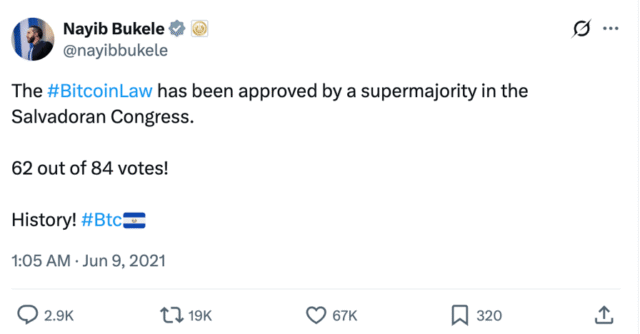
El Salvador was the first country to formally adopt Bitcoin as part of a sovereign reserve strategy after President Nayib Bukele began government BTC purchases in 2021 alongside the country’s move to make Bitcoin legal tender. The country currently holds 7,645 BTC, according to data from BitcoinTreasuries.com.

Source: Nayib Bukele

Source: Nayib Bukele

Bhutan, also one of the world’s largest sovereign holders of Bitcoin, built much of its treasury through state-backed mining operations powered by surplus hydroelectric energy as part of a broader strategy to turn renewable energy into a digital export and expand the country’s role in crypto finance.

However, data from Arkham Intelligence shows Bhutan-linked wallets have sharply reduced their holdings in recent months, with reserves falling from around 13,000 BTC at the end of 2024 to roughly 3,654 BTC by April 2026 following a series of large transfers and apparent sales.

Unlike El Salvador and Bhutan, which actively accumulated Bitcoin through purchases or mining, the three largest sovereign Bitcoin holders — United States, China and the United Kingdom — primarily acquired their holdings through criminal seizures and forfeiture proceedings.

Top 5 countries holding Bitcoin. Source: Bitcointreasuries.net

Top 5 countries holding Bitcoin. Source: BitcoinTreasuries.net

On March 6, 2025, US President Donald Trump signed an executive order establishing a Strategic Bitcoin Reserve capitalized with government-held Bitcoin, stating that BTC held by the reserve “shall not be sold” and would be maintained as reserve assets of the United States.

While the executive order allows Treasury and Commerce officials to explore budget-neutral strategies for acquiring additional Bitcoin, the reserve is initially backed by BTC already held by the government through forfeiture proceedings.

Magazine: Adam Back says current demand is ‘almost’ enough to send Bitcoin to $1M


Source link

Zondacrypto Hit With Investor Warning by Estonia Financial Regulator

0


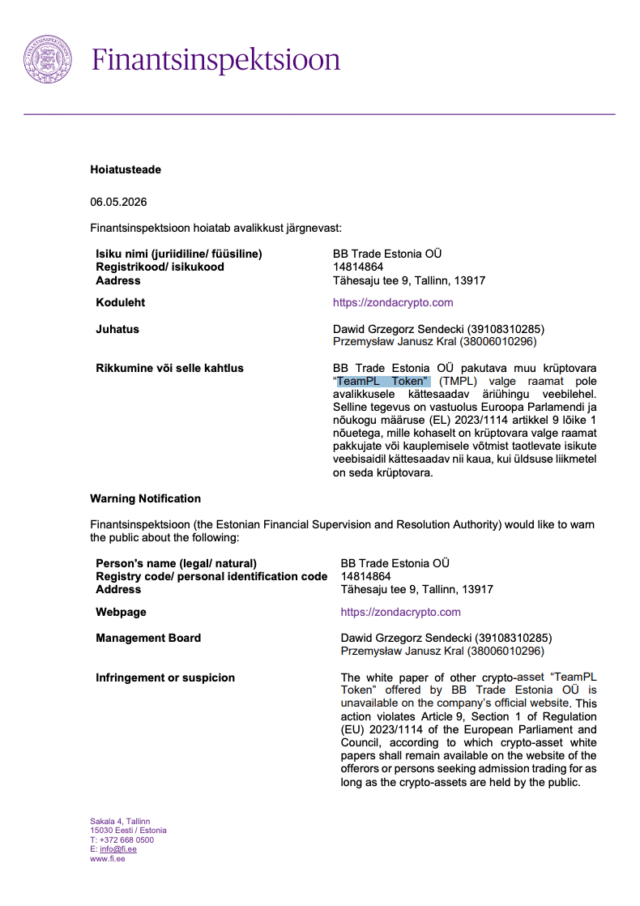
Estonia’s Financial Supervision and Resolution Authority (FSA), the country’s financial regulator, issued an investor warning for BB Trade Estonia OÜ, the company that operates the Zondacrypto digital asset exchange.

The FSA said the company did not have a white paper listed on its website for the “TeamPL” crypto token listed on the crypto exchange, a violation of the European Union’s Markets in Crypto-Assets (MiCA) regulatory framework. According to the FSA: 

“This action violates Article 9, Section 1 of [MiCA], according to which crypto-asset white papers shall remain available on the website of the offerors or persons seeking admission trading for as long as the crypto-assets are held by the public.”

The investor warning for Zondacrypto and its parent company. Source: Estonia FSA

Cointelegraph reached out to Zondacrypto but did not receive a response by the time of publication.

The investor warning follows news of withdrawal issues at the Zondacrypto exchange and an investigation into the company by Polish law enforcement officials.

Related: Europe’s MiCA regime puts smaller crypto firms under pressure

Zondacrypto faces investigation following withdrawal and access issues

In April, Zonda CEO Przemysław Kral said the exchange did not have access to a cold wallet containing about 4,500 Bitcoin (BTC), valued at about $360 million at the time of writing.

Kral claimed that the wallet’s private keys were never handed over by Sylwester Suszek, the founder and former CEO of Zondacrypto, who has been missing since 2022. He also denied rumors that the exchange is insolvent, adding that it would meet all customer obligations. 

Kral’s last post on the X social media platform was published on April 16, 2026. Source: Przemysław Kral

Polish investigators initiated a probe into the company in April, following reports from users of withdrawal issues and the inability to access funds.

Since that time, Kral has gone silent on social media, with no new posts since April 16. Local media outlets reported that he flew to Israel, where he is a citizen, amid the probe by Polish law enforcement.

In February, he told Cointelegraph that the company is based outside of Poland because the country has not brought its crypto regulations in line with the EU’s MiCA framework.

“Although we are a company with Polish roots and the largest player in the crypto industry on the Polish market, we have been operating outside Poland for years,” he said.

Magazine: Guide to the top and emerging global crypto hubs: Mid-2026


Source link

Google search engine

Recent Posts