

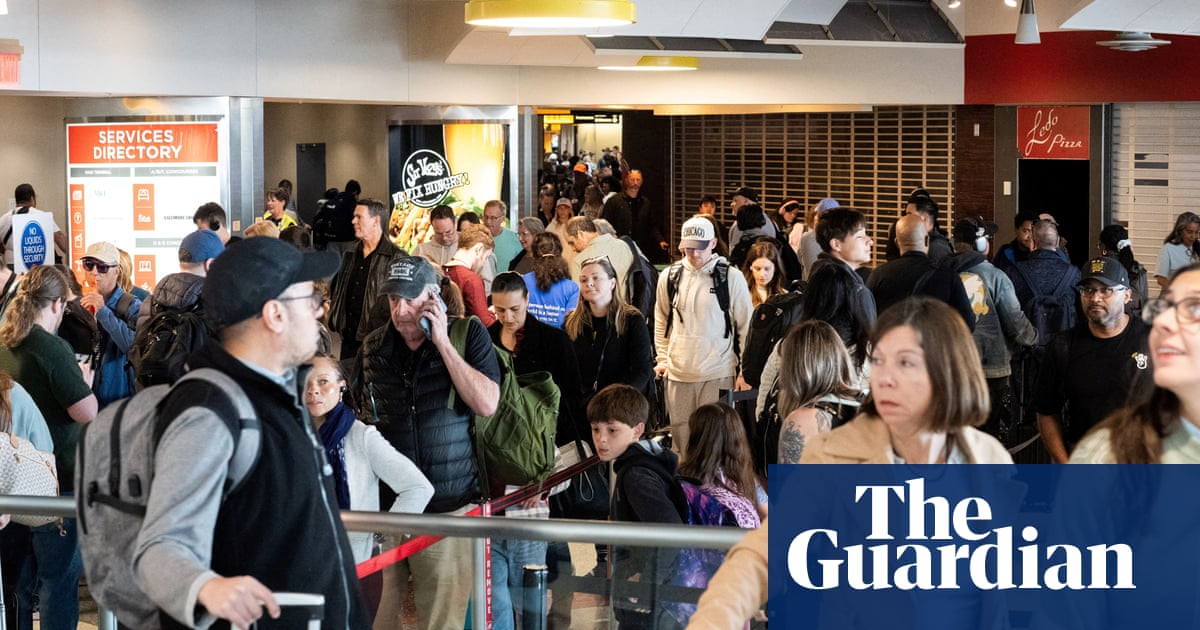
Chelsea Blackmore saves up every year for an annual vacation with her 58-year-old mother. This year, after landing an especially good deal, they made plans to embark on a Disney cruise from Orlando.
To keep costs low, she bought the least expensive plane tickets she could find: a $500 round trip fare on Spirit Airlines.
Soaring oil prices have left many Americans with higher ticket prices and fewer options for summer travel amid the economic maelstrom brought on by the war in Iran. Typically, budget airlines offer travelers like Blackmore base-fare tickets that can make travel more affordable during financially unstable times.
But last Saturday, Blackmore opened up the airline’s app and was faced with a pop-up message announcing Spirit was shutting down operations and her flight was cancelled.
“I cried for about five hours trying to search for new flights,” said Blackmore, 35, a photographer and travel agent based in Massachusetts.
Travel experts say the demise of Spirit is just a harbinger of the chaos higher energy prices will bring this summer. From drivers to flyers, all travelers are expected to feel the squeeze.
“Spirit is, in many ways, emblematic of what most Americans are feeling right now – which is a real gut punch around increasing energy costs and gas prices in particular,” said Lindsay Owens, the executive director of Groundwork Collaborative, a left-leaning economic thinktank. “We’re all Spirit Airlines, when it comes to feeling really distressed and worried about high gas prices.”
US oil prices have jumped more than 30% since the closing of the strait of Hormuz, where a fifth of the world’s oil and gas products typically pass through, at the start of the war. Prices at the pump have reached highs not seen since 2022, when the Russia-Ukraine war crippled the global supply of oil. The current national average gas price is $4.56 a gallon, more than $1 a gallon more expensive than last year. In some states, average gas prices have breached $6 a gallon.
Though Donald Trump keeps teasing peace deals with Iran, experts warn that it could take months or even years to fully restore the Gulf’s energy production even after the conflict ends.
Airlines, which rely on heavy jet fuel, have been hit particularly hard. While other major carriers like United and Delta can cut routes and increase fees to offset rising costs, budget airlines operate on thin margins that are thrown off by higher fuel prices.
Before its shutdown, Spirit was reportedly in talks over a $500m deal with the White House. Trump even floated the idea of the government buying out the airline, and other struggling budget carriers, including Frontier and Avelo, also asked the Trump administration to consider offering the low-cost industry a $2.5bn government assistance package to help with rising prices. But no deals were made, and Spirit abruptly ceased operations on 2 May.
In the wake of the company’s closure, Spirit specifically cited the shock of increased jet fuel prices as the death knell for the low-budget airline. A company lawyer said higher fuel prices left the company, already beleaguered by other financial issues, with “no remaining way out”.
The impacts of Spirit’s shutdown is expected to last far beyond the latest oil shock. Industry experts say the loss of Spirit will mean passengers will have to pay more for tickets in dozens of routes due to less competition.
“Even if you don’t like Spirit, and even if you never flew on Spirit, if you were flying on routes that Spirit flew … you benefited from their presence,” said William McGee, a senior fellow for aviation and travel at the American Economic Liberties Project.
When she scrambled to rebook on the next cheapest flight she could find, Blackmore ended up spending $800 on a pair of Southwest tickets that, unlike her Spirit tickets, didn’t even include a checked bag.
“I mean, yes, we could drive to Florida, but then that’s taking more time off of work,” Blackmore said
Some passengers are turning to alternate forms of transportation. Flixbus, parent company of Greyhound, said it has seen a more than 30% increase in passengers across 130 routes that mirror Spirit’s and a 20% year-over-year increase in online search activity, the company said in a statement.
Amtrak said that, while it is too early to isolate the impact of rising gas prices on the demand for rail service, it has noticed an uptick in passengers as well.
Despite higher prices affecting nearly every aspect of travel – transportation, eating out and accommodations – travel agents say demand for vacations is still high.
While one of Blackmore’s clients postponed their summer trip to next year, she said most are determined to continue with their plans in some way. They want to escape the stresses of everyday life and are willing to put charges on their credit card to pay back over time.
“I mean, the world is crazy right now, and everybody deserves a vacation,” she said, “So to put it on a credit card, it’s out of sight, out of mind.”
One international travel agency, Intrepid Travel, reported that demand was still “really strong” this summer. Instead of giving up trips altogether, Americans are adjusting how and why they are traveling, said Leigh Barnes, the president of the agency’s Americas division.
“We’re seeing travelers look harder at overall value – asking a lot more hypothetical questions around fuel shortage impacts, future flight cancellations, wanting to know paid-in-full dates, ‘just in case’,” Barnes said.
He added that while some travelers are trimming costs by traveling for fewer days or choosing more budget friendly styles of trip, “they’re still unwilling to compromise on the actual experience”.
Some travelers are also booking more closer to their departure date, with budget-conscious travelers waiting longer to lock in their plans.
But McGee strongly advised against that strategy.
“It seems apparent that fares, which are already increasing, are going to continue to increase,” he said. “And I think it’s anybody’s guess when that will stop.”